
Sevilla | 26 Dec 2025
Our day began at a local Tobacco Kiosk (Estanco). If you need to reload tickets for the tram or bus, this is the quickest way to do it. It’s a straightforward, cash-only transaction that gets you moving without the hassle of navigating station machines.
The Palace Lesson: Real Alcázar
We learned the hard way that the Real Alcázar—the oldest royal palace still in use in Europe—is no longer a place for spontaneous visits. Despite its thousand-year history as a fortress and a palace for Almohad caliphs and Christian kings, the modern queue is brutal. We tried our luck, but the “Sold Out” sign was final.
WanderAime Tip: If you want to walk through the Mudejar arches where Game of Thrones was filmed, you must book weeks in advance. Use the official Real Alcázar site to avoid the heartbreak we faced at the gates.
The Hidden Heart: Iglesia del Salvador
With the Cathedral queue stretching around the block, we opted for a strategic detour. A combined ticket (around €11) grants entry to both the Cathedral and the Iglesia del Salvador, located just five minutes away.
While the Cathedral is the giant, El Salvador is the soul. Built on the site of the 9th-century Ibn Adabbas Mosque (once the city’s main congregational mosque), the church is a Baroque masterpiece. But the real treasure lies beneath. We descended into the underground crypt, a quiet space that houses Roman and Visigoth remains. Standing there, you realize Seville isn’t just a city; it’s a “historical layer cake.” The crypt also serves as the final resting place for members of the Spanish Bourbon family, adding a heavy sense of royal solemnity to the silence.
After the cool shadows of the crypt, the walk back to the Cathedral felt vibrant. We ducked into a small coffee shop for thick Spanish hot chocolate—the kind that feels more like melted ganache than a drink—perfect for a December morning.

The Grandeur of the Cathedral & The Ascent of the Giralda
The Seville Cathedral is a defiant statement in stone. Built in the 15th century to be so large that “future generations will think us mad,” it remains the largest Gothic cathedral in the world.
- The Highlight: Standing before the Tomb of Christopher Columbus. His casket is held aloft by four allegorical figures representing the kingdoms of Castile, Aragon, Navarre, and León. It’s a stirring, controversial monument to a man whose bones traveled almost as much as he did—from Spain to the Dominican Republic, to Cuba, and finally back here in 1898.
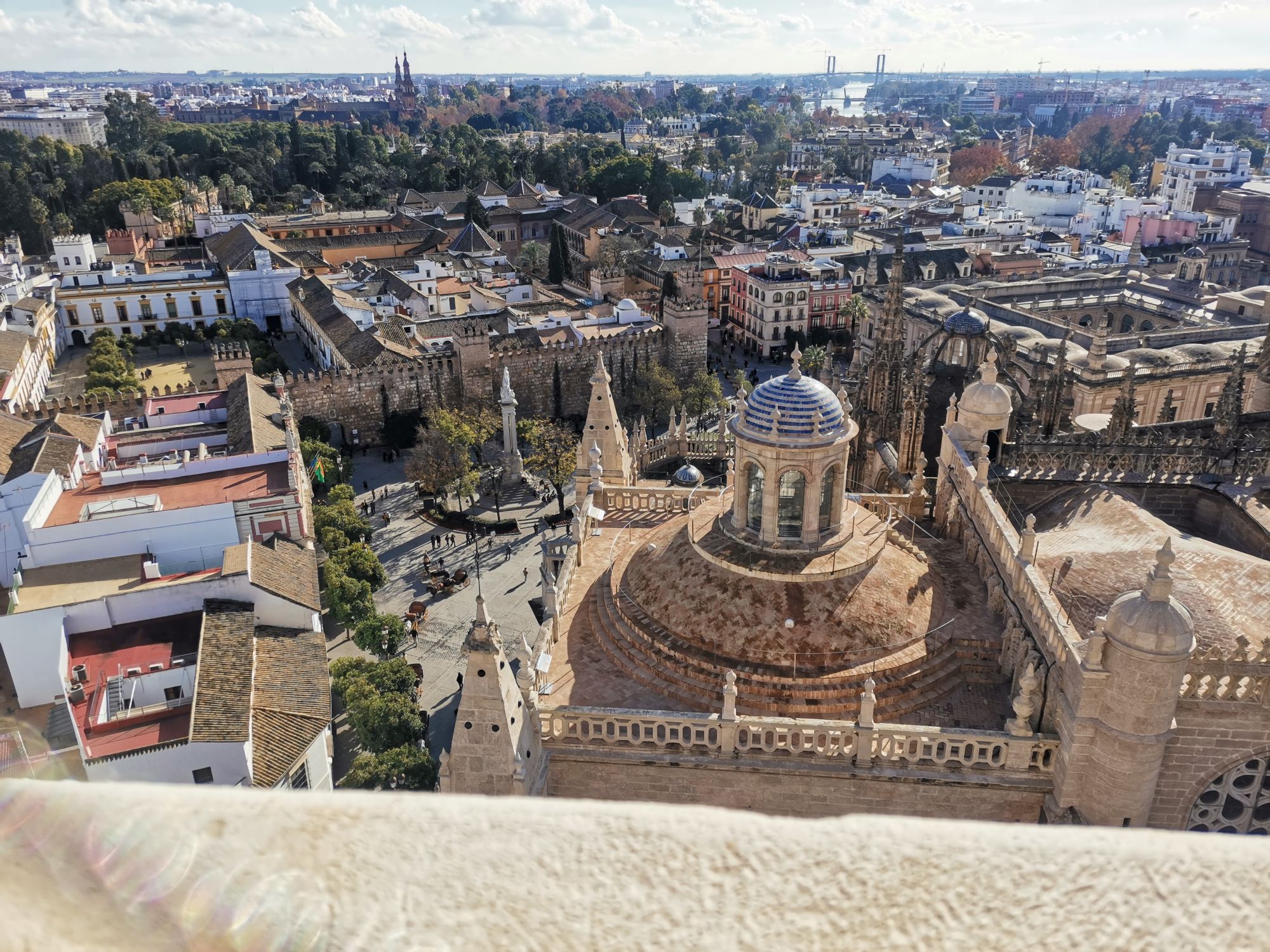
Then came the Giralda. This iconic bell tower was originally the minaret of the Great Mosque. Instead of stairs, there are 35 slanted ramps. History says they were designed so the Sultan could ride his horse to the top to admire the view.
- Survival Tip: The climb is a test of patience. Around ramp number 30, the crowd tends to bottleneck. Don’t rush; use the small windows along the way to catch your breath and a preview of the rooftops.
- The Summit: Up top, you’re surrounded by 24 massive bells. While I literally heard some people say it’s “just another city view” and not worth the effort, I personally found it quite nice. If you wait for the hour strike, you’ll hear the bells ring—it’s not overwhelmingly loud, but standing amidst that vibrating bronze while looking over the rooftops is an experience worth staying for.


Paella & The Modern “Mushrooms”
Post-climb hunger led us to a popular spot near the Cathedral for Paella. In many parts of Spain, paella is a communal dish for two, but here we found a place serving single portions—perfect for the solo-style traveler. We got lucky with a seat just before the lunch rush.
Our final stop was Las Setas (Metropol Parasol). This giant, “twisted” wooden art installation in Plaza de la Encarnación is the world’s largest wooden structure. It’s a polarizing piece of modern architecture, looking like a honeycomb cloud hovering over Roman ruins. While the panoramic walkway on top is famous, we stayed at ground level. In late December, the space transforms into a Christmas Market. It felt very family-oriented—full of festive stalls and children’s laughter. If you aren’t paying the fee for the rooftop escalator, it’s a lovely place to soak in the local holiday atmosphere before heading home.




Leave a Reply