

11 May 2025
👉 Want to see the complete 5-day Kumano Kodo hiking itinerary? Click here to read.
Morning Disappointment: Cancelled Cruise
Day 4 started with a gut punch. Remember the Kumano River Boat Cruise—the one I booked a month in advance, the one so popular it sold out on every other date? Yep, at 7 a.m. I got the dreaded email: cancelled due to rain. Understandable, of course (the river was raging after two straight days of drizzle), but still a real bummer.


So, Plan B: the bus to Shingu. We weren’t the only ones rerouting—judging by the crowd at the stop, half the would-be cruisers had the same idea. As we wound down the mountain, I pointed at the churning river: “That’s what we were supposed to be cruising.” Not quite the same as a wooden boat ride, but at least the scenery was free.
When we arrived, I realized another small heartbreak: we’d left our hiking sticks behind. The bamboo one was meant to be a souvenir, and I had imagined carrying it home like a badge of honor. Instead, I pictured some other pilgrim picking it up and giving it a second life. Maybe that’s more poetic anyway.
Exploring Hayatama Taisha Shrine


After dropping our bags at a cozy little hostel, we visited Kumano Hayatama Taisha. This shrine is one of the Three Grand Shrines of Kumano, forming the heart of the pilgrimage alongside Hongu Taisha and Nachi Taisha. Unlike Hongu, which feels solemn and tucked away, Hayatama Taisha bursts with vibrant vermilion structures set against deep greenery. Even in the rain, the colors seemed to glow. Pilgrims come here to collect one of the essential stamps on the Kumano Kodo, and standing beneath the towering camphor trees, I could feel the weight of centuries of devotion.
Quiet Streets of Shingu
Shingu itself surprised me. On paper, it’s a city. In reality, it felt like a place in quiet retirement—streets hushed, shops slow, almost dreamlike. Was it the rain? Or just the town’s natural rhythm? Whatever it was, I found myself moving slower too. A hippie-style café offered warmth, coffee, and excellent cake, and for a while the rain outside didn’t matter.


Tankaku Castle Ruins
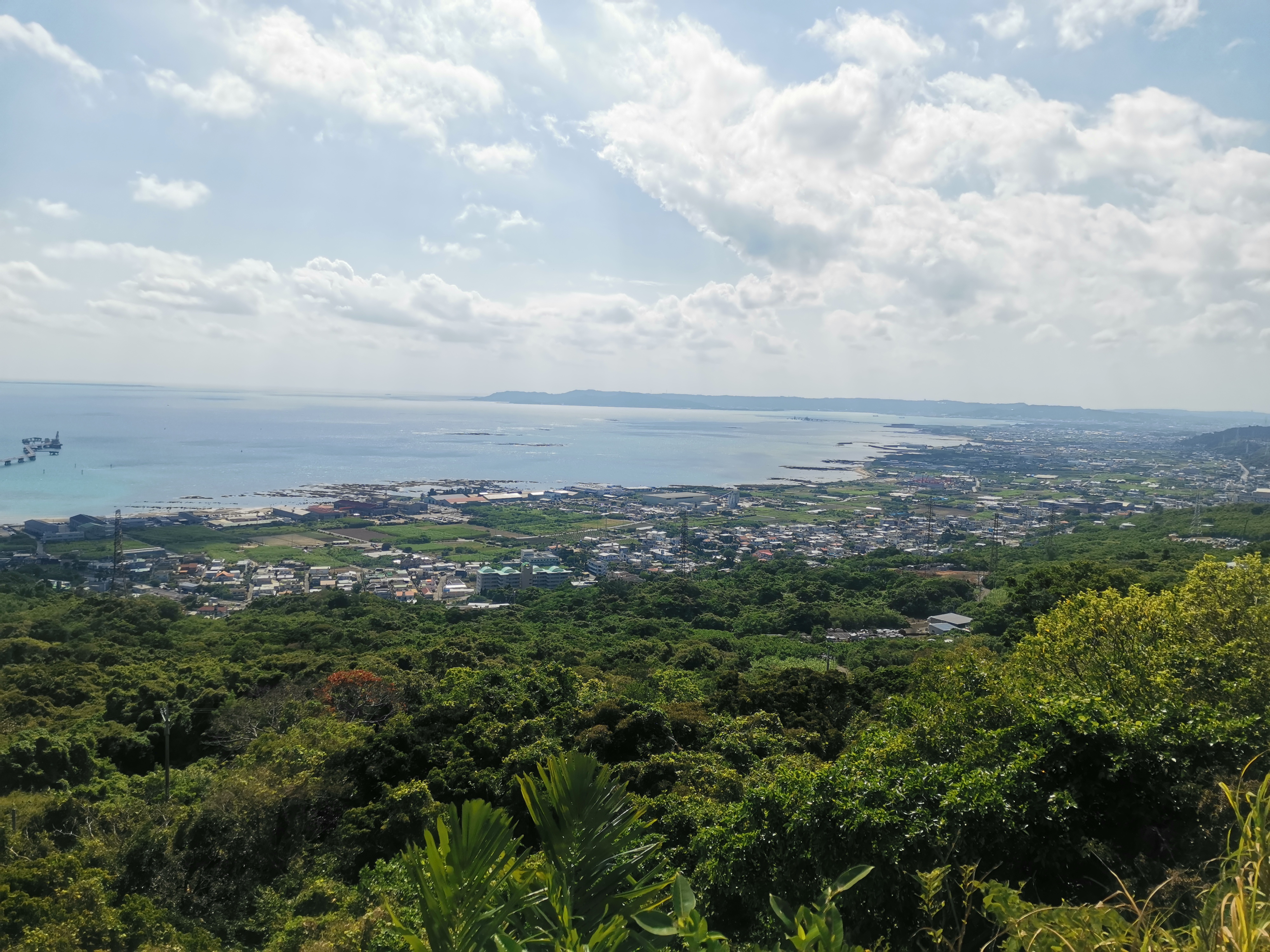
Next came the Tankaku Castle Ruins. Built in the late 1500s, it once stood as a strategic stronghold protecting the Kumano region. Today, only stone walls and foundations remain, but climbing the mossy steps to the top was worth it. From the lookout, we could see the city stretching quietly toward the Pacific Ocean. The ruins themselves were deserted—no tour groups, no noise—just the sound of the wind through the trees. It felt like standing in a forgotten page of history, one that nature has been slowly reclaiming.


Jofuku Park and the Legend of Immortality
Then, Jofuku Park—an unexpected brush with Chinese legend. Xu Fu (or Jofuku in Japanese) was an alchemist sent by China’s first emperor, Qin Shi Huang, to find the elixir of immortality. According to legend, he never went back. Instead, he landed in Shingu, brought new medicines and agricultural knowledge, and became part of Japan’s story.


The park itself has his statue, a small garden, and interpretive signs. It’s quirky and a bit understated, but I loved that this sleepy little city carries such a global story—proof that Shingu has always been connected beyond its borders.
The Brutal Kamikura Climb
And then came the main event: Kamikura Shrine. Calling it “a shrine on a hill” is like calling Mount Fuji “a hill with a view.” To get there, you climb 538 stone steps so steep they look like a wall. Some steps are narrow, others uneven, and all of them unforgiving. My legs screamed within minutes, and halfway up I gave in to crawling. Standing upright felt like tempting fate—I was convinced I’d topple backwards like a cartoon character. And then, in the middle of my sweaty struggle, I spotted… a crab. On the steps. On a mountain. I’m still baffled.


Part of the reason we wanted to tackle the climb was to collect the shrine’s pilgrimage stamp. I had read somewhere (in one of those late-night internet rabbit holes) that you didn’t actually need to climb all the way up to get it—but when we arrived, I couldn’t find any proof. So I cheerfully told my companion, “Well, let’s climb it then!” We huffed and puffed, reached the sacred boulder… and found no stamp. Down we trudged, only to discover that the stamp office was waiting for us quietly near the entrance all along. Classic.
At the top sits Gotobiki-iwa, a massive sacred boulder said to be the landing place of the gods when they descended to earth. For locals, it’s a holy site, the centerpiece of the annual Oto Matsuri fire festival where men in white robes charge down the stone steps at night with torches. Standing before the boulder, I finally understood: it wasn’t just a rock, it was a link between heaven and earth, fearsome and humbling in its simplicity.

Getting down was somehow worse than going up. Looking down at endless rows of slick, uneven stones made my stomach flip. I abandoned dignity and scooted down step by step like a toddler on a playground slide.
Halfway through, a group of Italians appeared — not going down, but powering up the staircase with the energy of marathon runners. We exchanged smiles and a few breathless laughs: they probably thought I looked ridiculous, and I thought they were borderline superhuman. That little human moment — me wobbling down, them charging up — somehow made the terrifying descent feel lighter, like we were all in on the same absurd joke.
Dinner & Hospitality in the Rain
By evening, we returned to our hostel. We shared the space with a friendly group of Taiwanese road-trippers, swapping stories and snacks.
Dinner was pure serendipity: I’d found a restaurant KAIHAMI CARNE
on Facebook, messaged them in desperation, and—miracle of miracles—they replied. In Japan, where reservations are usually phone-only, this was a lifesaver.


The restaurant was cozy, intimate, with only a few tables. At first it looked empty, but within 30 minutes every seat was taken. Those without reservations were politely turned away—proof that in Japan, “empty” restaurants can still be fully booked. The food was worth the effort: perfectly grilled beef, silky pasta, and the warmest of welcomes. Our Yu Guesthouse hostel host even lent us bicycles so we didn’t have to walk in the drizzle. It was one of those small kindnesses that made us feel truly at home.

Wrapping Up Day 4
So no boat cruise today. Instead, we got lost sticks, steep shrines, forgotten castles, and a brush with immortality legends. Rainy, tiring, funny, and unforgettable—that’s pilgrimage life for you.
💴 Kumano Kodo Day 4 Budget
- 🏨 Hostel in Shingu – ~¥4,500 per person
- 🚌 Bus: Yunomine Onsen → Shingu – ¥1,570
- 🍱 Food – ~¥2,000–3,500 (depending on preference)
Estimated Total (per person): ~¥8,070–9,570
👉 A complete 38-day Japan itinerary, including Nakasendo walking, Kumano Kodo hiking, Shimanami Kaido cycling, and a Kyushu road trip.
👉 Guide and tips for collecting Manhole Cards across Japan — click here to read more.
👉 Don’t miss Japan’s postcard-sending experience — read the full guide here.
👉 10 standout food experiences worth seeking out – Japan Foodie Map: My Top 10 Meals Across Japan




Leave a Reply