

17 September 2025 — Silk Road Beginnings in the Far West
Touchdown in a City Between Worlds
We landed in Kashgar (喀什) around 6 p.m., arriving at a small but efficient domestic airport tucked into the far western edge of China. The luggage took a little longer to arrive, but everything else moved with an easy calm — a fitting first glimpse of life in Xinjiang.
Ordinarily, landing at 6 p.m. would mean heading into a dark city. But Xinjiang runs on Beijing time despite being two to three hours behind geographically. This means sunset stretches late into the evening, a detail that never stopped feeling surreal throughout the trip.
Collecting Our Border Pass — A Necessary Rite of Passage
Our journey would take us to Tashkurgan, Atush, and several border regions, so we needed a border pass. Chinese nationals can apply almost anywhere, but foreigners must visit the immigration center en route to the city.
Our taxi driver kindly waited while we entered the packed hall. Large domestic tour groups filled the seats, yet the two officers worked swiftly and efficiently. With just the two of us, the process took only about 20 minutes — an unexpectedly smooth start to an ambitious itinerary.
Checking In Near Carpet Street — A Welcome Burst of Color
Our hostel sat near Carpet Street, one of Kashgar’s most atmospheric neighborhoods. Here, long rows of silk, wool, and cotton carpets hung from storefronts like vibrant flags. They swayed gently in the evening breeze, creating shifting mosaics of color and texture. Some vendors offered international shipping for larger pieces, but we preferred wandering the aisles in search of small souvenirs we could carry.


First Encounter with the Ancient City of Kashgar
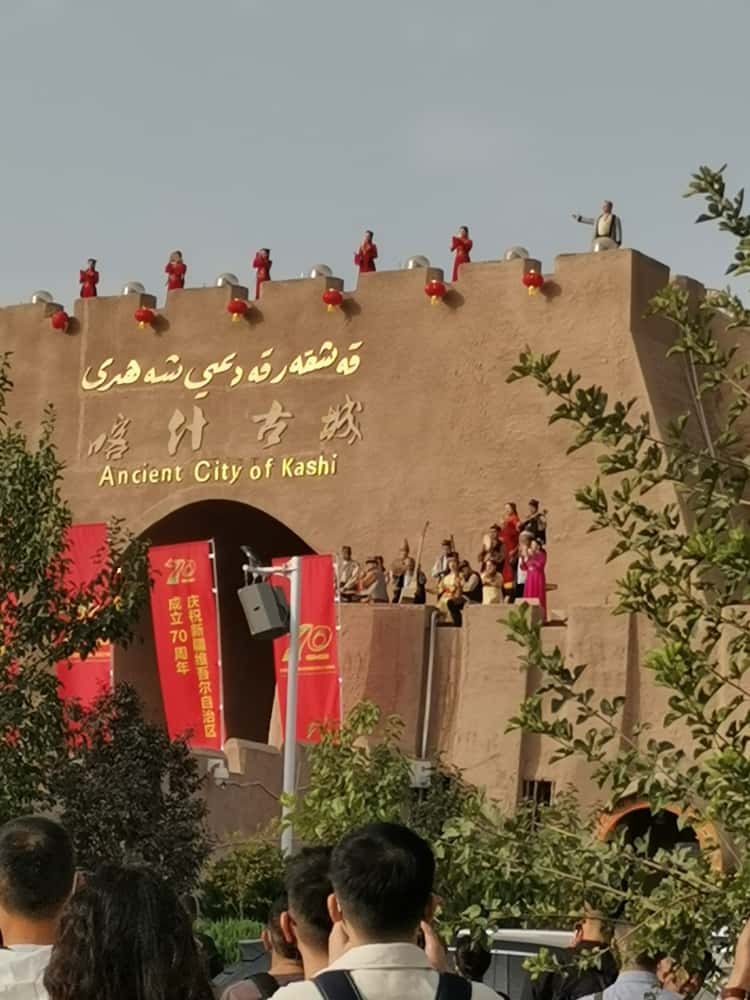
Entering the Ancient City felt like stepping into a living museum. We were surprised by its size — not merely narrow alleys, but a sprawling labyrinth of bazaars and side streets. We passed stalls selling polished jade stones, Uyghur doppa hats, raw Yengisar knives, traditional instruments, and soft cashmere scarves. Every corner seemed to reveal something entirely new, as if the city itself were constantly unfolding.


A Quiet Night at Khan Bazaar Food Street
We eventually reached the Khan Bazaar Food Street, though most vendors had already closed for the night. Hungry but thoroughly happy from our wandering, we grabbed a taxi back to the hostel — the end of our first night in Kashgar.
Exploring the Ancient City in Daylight
18 September 2025 — Food, Folklore, and the Living Culture of Kashgar
A Slow, Sunny Breakfast at Castle Café
Our host recommended Castle Café for breakfast, and it was exactly what we needed before a full day of walking. Nuts, fruits, fresh naan, eggs, honey, and homemade jam — a simple but hearty spread, eaten slowly under warm morning light.


Walking Deeper into the Old Town
We had only explored a fraction of the ancient city the previous night, so we set out again with fresh energy.

Our first stop was the Geng Gong Temple (耿恭祠), dedicated to a Han Dynasty general who defended this region nearly 2,000 years ago. A statue of him on horseback stands proudly on the hilltop, overlooking Kashgar’s ancient rooftops. It felt like a symbolic reminder of the Silk Road’s long history of cultures meeting and intertwining.
Near the temple, we found several abandoned alleys — quiet, dusty, and cinematic, carrying the weight of stories that had long settled in their clay walls.


Id Kah Mosque — The Beating Heart of Kashgar
Next, we reached the iconic Id Kah Mosque, one of the largest mosques in China. Its golden facade, framed by trees and open squares, has anchored Kashgar’s life for centuries. The surrounding area buzzed with activity: families strolling, kids running around, vendors chatting in multiple languages.
Antique Street — A Treasure Trove of Curiosities
The west side of the ancient city brought us to Antique Street, a stretch filled with old coins, vintage objects, and endless photo spots. Whether the goods were genuinely antique hardly mattered; the atmosphere, layered with nostalgia and curiosity, was the real treasure.

A Folk Music Afternoon — Kashgar’s Rhythm
In the afternoon, we stumbled upon a local tea house where musicians played lively Uyghur folk music. The melody drifted into the streets, drawing in passersby. People clapped, sang, danced — nothing staged, just genuine community joy.
We ordered saffron tea and lamb skewers, soaking up the warmth of the scene. It felt like the kind of moment you can’t plan — only stumble into by chance.


A Night of Noodles, Skewers, and Honey Melon
For dinner, we visited a nearby food street. The Xinjiang hand-pulled noodles were unforgettable: springy, fragrant, coated in rich savoury sauce. It became the start of our noodle obsession for the rest of the trip.
Back near our hostel, we tried grilled chicken — juicy, smoky, perfectly seasoned — and finished with a slice of honey melon. At only ¥5, it was impossibly sweet and refreshing. Honey melon stands are everywhere in Kashgar, and missing them would be a genuine loss.
And that wrapped up our second day in Kashgar — a full spectrum of color, flavor, music, and history..
🌏 Travel Tips for Kashgar
- Timezone: Xinjiang follows Beijing time, but daylight hours are 2–3 hours later.
- Border Pass: Foreign visitors must apply in person at the immigration center before visiting border towns like Tashkurgan.
- Shopping: Carpets, jade, knives, and scarves make for unique souvenirs.
- Don’t Miss: Local folk music, saffron tea, Uyghur noodles, and honey melon.




Leave a Reply