

1 January 2026
Tangier felt like a city that needed a gentle introduction. On our first full day in Morocco, we opted for the Tangier City Tour sightseeing bus — not cheap, but better than wandering around aimlessly without understanding the layout of the city.

We were actually the first passengers of the day. As with many things in Morocco, payment was cash only. The bus conductor didn’t have enough change, so they casually waited until the next stop, found some change, and returned it to us later. No stress, no fuss. That small moment already hinted at the city’s laid-back, slightly laissez-faire rhythm — something I found unexpectedly pleasant.
First Loop: Getting a Feel of the City
We decided to stay on the bus for the entire first loop, simply to understand the geography. The full circuit took around one hour, passing through a surprisingly diverse set of neighborhoods and landmarks:
- Port of Tangier – the city’s historic maritime heart
- Place du 9 Avril 1947 – a symbolic square tied to Morocco’s independence movement
- Palais Moulay Hafid (1 & 2) – an early 20th-century palace blending European and Moroccan styles
- Tombeaux Phéniciens (Phoenician Tombs) – remnants of Tangier’s ancient Mediterranean past
- Place Faro
- Sahet El Oumane
- Tanger City Mall – modern Tangier by the sea
- Villa Harris – once home to British writer Walter Harris
- Monopolio
- Marina – the regenerated waterfront area
This loop made one thing very clear: Tangier is not a single-layered city. It is Mediterranean, Atlantic, African, and European all at once — shaped by centuries of trade, colonisation, and movement.


Palais Moulay Hafid & the Art of Looking Up
On the second round, we got off near Palais Moulay Hafid and walked towards the bay. Nearby, we visited one of Tangier’s well-known museums housed in a historic palace (ticket: 20 dirhams, cash only).
Inside, the experience was quietly impressive. Mosaic floors, symmetrical courtyards, and carefully proportioned spaces reflected Morocco’s deep architectural traditions. One thing I quickly learned: in Morocco, you need to tilt your head up often. So much attention is given to ceilings — carved wood, painted patterns, intricate plasterwork — details that reward patience and observation. It was a visual treat, and far more meditative than I expected.


Second Route: Beyond the City Centre
After the museum, we returned to the port to catch the second sightseeing route, which stretches beyond the city core:
- Port of Tangier
- Socco Alto (1 & 2)
- Parc Perdicaris (1 & 2) – wooded hills overlooking the sea
- Cap Spartel (1 & 2) – where two seas meet
- Grottes d’Hercule (Hercules Cave)
- Golf area
We alighted at Grottes d’Hercule, one of Tangier’s most famous attractions. In the end, we decided not to enter. The entrance fee wasn’t cheap, and we had heard that beyond the mythical association with Hercules, the interior itself was fairly underwhelming. Sometimes, imagination does more work than physical space — and we were content to leave it at that.

Cap Spartel: Where Two Seas Meet
Instead, we continued on to Cap Spartel, the legendary meeting point of the Mediterranean Sea and the Atlantic Ocean. The view itself was pleasant rather than spectacular, but something entirely unexpected happened.
Out of nowhere, we spotted two wild boars — an adult and a young one — sprinting right past us. It was brief, surreal, and oddly charming. Probably the wildest thing I’ve ever seen during a city tour, and a reminder that nature still quietly coexists alongside these historic routes.


A Long Ride Back
The return journey tested our patience. Whether we missed the intended bus or it departed earlier than scheduled, we’re still not sure. We waited nearly an hour in the cold, and once the bus finally arrived, it was almost another hour’s drive back into the city.
By the time we returned, the day felt long. We picked up some groceries, had a simple lunch, and retreated back to rest.

Final Thoughts: What Stayed With Me
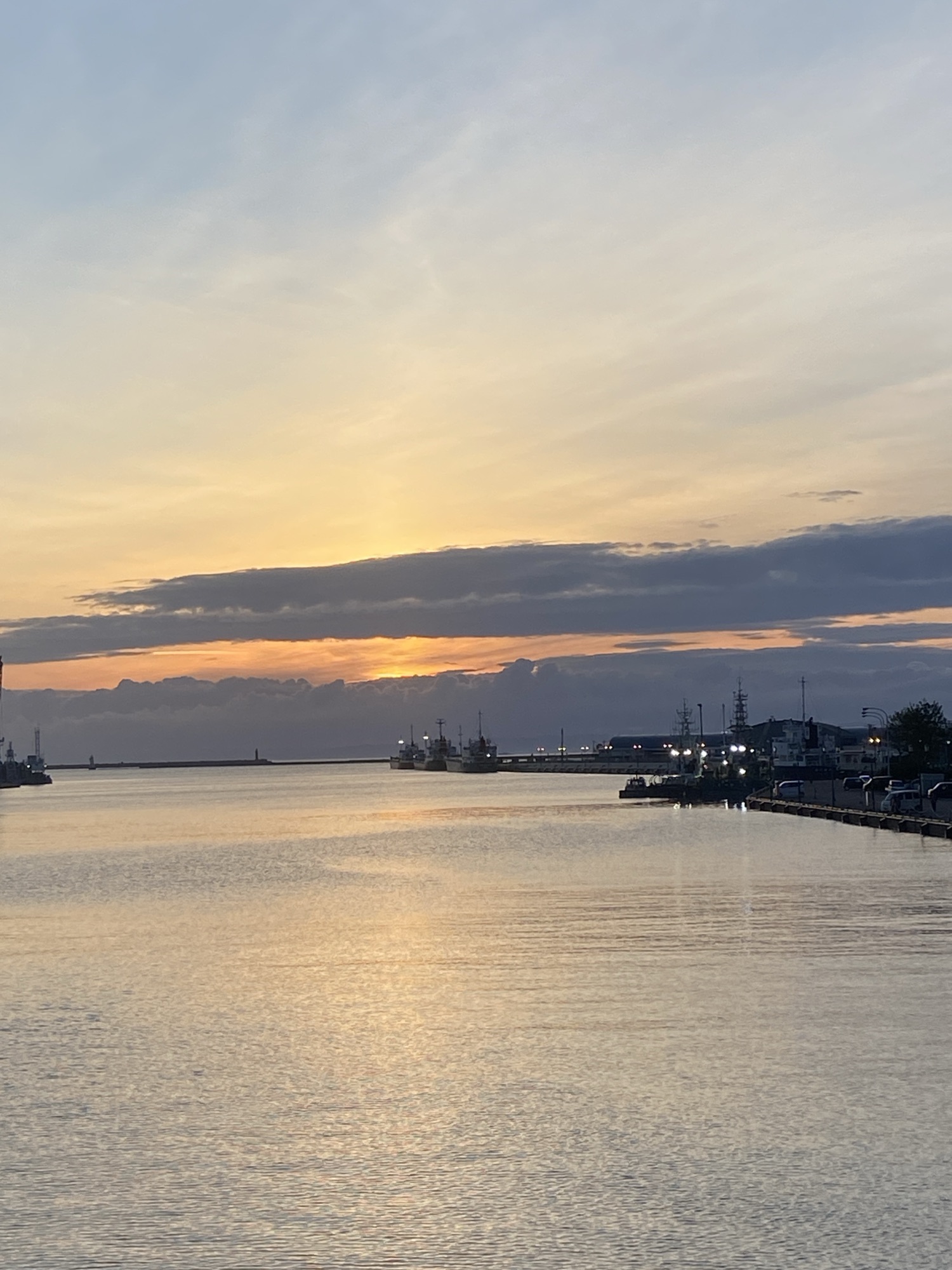
It was an enjoyable day, but honestly, nothing during the city tour truly stood out in terms of dramatic sights or unforgettable attractions. Surprisingly, my favourite moment in Tangier remained the bayside and port walk from the night before, when the city glowed gently during sunset.
That view — the curve of the bay, the lights along the port, the quiet sea breeze — was the only thing that truly called me back.
Morocco would later offer many beautiful cities and landscapes, but when it comes to sea views, Tangier still stands out in my memory. It may not overwhelm, but it lingers — like a city that doesn’t ask for your attention, yet stays with you long after you leave.
Practical Tips for Tangier City Tour
- Payment: Cash only for city tour buses and many attractions
- Change: Don’t expect exact change immediately — flexibility helps
- Timing: Allow extra buffer time for buses, especially in winter
- Attractions: Museums and caves may have higher fees than expected
- Best Moments: Sunset walks along Tangier Bay often outshine major sights



Leave a Reply