
31 Dec 2025
On the final day of 2025, while the rest of the world was preparing for midnight champagne, we found ourselves winding through the rugged landscapes of Andalusia. We had originally planned to navigate the region via our usual DIY bus route, but a last-minute discovery changed our trajectory.
We found a local tour departing from Málaga that was nearly the same price as the public bus, but with a much richer itinerary: a guided walk through Ronda and a stop at a place I had quite literally never heard of until the night before: Setenil de las Bodegas.


A Town Built Into the Earth
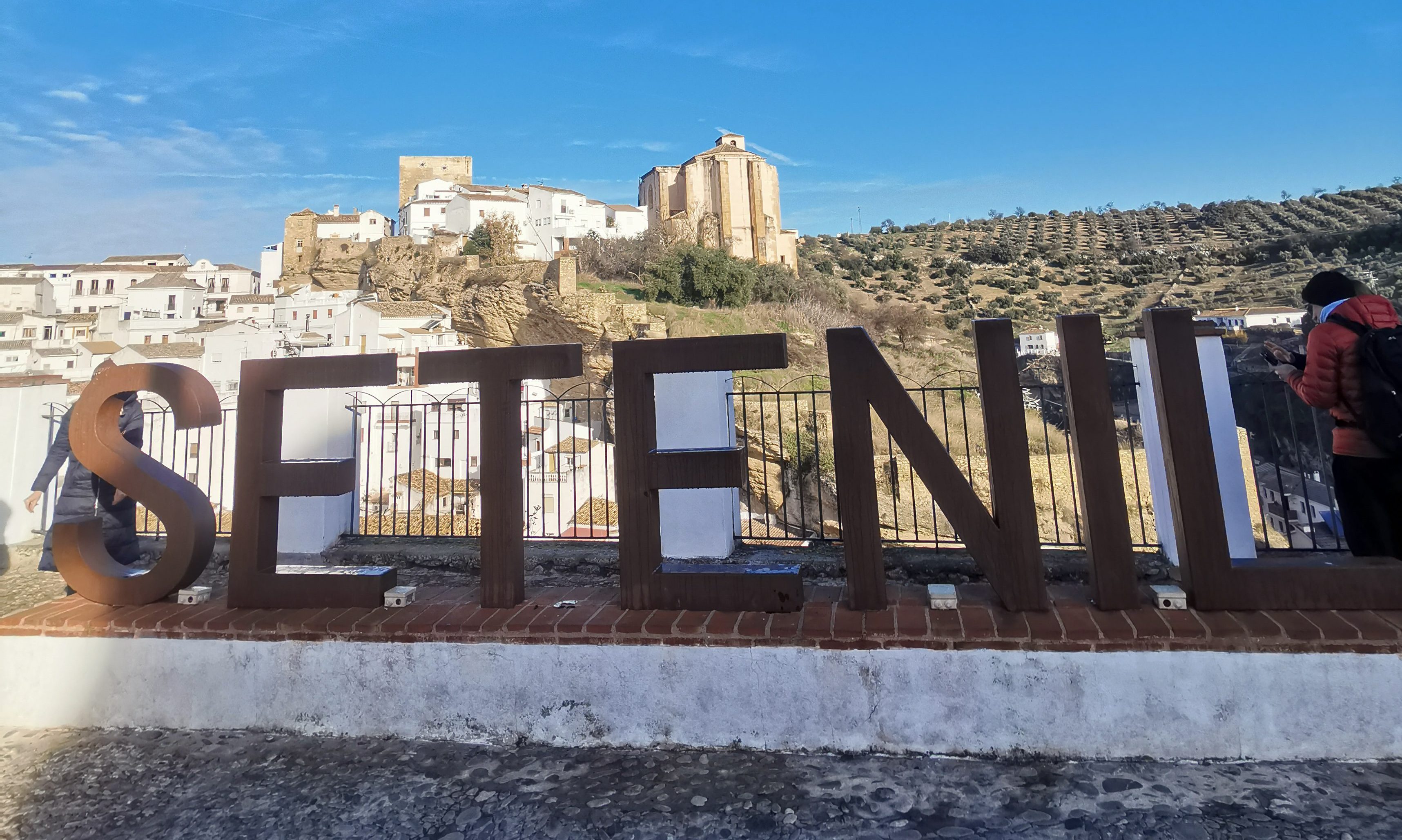
In the heart of Andalusia’s Cádiz province, Setenil de las Bodegas offers a perspective on travel that is quite literally grounded in the earth. While other Pueblos Blancos (White Villages) like Olvera or Zahara de la Sierra perch atop hills to touch the sky, Setenil was built into the deep basalt narrows of the Trejo River gorge.
Historical Context: Why Live Under a Rock?
The choice to build into the cliffs wasn’t just aesthetic; it was strategic. These “troglodyte” dwellings (houses built into natural caves) date back to the Moorish era and even earlier. By using the existing rock as a roof and back wall, the settlers gained:
- Thermal Regulation: The thick stone keeps houses cool in the brutal 40°C Andalusian summers and warm during the crisp winters.
- Defense: The gorge provided a natural fortress. In fact, Setenil was one of the last Muslim strongholds to fall to the Christians in 1484, resisting seven different sieges.
The Journey In: A Lesson in Pace
Because Setenil is a labyrinth of ancient, narrow cobbles, our large tour bus (which picked us up in Málaga and made a second stop in Teatinos) had to park on the outskirts.
Wanderer’s Tip: The walk from the bus parking to the town center is about 20 minutes. If you are short on time or have mobility issues, look for the small tourist train (Trenecito) that shuttles between the parking area and the main square. It usually costs a few Euros and saves your legs for the actual sightseeing!
We were in a bit of a rush—a side effect of the “fixed time” tour life—but the walk gave us our first glimpse of the town’s unique skyline. We gathered at the Plaza de Andalucía, where our guide peeled back the layers of the town’s history before letting us loose.


The Interplay of Light and Shadow
The character of the village is defined by two iconic streets that mirror the duality of the gorge:
1. Calle Cuevas del Sol (Caves of the Sun)
This is the “celebrity” street of Setenil. Here, the white facades bask in the Andalusian glow, reflecting the warmth of the Mediterranean sun against the cool stone. It’s lined with cafes and bars where, if you have more than our two hours, you should absolutely sit for a tapa.
2. Calle Cuevas de la Sombra (Caves of the Shadow)
Step a few meters away, and you enter a subterranean secret. Here, the rock ceiling stretches completely across the street, blocking out the sky entirely. Even at midday, the air is cool and the light is soft. You don’t just see the architecture here; you feel the weight and the silence of the cliffs surrounding you.


The View from Above: Mirador del Carmen
We decided to prioritize the views first, trekking up to the Mirador del Carmen. From this vantage point, you can see the Church of Nuestra Señora de la Encarnación, a Mudéjar and Gothic masterpiece perched atop the highest point.
Standing there, looking at the contrast between the white-washed houses and the jagged brown stone, I realized that Setenil is a masterclass in human ingenuity. These people didn’t try to conquer nature; they lived within its folds.
The Reality of the “Iconic” Shot
I’ll be honest: because we arrived on a tour bus alongside several other groups, the narrow streets were swarmed. Getting that “empty street” photo of the overhanging rocks is nearly impossible during the midday rush. If you want the silence of the cliffs, I’d recommend staying overnight or arriving via car at 8:00 AM before the tour buses roll in.

Reflections on a Whistle-Stop Visit
Two hours wasn’t enough to visit the Castillo de Setenil (the ruins of the old Moorish castle) or to sit for a leisurely breakfast of molletes with olive oil. We were back on the bus before the clock struck noon, heading toward the cliffs of Ronda.
Yet, Setenil stayed with me. It’s a reminder that even in a world of steel and glass, there are still places where the earth is the ceiling, and history is written in the shadows of the stone.
Transport & Practical Tips
- Booking: If you’re in Málaga, check platforms like Civitatis or Viator for “Ronda & Setenil” day tours, which is excellent value considering it includes a guide and seamless transport.
- The “Bodegas” in the name: While the name suggests “Wineries,” many of the ancient caves that once stored wine were converted into homes or shops after the phylloxera plague destroyed the local vineyards in the 19th century. Look for local olive oil instead—it’s world-class!


Leave a Reply