
12 Nov, Wed
- ☕ A Slow Morning in Chatan
- 🍞 Café Comfort: Rainy Day Rituals
- 🇺🇸 American Village: A Different Side of Japan
- 🚫 An Accidental Military Encounter
- 🏺 Back to Yomitan: Pottery & Tradition
- 🍶 Last Night in Yomitan: A Quiet Ending
- ✈️ A Small Relief Before the Next Island
The weather finally eased—slightly.
After days of relentless rain sweeping across Okinawa, today felt like a small victory. It still drizzled on and off, but compared to the earlier downpours—and news of typhoons affecting the region—it was enough to give us hope.
In fact, the weather had been so severe that we received an email warning that our upcoming flight from Naha to Miyakojima could be cancelled. The airline even offered refunds or rerouting options.
But skipping Miyakojima? That would unravel the entire rhythm of our island-hopping plan, especially since we were meant to continue onward to Ishigaki.
So for now, we did the only thing you can do against nature—wait.
At least travel insurance gave us some peace of mind.
☕ A Slow Morning in Chatan
The previous day had been completely washed out, so instead of heading to Chatan, we explored closer to Yomitan.
This time, we returned with purpose.
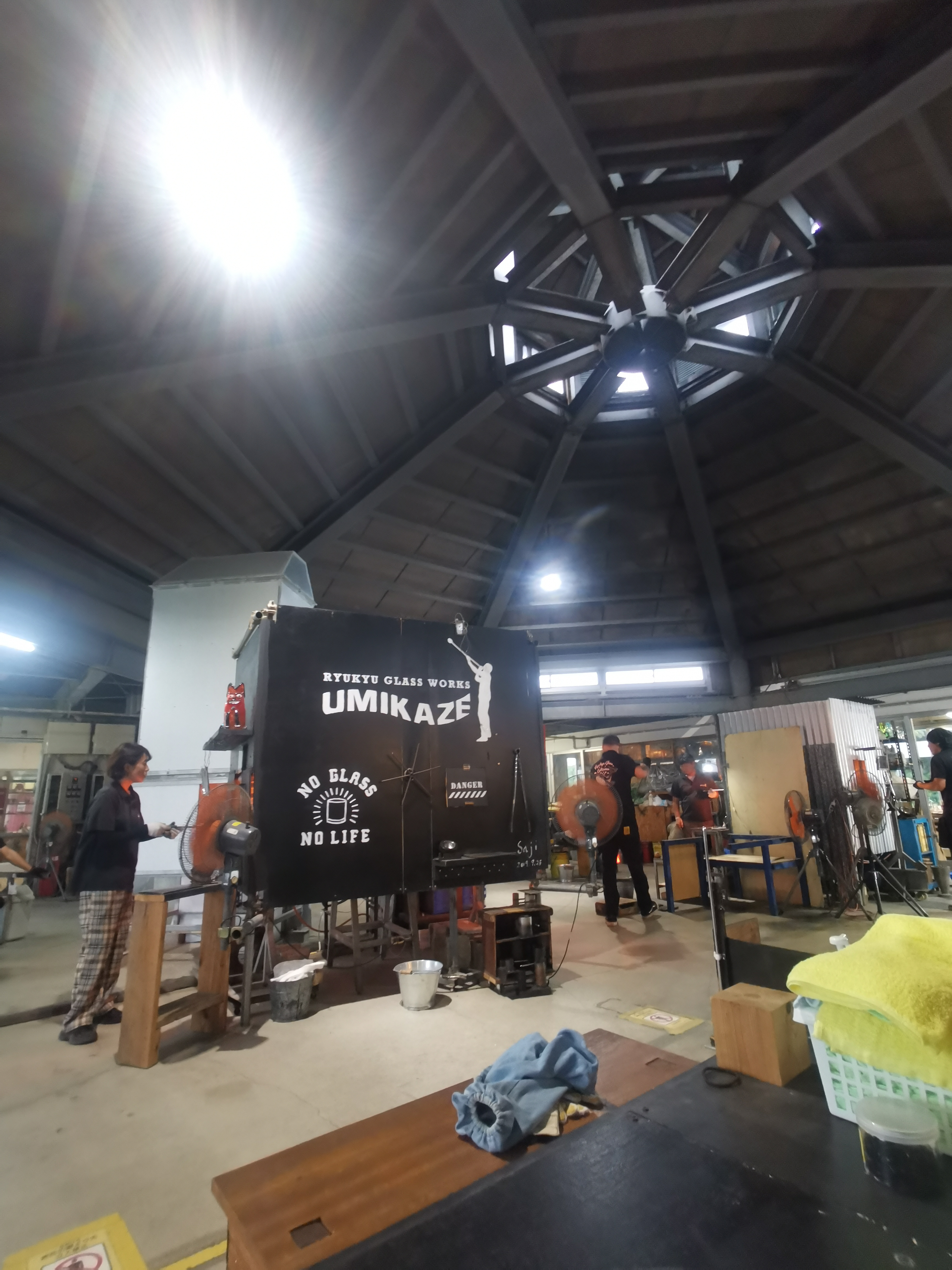
We started the morning early, making a quick stop to collect the glass piece we had made the day before in Yomitan—a small but meaningful souvenir, shaped by hand and now ready to travel home with us. It felt like the perfect way to begin the day, picking up something tangible from the experience before heading out toward Chatan.

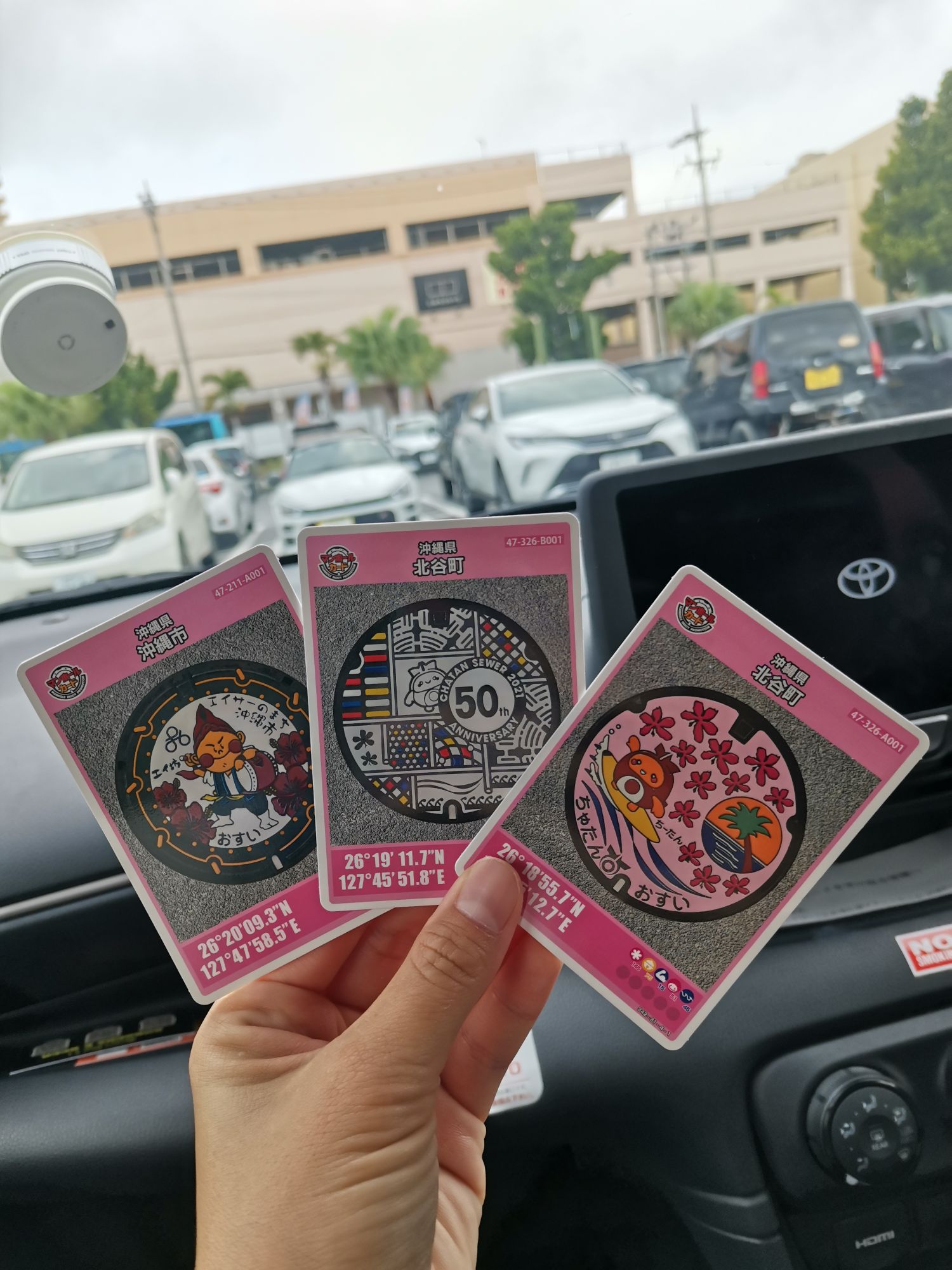
On our first night in Yomitan, we had briefly passed through Chatan—but most offices were already closed. This time, we finally collected our manhole cards from the local water and tourism offices, a uniquely Japanese collector’s culture that turns even infrastructure into something worth documenting.
It’s small, but deeply reflective of Japan’s attention to civic pride and design—even sewer covers are treated as local storytelling canvases.

🍞 Café Comfort: Rainy Day Rituals
We made our way to Good Day Coffee, drawn in by reviews praising their toast—and it absolutely delivered.
Simple, warm, and satisfying.
Paired with a hot latte, it felt like the perfect antidote to grey skies.
Outside, the drizzle had already started again, turning the morning into something slower, quieter—almost cinematic.
Not far away, we grabbed a matcha latte from a nearby café.
It was technically within walking distance, but Okinawa rain has a way of convincing you otherwise—so we did a quick drive-by stop instead.


American Village: A Different Side of Japan
Next stop: American Village
At first glance, it feels almost surreal. Bright colors, Ferris wheels, palm-lined streets—it looks more like a slice of California than Japan.
But behind this aesthetic lies a deeper, more complex history.
After World War II, Okinawa became a major hub for the United States military presence in Japan. Even today, a significant portion of US military bases in Japan are concentrated on this relatively small island.
American Village emerged in the post-war era as a commercial and leisure zone catering to both locals and US service members stationed nearby.
That’s why you’ll find:
- Vintage American military memorabilia
- Army-style clothing and surplus shops
- A blend of Okinawan and Western pop culture
It’s not just quirky—it’s a living reflection of Okinawa’s layered identity, shaped by occupation, adaptation, and tourism.

An Accidental Military Encounter
One unexpected moment really summed up this unique coexistence.
I had Googled a restaurant and confidently drove toward it… only to find myself at the entrance of what looked like a military resort compound.
Turns out, it was likely part of a US military-operated recreation or accommodation facility—spaces typically reserved for service members and their families.
An army personnel at the entrance politely asked us to turn around.
No harm, no foul—just one of those travel moments where curiosity meets reality.
But it also reinforced something fascinating:
In Okinawa, the boundary between civilian life and military presence can sometimes feel surprisingly close.
Back to Yomitan: Pottery & Tradition
Later, we returned to Yomitan Pottery Village.
Yomitan is one of Okinawa’s most important pottery hubs, deeply rooted in the island’s yachimun (traditional ceramics) culture.
Historically, Okinawan pottery evolved through trade with China, Korea, and Southeast Asia during the Ryukyu Kingdom era. This blending of influences created a distinct style—earthy, functional, yet expressive.
We browsed slowly this time.
With luggage limits in mind, we held back… mostly.
But we couldn’t resist picking up a pair of shisa—the iconic lion-dog guardians believed to ward off evil spirits.
A small piece of Okinawa to bring home.


🍶 Last Night in Yomitan: A Quiet Ending
For our final night, we found a cozy izakaya: Inakamono
No reservation needed.
Dual-language menu.
A relaxed, welcoming atmosphere.
We ended up seated next to a Taiwanese group, adding to that familiar travel feeling—strangers sharing space, food, and a moment in time.
The food was excellent, comforting in that unpretentious izakaya way.
After dinner, we took a short walk back to our accommodation, stopping by a nearby grocery store along the way.
And for once—no rain.


✈️ A Small Relief Before the Next Island
Back at our stay, we checked our flight status again.
Still on schedule.
A huge relief.
Tomorrow, we leave for Miyakojima—
hoping the weather holds,
and the journey continues.
🚗 Transport & Travel Tips
Getting from Yomitan to Chatan
- 🚗 By car: ~25–35 minutes (best option, especially in rain)
- 🚌 By bus: Possible but slower; requires transfers
Parking
- American Village has multiple free parking lots
Manhole Cards
- Usually available at local municipal offices or tourist centers
- Check opening hours (typically weekdays, daytime only)
American Village Tip
- Visit in the evening for lights and atmosphere
- Great spot for sunset when weather permits
Military Zones
- If you accidentally enter restricted areas, just turn back.




Leave a Reply