
Beijing — 12 October 2025
Morning at the Temple of Heaven (天坛) — The Royal Temple of Heaven
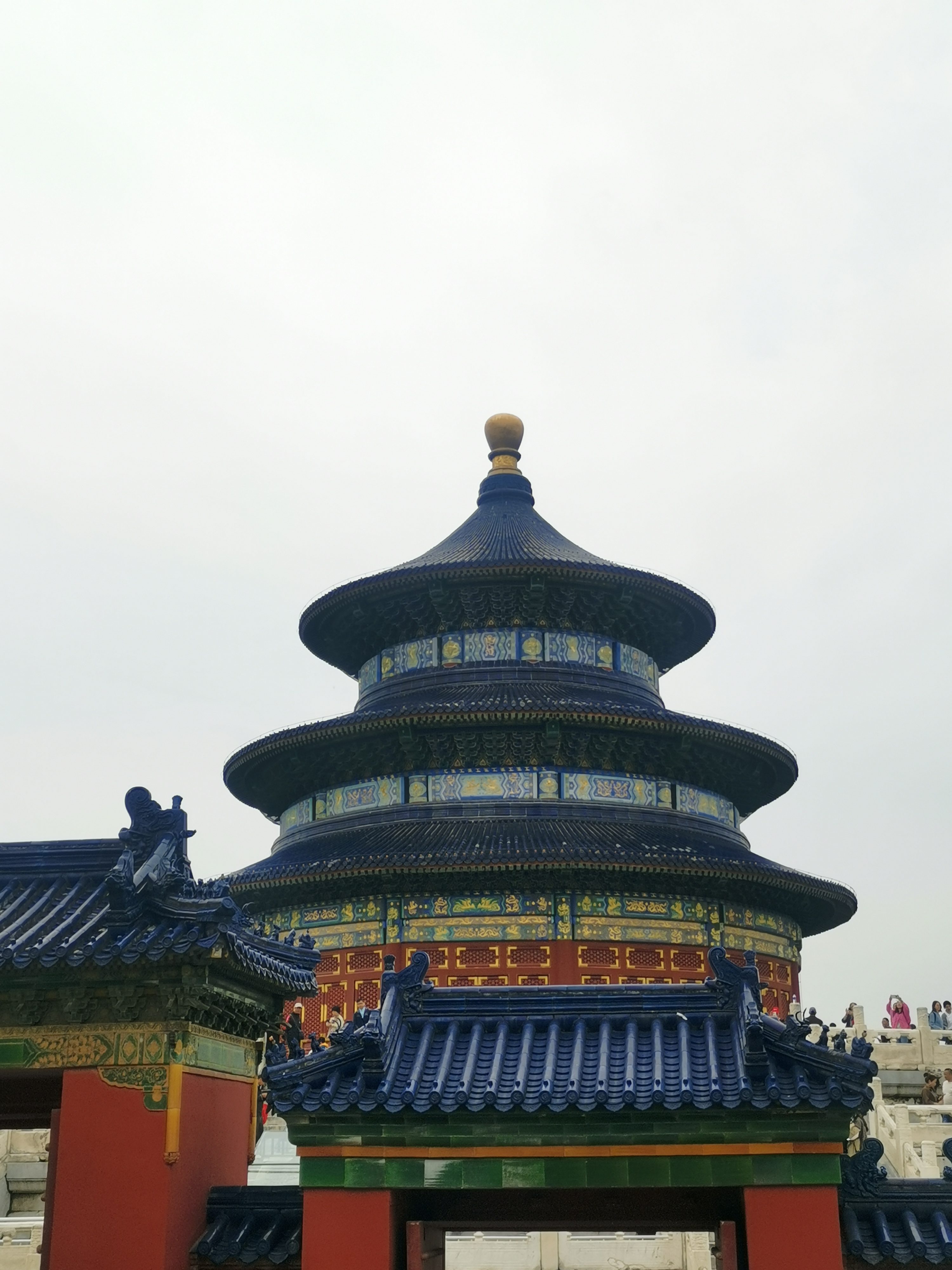
Our morning began at the magnificent Temple of Heaven (天坛 / Tiāntán), one of the most important ceremonial sites of imperial China.
Constructed in 1420 during the reign of the Yongle Emperor of the Ming dynasty, the complex served as the sacred ground where emperors performed annual ceremonies to pray for good harvests and favourable weather. In ancient China, the emperor was believed to be the “Son of Heaven” (天子) — the mediator between the heavens and the earthly world. If harvests failed, it was believed that heaven had withdrawn its favour.
Walking through the vast park surrounding the temple, the cold morning air was filled with the hum of visitors and tour groups. Even with the crowds, the space still felt grand and peaceful.
The highlight, of course, is the iconic Hall of Prayer for Good Harvests, the striking triple-roofed circular structure that has become one of Beijing’s most recognisable landmarks.
The architectural symbolism here is fascinating:
- Circular structures symbolise heaven
- Square bases represent earth
- The deep blue tiles reflect the sky
Unlike most imperial buildings in China that sit on square foundations, the Temple of Heaven deliberately incorporates circular forms to emphasise its cosmic connection.
Despite the crowds, there was something quite beautiful about simply walking through the expansive grounds — passing ancient cypress trees, open courtyards, and the occasional sculptures scattered throughout the complex.
It felt like wandering through a sacred landscape designed to mirror the harmony between heaven, earth, and humanity.


Ticket Tips
- Entrance ticket: about 34 RMB (peak season)
- The through-ticket covering all major halls is recommended.
- Arrive early morning to avoid large tour groups.
Transport
- Subway: Line 5 — Tiantan Dongmen Station (天坛东门站)
- Exit A leads directly toward the East Gate entrance.
Discovering the Beijing Ancient Architecture Museum
After exploring the Temple of Heaven grounds, we made our way to the lesser-known but fascinating Beijing Ancient Architecture Museum.
Located inside the historic Xiannongtan (Altar of Agriculture) complex, the museum is dedicated to the history and craftsmanship of traditional Chinese architecture — something that becomes especially meaningful after seeing Beijing’s temples and palaces.
The museum is particularly famous for its extraordinary “ceiling caisson” (藻井 / Zǎojǐng).
A caisson ceiling is a decorative recessed ceiling structure often found in important temples, palaces, and ceremonial halls in ancient China. These elaborate wooden constructions resemble a three-dimensional geometric dome, layered with intricate wooden brackets, carvings, and painted motifs.
Seeing one up close reveals the sheer sophistication of ancient Chinese carpentry — especially considering that traditional buildings were constructed without nails, relying instead on the famous dougong (斗拱) bracket system.
It’s the sort of museum that architecture lovers would absolutely appreciate, and it provides context for many of the structures you see around Beijing.


Afternoon Walk Back to Qianmen
Later in the afternoon we returned to the historic commercial district around Qianmen Street.
Qianmen has long been one of Beijing’s most famous streets, located just south of Tiananmen Square. During the Qing dynasty, this area was already a bustling marketplace serving merchants, travellers, and imperial officials.
Today it has been restored into a pedestrian-friendly historical street filled with shops, restaurants, and snack stalls.
And yes — we ended up having Peking duck again.
In Beijing, eating Peking duck once never quite feels like enough.
Watching the chef expertly slice the crispy duck skin and tender meat is always part of the experience. The dish itself dates back to the Imperial kitchens of the Ming dynasty, where it was originally prepared for the royal court before becoming one of Beijing’s most famous culinary exports.
To finish the meal, we grabbed matcha ice cream, which somehow felt like the perfect sweet break after a heavy meal.


Night Walk Around Shichahai and Nanluoguxiang
In the evening we headed north toward the scenic lakes of Shichahai Scenic Area.
Shichahai is made up of three lakes — Qianhai, Houhai, and Xihai — and has long been one of the most atmospheric parts of old Beijing. During the Yuan dynasty, this area formed part of the Grand Canal system and became a hub of commerce and aristocratic residences.
Today, it’s lined with bars, restaurants, and lively nightlife spots.
From there we wandered through the famous hutong street Nanluoguxiang.
Nanluoguxiang is one of Beijing’s best preserved hutong lanes, dating back over 700 years to the Yuan dynasty. Traditionally, hutongs were narrow alleyways formed by rows of siheyuan courtyard houses, where generations of families lived side by side.
However, the vibe that evening was a bit unexpected.
For some reason there weren’t that many people around, and the nightlife area felt a little noisy and chaotic. There were quite a few clubs and bars blasting music, which frankly made parts of it feel less charming than we had expected.
The other side of the street, however, had some lovely little shops and boutiques.
One of the things we bought was a 香囊 (Xiāngnáng) — a traditional Chinese scented sachet.
Historically, these small embroidered pouches were filled with fragrant herbs and worn to ward off illness or bad spirits. They were especially popular during festivals like the Dragon Boat Festival, but today they’re also sold as cultural souvenirs.
Holding one felt like carrying a tiny piece of Chinese tradition home.


Reflections on the Day
Looking back, the day felt like a contrast between imperial ritual and everyday urban life.
In the morning we stood where emperors once prayed for the fate of an entire empire. By evening we were wandering through lively hutongs filled with music, shops, and curious little finds.
Beijing has a way of doing that — shifting effortlessly between 5 centuries of history and the pulse of a modern city.
Even on a cold and crowded day, there’s always something fascinating around the next corner.




Leave a Reply