
3 November 2025
Why We Flew via Taiwan Instead of Direct to Okinawa
Flights from Malaysia to Okinawa are surprisingly limited—and often expensive. Instead of forcing a direct route, we took a more flexible (and honestly, smarter) approach: flying via Taipei.
With Taiwan just under two hours from Naha, it has long served as a regional gateway to Okinawa. Historically, the Ryukyu Kingdom maintained tributary and trade relationships with China and Southeast Asia, including areas close to Taiwan—so even today, the connection feels natural, not just logistical.
By splitting the journey:
- Malaysia → Taiwan
- Taiwan → Okinawa
We found more flight options, better timing flexibility, and overall lower cost compared to direct routes.
It also gave us a chance to enjoy a short Taiwan stopover before heading into Japan’s subtropical island culture.
✈️ Flight Details
- Route: Taipei (TPE) → Okinawa (OKA)
- Time: 14:45 – 17:05 (~1 hr 20 min flight)
- Tip: This is one of the busiest regional leisure routes—book early for better fares, especially around autumn foliage season in Japan.
☕ A Slow Morning Before Island-Hopping Begins
Before heading to the airport, we eased into the day with a simple but comforting breakfast—toast and coffee at a quiet café in Taipei. It felt like a soft transition between two very different travel moods:
- Taiwan’s urban café culture
- Okinawa’s laid-back island rhythm
That contrast becomes more apparent the moment you land.


🚗 Our Okinawa Road Trip Plan (Main Island Loop)
We designed a clockwise driving route across Okinawa’s main island:
Naha → Ginowan → Nago → Nakijin → Yanbaru → Yomitan → Chatan → Naha
Each stop reflects a different side of Okinawa:
- Coastal cityscapes
- UNESCO-listed castle ruins
- Dense subtropical forests in the north (Yanbaru)
- American-influenced seaside towns like Chatan
More on that in the upcoming posts—but this first evening set the tone.
🌆 First Impressions of Naha: A City That Feels… Different
We landed in Naha in the late afternoon, and by the time we reached our hotel, it was already past 6pm.
🏨 Stay
- Smile Hotel Naha City Resort
- Practical, comfortable, and well-located for walking
But what struck me immediately wasn’t the city—it was the feeling.
Despite being a capital city, Naha carries an unexpectedly nostalgic atmosphere. Maybe it’s personal, but even the hotel had electronics and control panels that felt like something from decades ago—buttons and systems I hadn’t seen in years.
It gave the space a kind of quiet charm, like Okinawa exists slightly outside the fast-forward pace of mainland Japan.


🍢 A Simple Yakitori Dinner That Became a Highlight
Our first meal in Okinawa was unplanned—but memorable:
There’s something about starting a trip with grilled skewers and a casual setting that grounds you immediately. No overthinking, no chasing “top-rated spots”—just good food, smoke in the air, and that comforting rhythm of a local dinner.
Yakitori became a recurring theme throughout our journey, but this first night set the standard.


🛍️ Kokusai Dori: The Heartbeat of Naha
After dinner, we took a slow walk to Kokusai Dori.
Stretching about 2 kilometers, this lively street has been the commercial heart of Naha since the post-war reconstruction era. After the devastation of Battle of Okinawa, this area was rebuilt and nicknamed “Miracle Mile”—a symbol of Okinawa’s resilience and revival.
Even in November (off-peak season), it felt vibrant—but not overwhelming. There’s a balance here that’s hard to find in major Japanese cities:
- Lively but breathable
- Touristy but still local

🍦 Blue Seal Ice Cream: Okinawa’s Local Icon
We made a quick stop for dessert at Blue Seal.
Originally established during the American occupation of Okinawa, Blue Seal reflects the island’s unique cultural blend—Japanese, American, and Ryukyuan influences all in one.
What we tried:
- Sea salt ice cream
- Sweet potato
At the time, I didn’t realise how iconic it was—but after seeing it everywhere across Okinawa, it made perfect sense. It’s one of those small, consistent joys of the trip.

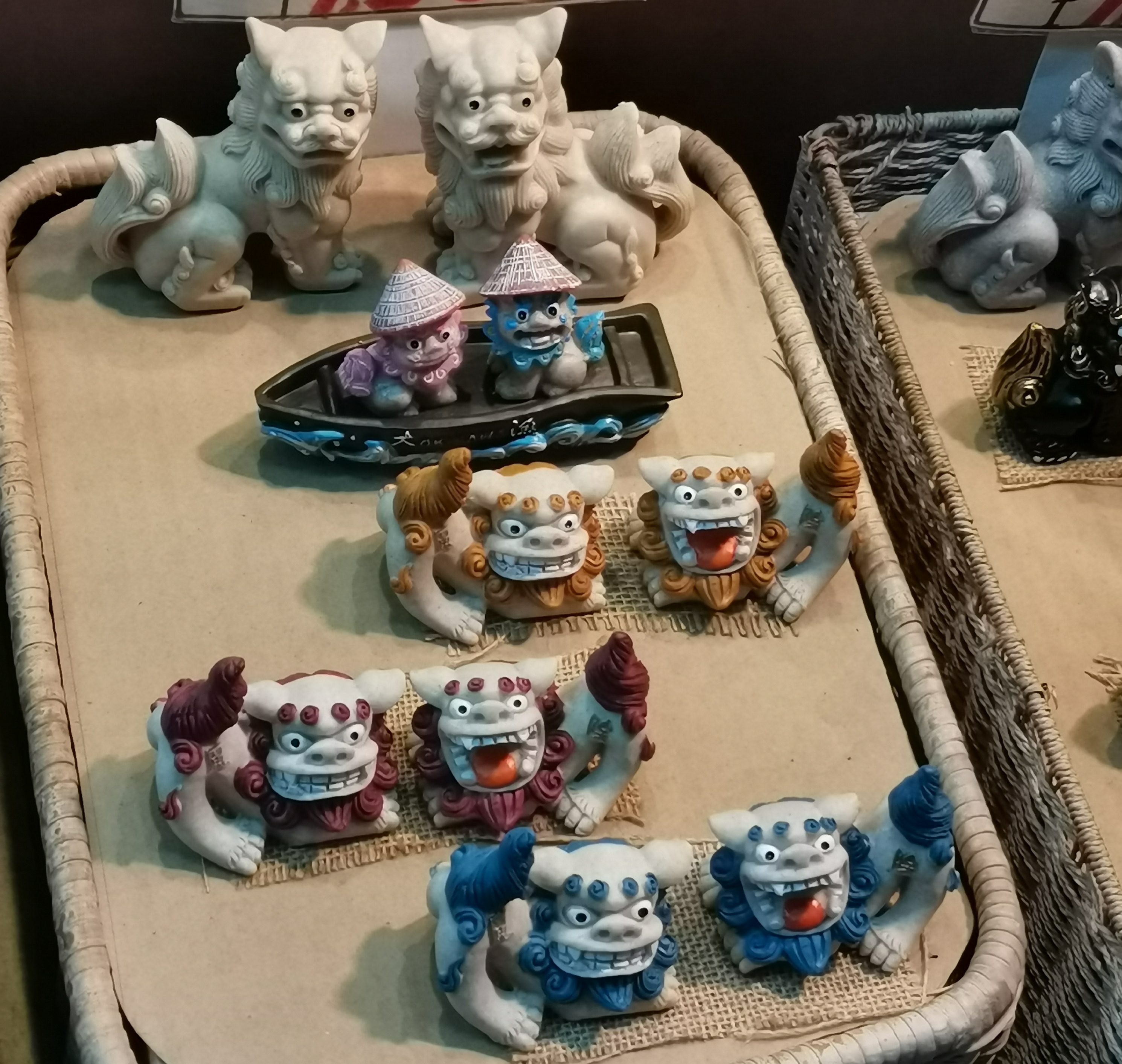
🦁 The Shisa: Okinawa’s Guardian Spirits
One of the most charming discoveries that night was spotting these little lion-dog statues everywhere.
They’re called Shisa.
Rooted in Chinese guardian lion traditions but uniquely adapted in Okinawa, Shisa are believed to ward off evil spirits and protect homes.
Traditionally, they come in pairs:
- Male (open mouth): drives away evil
- Female (closed mouth): keeps good energy in
You’ll find them:
- On rooftops
- At entrances
- In souvenir shops across Kokusai Dori
They’re not just decorations—they’re part of everyday spiritual protection in Okinawan culture. And naturally, they’ve become one of the most popular souvenirs to bring home.

💸 Day 1 Expenses for 2ppl (Approx.)
- Yakitori dinner: ~¥3,070
- Drinks (Lawson + others): ~¥825
- Ice cream: ¥700
- Bus (airport → hotel): ¥480
👉 Total: ~¥5,000 for the evening
🚌 Transport Tips (Arrival Day)
- From Naha Airport, you can:
- Take a bus (cheaper, slower)
- Or the Yui Rail monorail (faster if near stations)
💡 Tip:
If arriving after 5pm, buses are still reliable, but check routes in advance—some hotel areas are easier accessed by taxi or monorail.
🌙 Ending the Day
After a simple stroll, dessert, and a quiet walk back, we returned to the hotel early.
There’s something satisfying about not overpacking the first day—just settling in, observing, and letting the destination reveal itself slowly.
Tomorrow, the real journey begins: Okinawa by road.





Leave a Reply