
12 Dec 2025
While Madrid pulses with a modern, frantic energy, a mere 80 kilometers to the northwest lies a city that feels carved from the very bones of history. On a crisp December 12th, we traded the metro’s hum for the open road to explore the Roman shadows and Gothic spires of Segovia.
The Morning Hustle: Moncloa to Segovia

Our journey began at Moncloa Station. We caught the Avanza Bus, which is remarkably convenient—the trip takes about 1 hour and 20 minutes and costs around €10 for a return ticket.
The buses are frequent, but a word of advice: time yourself well. You don’t want to be left standing around waiting for the next slot. We heard Segovia is a magnet for tourists, so our goal was to arrive early, beating the crowds to find a calm, peaceful view of the city’s most famous icon.
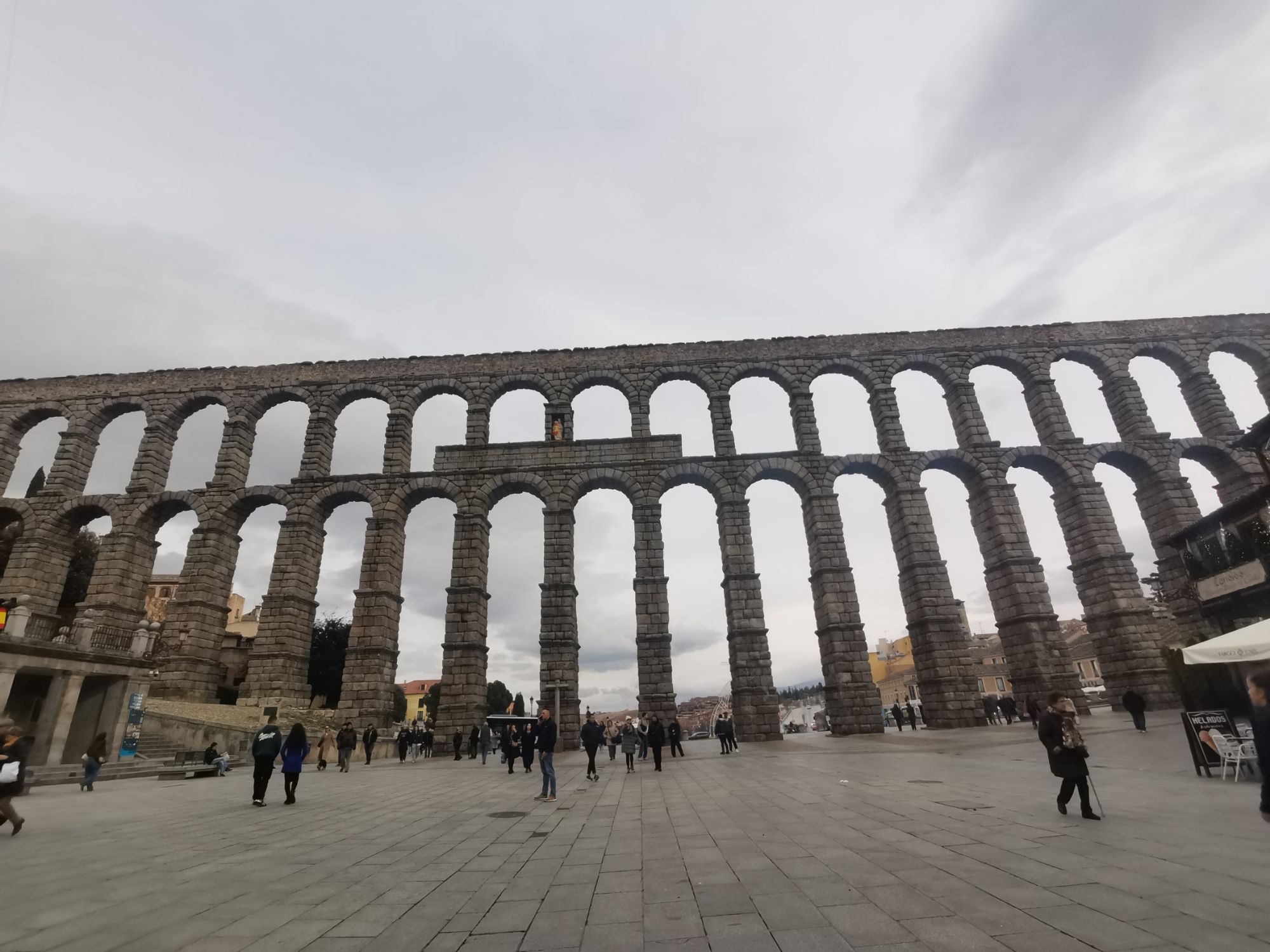
The Silent Giant: The Roman Aqueduct

After alighting at the bus station, it was a short 10-minute walk to the main square. Most things were still closed, save for one or two sleepy bakery cafes along the way. Then, we saw it: the Aqueduct of Segovia.

It was exactly as beautiful as we imagined. Standing there before 9:00 AM meant we could enjoy the view in total silence.

Historical Context: Built around the 1st century AD, this engineering marvel is a UNESCO World Heritage site and one of the best-preserved elevated Roman aqueducts in the world. It was constructed with roughly 25,000 granite blocks held together by nothing but gravity—no mortar at all. It once carried water from the Frío River 17km away. However, unlike many ancient structures that feel frozen in time, it’s important to note that the aqueduct is no longer in use today. It ceased its functional life in the mid-19th century to help preserve the stones from further erosion, standing now as a pure monument to Roman ambition.

Since the tourism office wasn’t open yet, we climbed the stone staircase to the left, taking pictures from above and walking along the ancient streets.
A “Weird” Sense of Scale: The Castilian Plains

Rather than getting lost in the inner city immediately, we chose to walk along the City Walls. This offered us a magnificent view of the natural plains outside the walls.
Coming from a home in the tropical forest and deep valleys, seeing these vast, green, flat grounds was a strange sensation. I realized then that while Portugal (which we had recently visited) has many plains, there was something about the sheer scale of the Spanish greenery here that felt different. It isn’t necessarily a “peculiar” geographical feature to the locals, but to me, it felt grand, impressive, and deeply peaceful.
The Fairytale Alcázar

After a bit of an uphill trek, we reached the Alcázar de Segovia (sometimes referred to in the area by its older roots near Sepúlveda).
Background: This fortress is the stuff of legends—literally. It’s said to be one of the inspirations for Disney’s Cinderella Castle. Originally a Roman fort, it served as a royal palace, a state prison, and a military academy. It was the favorite residence of the Spanish monarchs of the House of Trastámara.
It was still very early when we arrived at the castle grounds, so the crowds were thin. We took photos of the striking “ship’s prow” silhouette, but decided not to go inside, preferring to soak in the exterior atmosphere.
Rain and the Return
We eventually looped back through the inner streets to the main square. By noon, the city was waking up; restaurants were opening their doors and the tourism office was finally active. We grabbed a map to explore more thoroughly, heading to the right side of the aqueduct to see where it stretched out of the city.


We had grand ambitions to walk the whole length, but we soon realized it stretches for kilometers toward the mountains! Combined with a light rain that began to fall, we decided to turn back. After a failed search for a lunch spot that caught our eye, we hopped on the 2:30 PM bus back to Madrid. Even though it was a short trip, the view of that aqueduct left a lasting impression on me.
Evening in Madrid: Tapas and the Prado
Back in Madrid, we wandered from Moncloa down toward Gran Vía and the stunning Palacio de Cibeles. We ducked into a random, cozy bar-pub and did what one must do in Spain: Tapas and Sangria.
To end the night, we headed to the Museo Nacional del Prado.


Wander Tip: The Prado is free from 6:00 PM to 8:00 PM.
We arrived around 5:00 PM as the winter darkness was setting in. There was already a massive line. We ducked into the beautiful church next door for a quick look, thinking we had time, but when we came out, the queue had doubled! They release numbers for 10–15 minute sessions to control the flow; we waited about 30 minutes before finally getting in.

Reflections on Art: The collection is massive—Caravaggio and many others. I’ll be honest: I’m not well-versed in historical paintings, or really, paintings of any kind. But you don’t need to be an expert to appreciate the brushwork. We spent our time simply wandering the grand halls, admiring the scale of the masterpieces, before finally calling it a night.

Leave a Reply