
6 Nov 2025
A Sunday Drive into Northern Okinawa
It was a Sunday — a fitting day to head north toward Kouri Island, a small coral island off the coast of Okinawa’s Motobu Peninsula.
We began the morning at Sinmay Coffee, trying their sugarcane coffee alongside waffles with ice cream. Sugarcane has historically been one of Okinawa’s key agricultural products, especially during the time of the Ryukyu Kingdom, when the islands functioned as a maritime trading hub between China, Japan, and Southeast Asia.
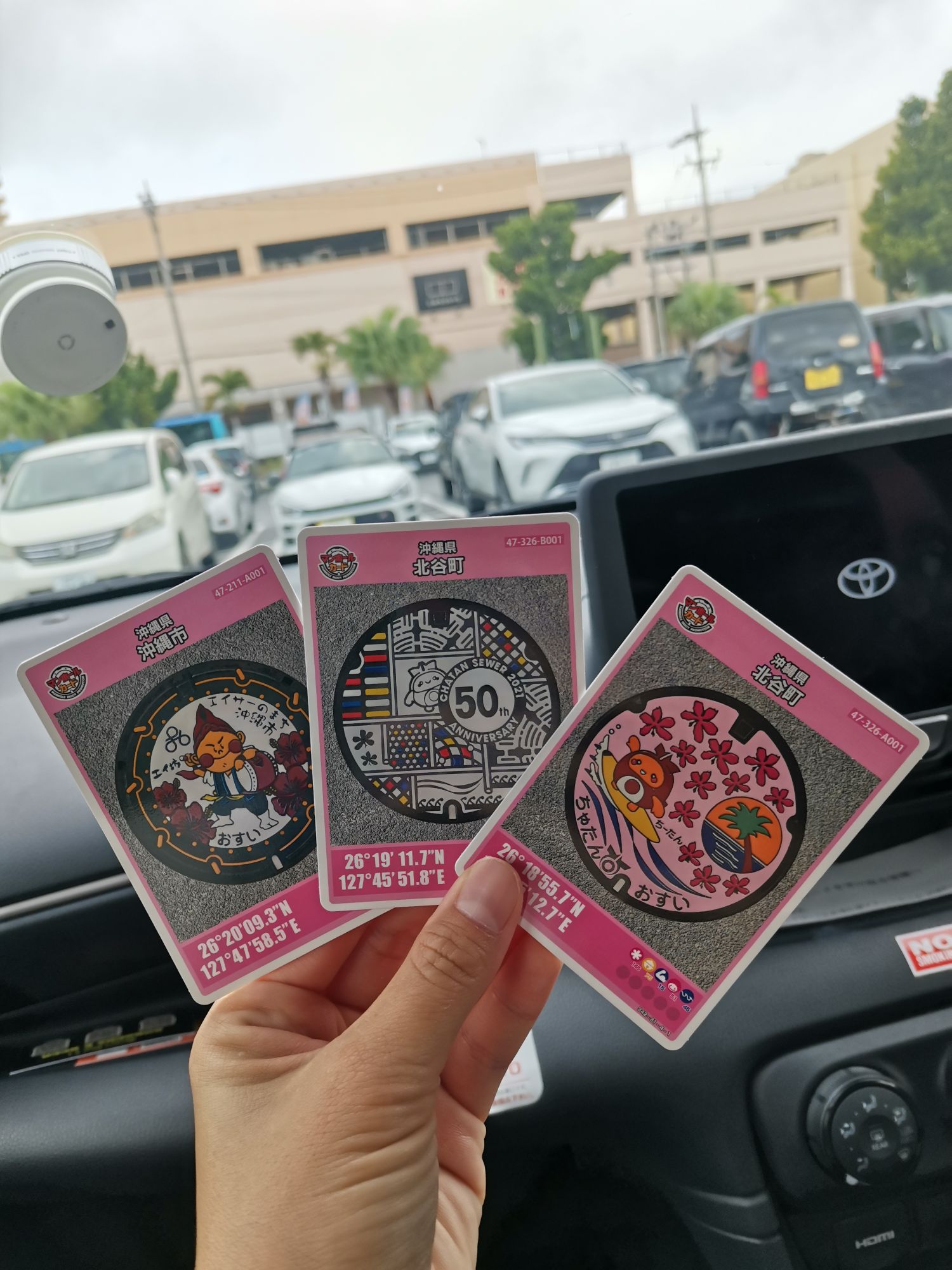
Before heading out, we stopped by もとぶかりゆし市場 to collect a manhole card and browse local produce. Markets like this often reflect the island’s subtropical agriculture — bitter melon (goya), local seafood, and seasonal fruits that differ noticeably from mainland Japan.


Crossing Kouri Bridge: Geography of a Coral Island
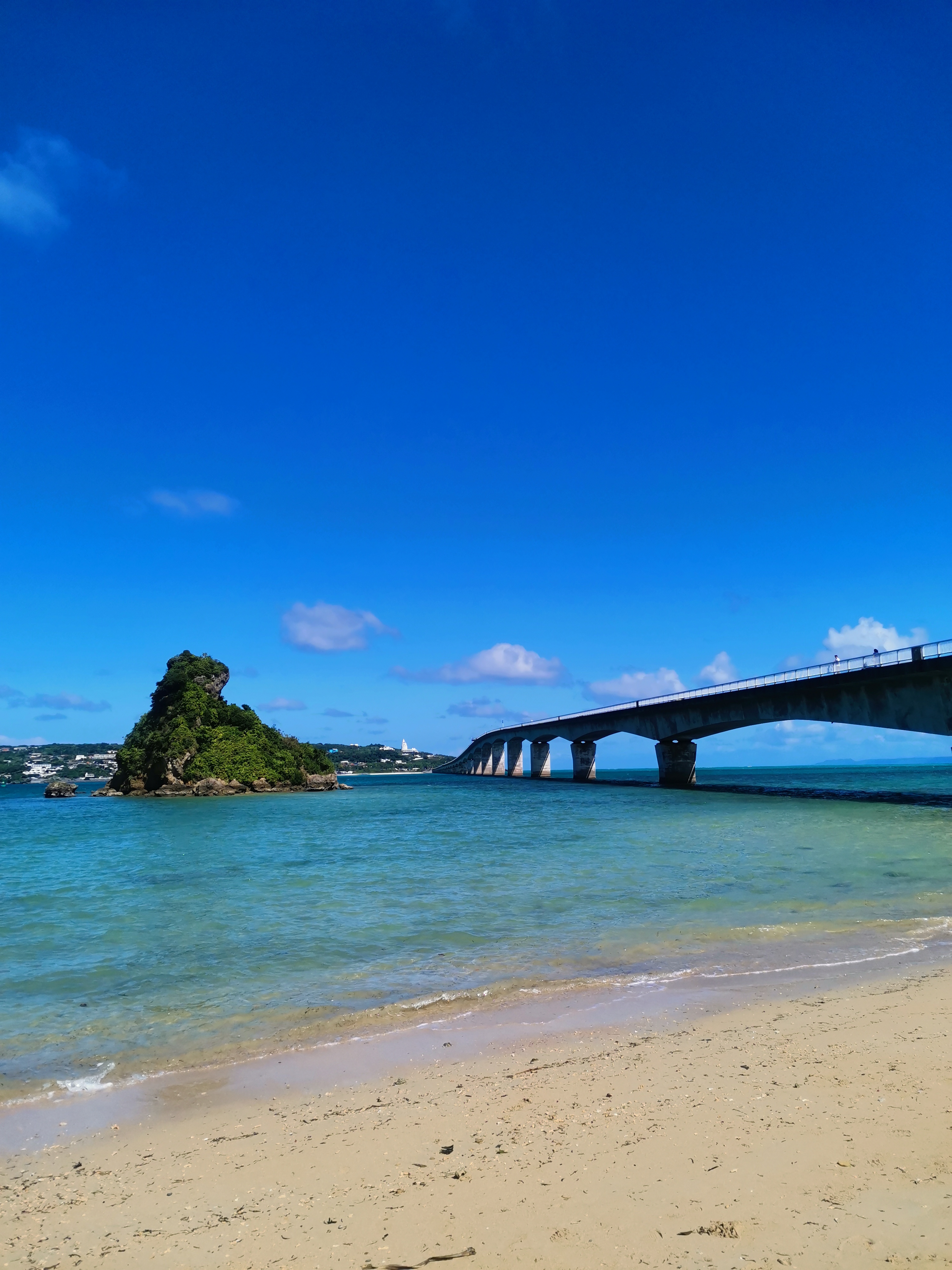
The approach to Kouri Island is defined by the Kouri Bridge, a 2-kilometre bridge completed in 2005 that connects the island to Okinawa’s main island.
Just before the bridge, there’s a well-known viewpoint where the contrast between shallow turquoise waters and deeper blue ocean becomes especially clear — a result of coral reef formations surrounding the island.
Driving across the bridge itself is straightforward but scenic, with uninterrupted ocean views on both sides. Unlike more urban coastal roads, this stretch remains relatively undeveloped, which contributes to its appeal.

First Stop: The Challenge of Kouri Shrimp
Our initial plan was to go straight to Kouri Shrimp, one of the island’s most well-known food spots.
As expected, it was crowded.
Kouri Island’s infrastructure is limited — narrow roads and small parking areas mean that popular locations can quickly become congested, especially on weekends. After circling a few times without success, we decided to continue around the island first.
Northern Coast: Heart Rock and Coastal Formations
We headed toward the northern side of the island, where Heart Rock is located.
Before walking down, we stopped at a café above the coast for French toast and drinks, which also provided a higher vantage point of the shoreline.
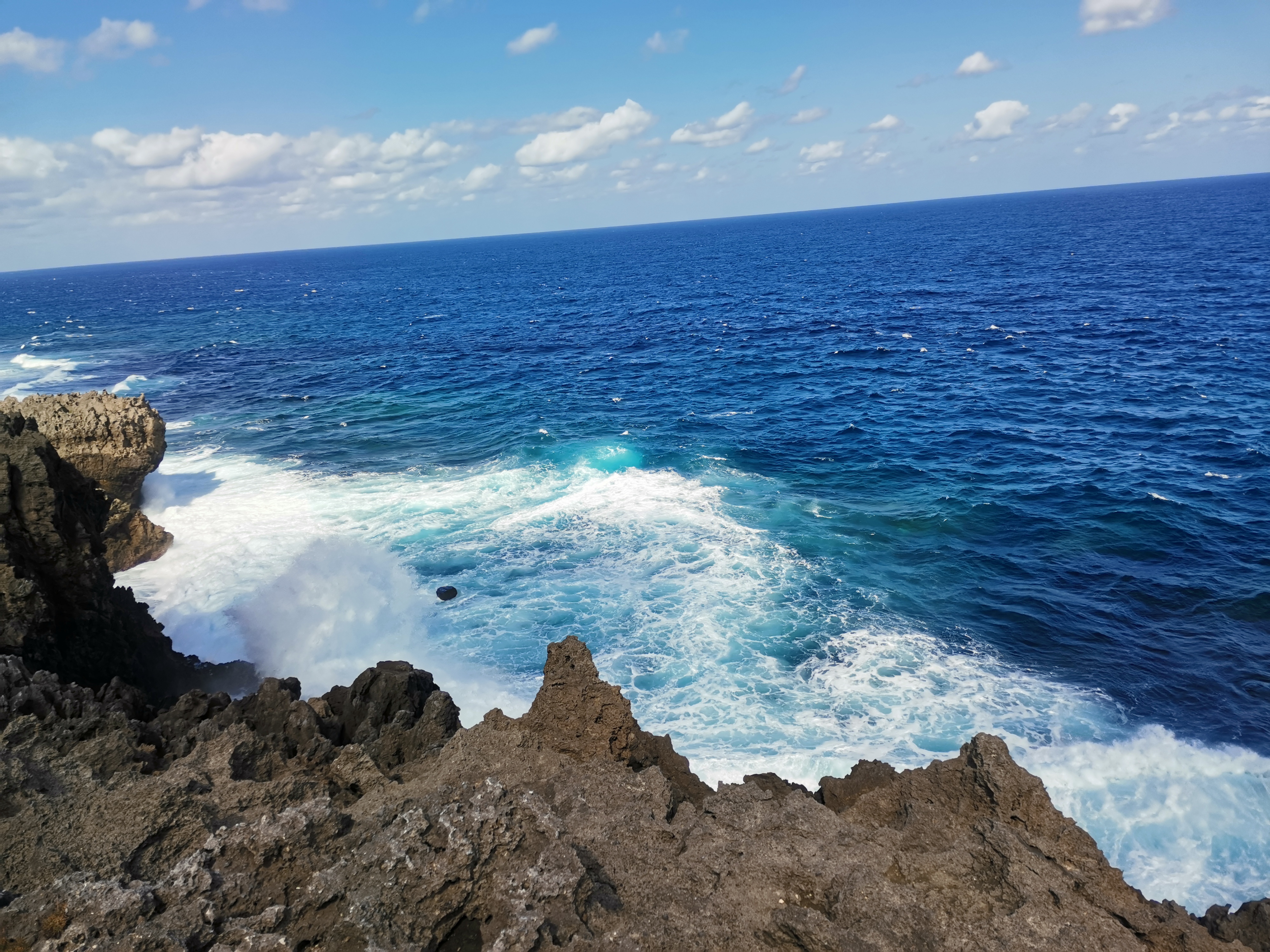
Heart Rock itself consists of two adjacent rock formations shaped by long-term coastal erosion. While it has gained popularity through media exposure, its formation is a good example of how Okinawa’s limestone and coral geology interacts with wave action over time.
The beach area was relatively busy, with visitors walking in and out for photos. We spent some time sitting along the shore — it’s the kind of place where, unless you plan to swim, most activities are limited to walking or resting by the beach.


A Quick Stop (and More Coffee)
On the way back up, we stopped at another café nearby for coffee. Small independent cafés are quite common on Kouri Island, often positioned to take advantage of elevated sea views.


Second Attempt: Kouri Shrimp
We returned to Kouri Shrimp later in the afternoon.
After a few more rounds of circling, we finally managed to get a parking spot when another car left. The queue was still present, but it moved relatively quickly.
The restaurant itself is built across multiple levels, including a rooftop seating area. This helps distribute the crowd despite the limited footprint.
The shrimp rice — simple grilled shrimp over rice with garlic butter — is the signature dish, and it lived up to expectations.

🚗 Practical Tip: Parking on Kouri Island
- Parking is limited across the island, especially near popular spots
- Consider parking near Kouri Ocean Tower and walking (~10–15 minutes)
- Alternatively, visit earlier in the day to avoid peak congestion
Elevated Views: Kouri Ocean Tower
Next, we drove to Kouri Ocean Tower, which has a much larger parking area.
From there, visitors take an automated cart along a short track up to the main building. Along the way, there are displays of seashell collections — reflecting Okinawa’s marine biodiversity, which is influenced by the warm Kuroshio Current flowing through the region.
At the top, an observation deck provides a clear view of Kouri Bridge and the surrounding waters.
Compared to city observation towers, the appeal here comes from the open coastal geography — wide visibility, low-rise surroundings, and minimal development.


🎟️ Tip: Ocean Tower
- Entry fee required (approx. ¥800–¥1000)
- Best visibility during clear weather; can be windy
- Works well as a combined stop with nearby attractions
Change of Plans: Moving to Nago
By late afternoon, we had covered most of the island.
Kouri Island is relatively small — about 8 km in circumference — so it doesn’t require a full day unless you’re planning extended beach time.
We originally planned to stay two nights in the same accommodation, but due to ventilation issues, we decided to switch and booked a hotel in Nago instead.


Dinner in Nago: Local Okinawan Flavours
For dinner, we went to Shimaakari, Nago (沖縄料理しまあかり 名護店), a well-known local restaurant.
There was about a 30-minute wait, which is common for popular spots in smaller Okinawan cities.
The menu featured local specialties such as peanut tofu and grilled skewers. Okinawan cuisine differs from mainland Japanese food, with influences from Chinese and Southeast Asian cooking — a reflection of the islands’ historical trade connections during the Ryukyu Kingdom period.
The restaurant occasionally hosts traditional performances, though we didn’t catch one that night.


Final Thoughts: A Compact but Distinct Destination
Kouri Island is small and easy to navigate, but its appeal lies in a combination of:
- Coral island geography and coastal formations
- Scenic infrastructure like Kouri Bridge
- Concentrated food spots like Kouri Shrimp
- Accessible viewpoints such as Ocean Tower
It works well as a half-day trip from Motobu or Nago.




Leave a Reply