
14 October 2026
There is a distinct atmosphere to the Kiso Valley when it rains. Mist settles over the cedar-covered mountains, while the dark wooden facades of old Japanese buildings take on a deeper, richer colour.
On 14 October 2026, armed with an umbrella and dressed in warm layers, we took a day trip from Matsumoto into the historic Kiso Valley, following part of the old Nakasendo route by train.
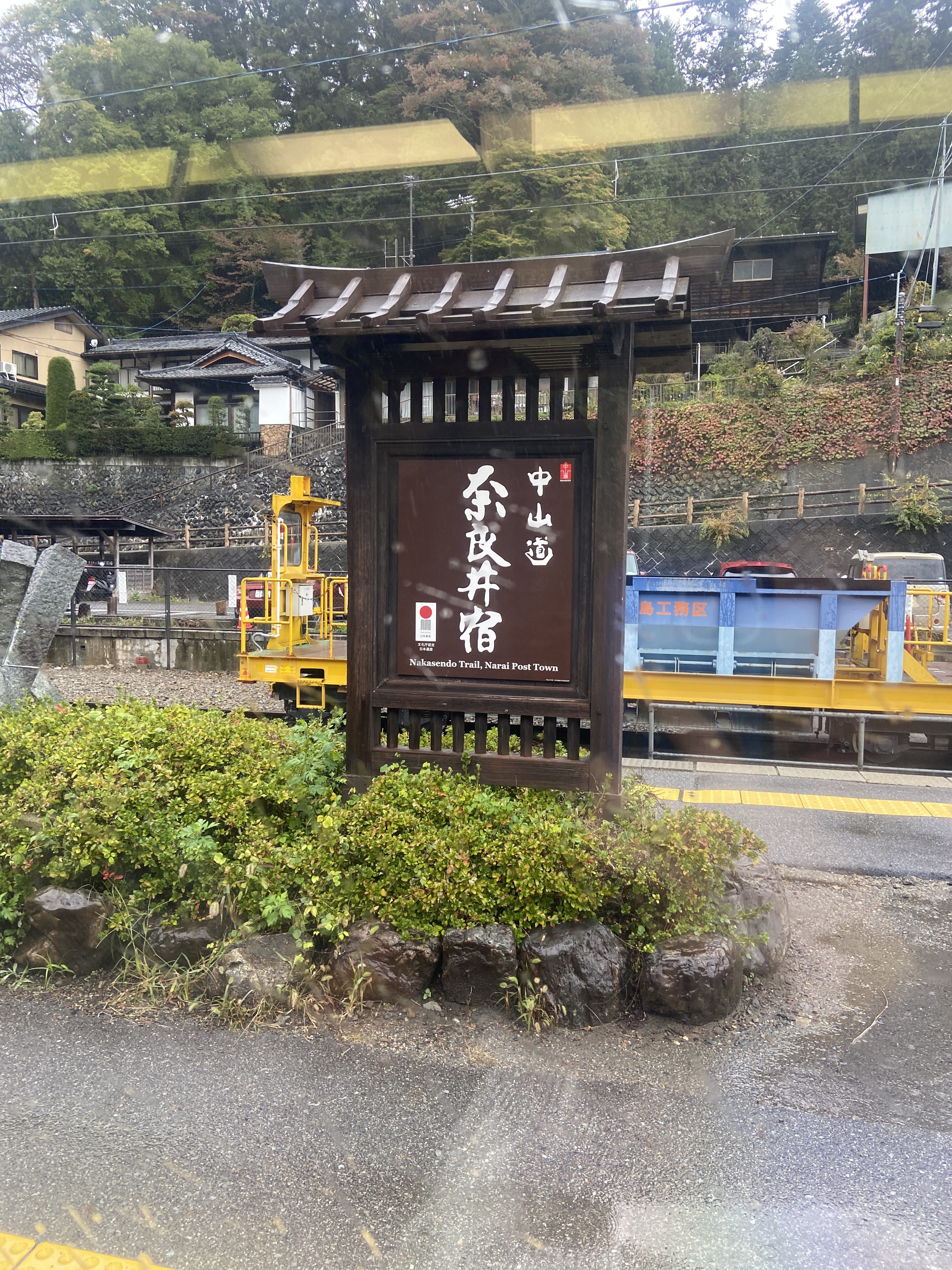
Narai-Juku (奈良井宿): Walking Through Japan’s Edo Period
We took a local train along the JR Chuo Main Line from Matsumoto Station to Narai Station, a journey of approximately 45–50 minutes.
Travel tip: Train services through the Kiso Valley are relatively infrequent, and IC cards such as Suica may not be accepted at smaller stations. Check the latest ticketing arrangements and keep some cash handy.
Narai-Juku was one of 69 post towns along the historic Nakasendo (中山道), an inland highway connecting Edo (present-day Tokyo) and Kyoto during the Edo period (1603–1868). Unlike the Tokaido, which followed the Pacific coastline, the Nakasendo crossed the mountainous interior of central Japan.


These post towns provided accommodation, food and fresh horses for travelling merchants, samurai, government officials and feudal lords. Narai-Juku occupied an important position near Torii Pass, one of the more challenging mountain crossings along the route.
Its location made it a natural resting point for travellers preparing to cross the pass. The town eventually became so prosperous that it earned the nickname Narai of a Thousand Inns (奈良井千軒).
Today, Narai-Juku is recognised as one of Japan’s best-preserved post towns, with a historic streetscape stretching for approximately one kilometre. Its traditional wooden buildings feature projecting upper-storey eaves, lattice windows and dark timber facades that retain much of their Edo-period character.


Walking along Narai-Juku’s main street, we could appreciate how the town must have looked centuries ago. Unfortunately, the rain made the streets rather quiet, and quite a number of the craft shops and tea houses were closed.
With limited dining options available, we found a local restaurant and waited around 30 minutes for a table.


Lunch turned out to be one of the highlights of the day. We had a comforting set meal of thinly sliced pan-fried pork, shredded cabbage, local pickles, tofu topped with bonito flakes, rice and miso soup. We also ordered a bowl of hot noodles with tender pork and freshly cut scallions. Nothing particularly elaborate, but exactly what we needed on a chilly, rainy afternoon.
Kiso-Hirasawa (木曽平沢): A Town of Traditional Lacquerware
After lunch, we decided to extend our walk towards neighbouring Kiso-Hirasawa.


While Narai-Juku developed around travellers and accommodation, Kiso-Hirasawa became known for its traditional woodworking and lacquerware industry. The town has a long history of producing Kiso lacquerware (木曽漆器), using locally available timber, including Japanese cypress, as the foundation for its craft.
Lacquerware was an important part of everyday Japanese life, used for bowls, trays, chopsticks and other household items. The craftsmanship required multiple stages of coating and polishing, producing durable wooden objects with a distinctive finish. The industry eventually became one of the defining features of the Kiso region.
However, looking back, walking to Kiso-Hirasawa in the drizzle was perhaps not our best decision.
The route along the road and river was not particularly scenic under the grey skies. When we eventually reached the town, it was incredibly quiet, with virtually nothing open. We made our way to Kiso-Hirasawa Station and ended up waiting almost an hour for the next train back to Matsumoto.

Travel tip: Do check the JR Chuo Line timetable before deciding to walk between Narai and Kiso-Hirasawa. Local trains can be one to two hours apart, depending on the time of day. What looks like a short extension on the map can turn into a rather long wait at a rural station.
Unless you are particularly interested in traditional lacquerware, I would probably recommend spending more time exploring Narai-Juku instead.
Back in Matsumoto: Matcha, Cheesecake & Robatayaki
We arrived back in Matsumoto at around 5 PM. With some time to spare before our dinner reservation, we looked for somewhere warm to sit down.
We found a lovely matcha shop in the city centre and ordered hot matcha lattes served in ceramic mugs, accompanied by a rich Basque-style baked cheesecake. The cake came with sweet syrup and edible pansies, making it almost too pretty to eat.

It was a welcome afternoon break after spending much of the day outdoors in the rain.
Later, we headed to the robatayaki restaurant I had reserved.
What Is Robatayaki (炉端焼き)?
Robatayaki literally translates to fireside cooking. The cooking style is traditionally associated with northern Japan, particularly fishing communities where fresh seafood and other ingredients were cooked over charcoal fires.
Today, robatayaki restaurants serve seasonal seafood, meat and vegetables grilled over charcoal, often with diners seated around an open cooking counter.
I was glad we had made a reservation in advance, as the cosy restaurant was almost completely full when we arrived.
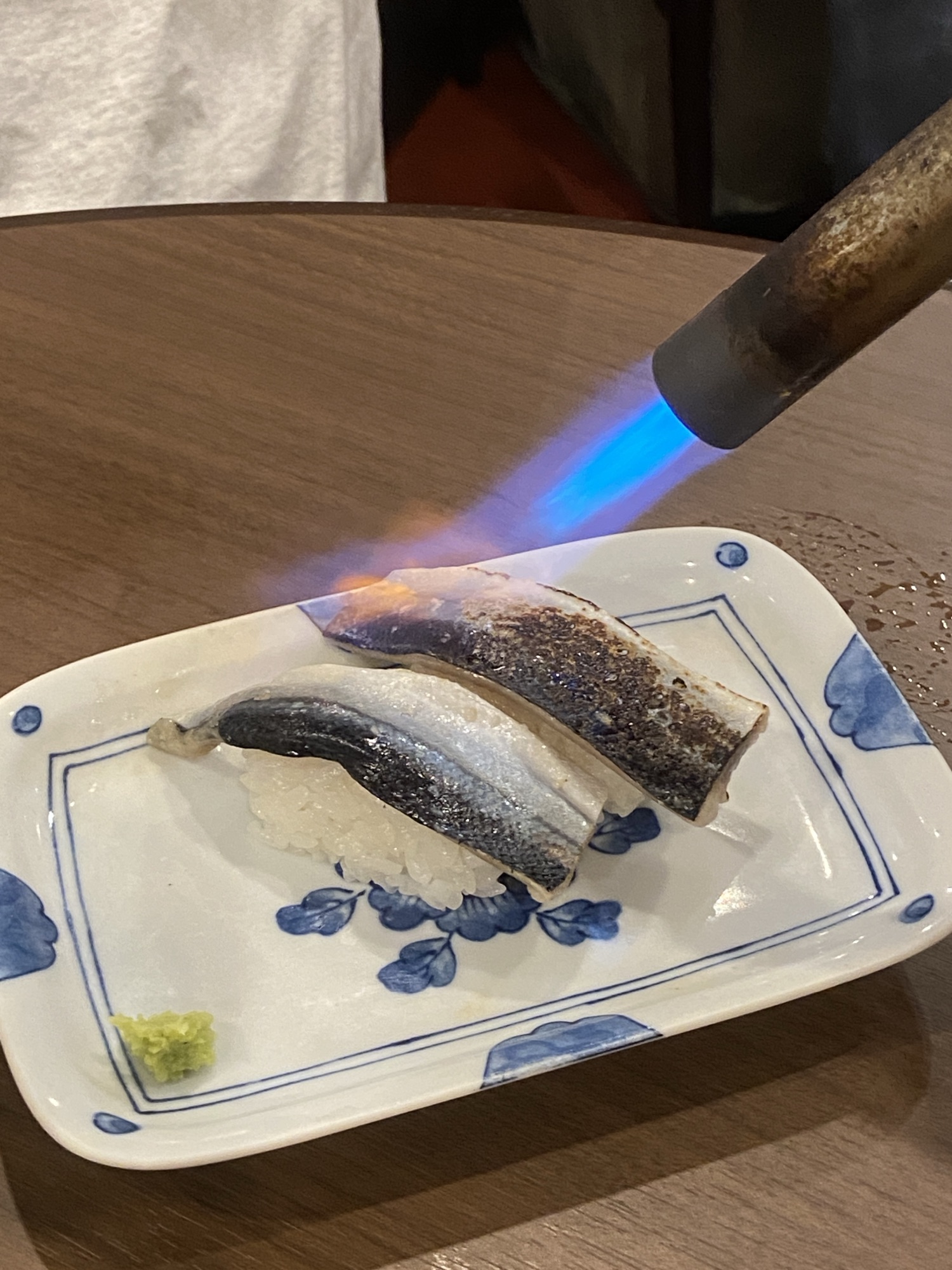
The presentation was beautiful. We had a seasonal salad topped with lightly seared fish, followed by grilled local beef served on a slate platter with fresh wasabi, sea salt and a savoury dipping sauce.


The combination of freshly grilled meat and simple seasonings worked wonderfully. After a rather wet and quiet day in the Kiso Valley, it was a very satisfying way to end the evening.
An Unfortunate Souvenir: The Broken Suitcase Wheel
Just when we thought the day had ended on a good note, we returned to the hotel to discover that one of the main wheels on our forwarded suitcase had been completely broken off.
We had used a luggage forwarding service, commonly known as Ta-Q-Bin, to send our heavier suitcases ahead to the hotel. Unfortunately, something had gone wrong during transit.
The hotel staff were very helpful and assisted us in contacting Yamato Transport customer service to file a report. However, the timing could hardly have been worse. We were checking out the following morning, with our flight back to Kuala Lumpur scheduled for the day after.
There was little time to sort out a replacement or pursue the claim properly. Dragging a heavy suitcase with only three functioning wheels through Matsumoto Station and subsequent transit connections was certainly not something we enjoyed.
Looking back, perhaps we were fortunate that this happened towards the very end of our long trip rather than at the beginning.
Despite the rain, closed shops, long train wait and broken luggage, the day gave us another glimpse into the history of the Nakasendo and the traditional towns that once supported travellers crossing central Japan.
Narai-Juku was certainly the highlight. If visiting the Kiso Valley, I would recommend allowing enough time to explore its historic streets rather than trying to squeeze in too many stops, particularly when travelling by local train.


Leave a Reply