
16 May 2025
Our trip to Himeji started with… a detour. We took the wrong train and ended up adding 45 extra minutes to the journey. By the time we finally arrived, we were already tired—but Himeji had a way of waking us up again.
Strolling Towards Himeji Castle
The city layout is beautiful. From the train station, there’s this grand avenue that leads straight to Himeji Castle, with wide pedestrian lanes perfect for a leisurely stroll. It’s not a huge city, but it felt welcoming and easy to enjoy.

Quick Bites and Coffee Rescue
Naturally, we tried the wagyu beef skewers from the stalls near the castle gates. They were good, but honestly, not mind-blowing. A cozy coffee shop nearby saved the day though—nothing beats caffeine when you’ve already lost 45 minutes of your life to the wrong train.


Himeji Castle: The White Heron
Now, Himeji Castle itself is something else. Nicknamed the White Heron Castle (Shirasagijo) because of its elegant white walls, it is one of the very few castles in Japan that survived wars, earthquakes, and World War II bombings completely intact. Built in its present form in 1609, it’s considered Japan’s most spectacular and best-preserved feudal castle, and in 1993 it was designated as a UNESCO World Heritage Site. Unlike many castles in Japan that were rebuilt using concrete, this one is the real deal—over 400 years old and still standing strong.


It’s perched on higher ground, which means climbing lots of steep stairs—a workout disguised as sightseeing. On that day, crews were already setting up for a procession scheduled the next morning, which added some extra buzz around the place.
Kōko-en Gardens: Stepping Back in Time
After exploring the castle, we headed to the gardens. Funny thing—you actually have to leave the castle, cross a bridge, and then re-enter from another side to get to them. But it was worth the minor maze.
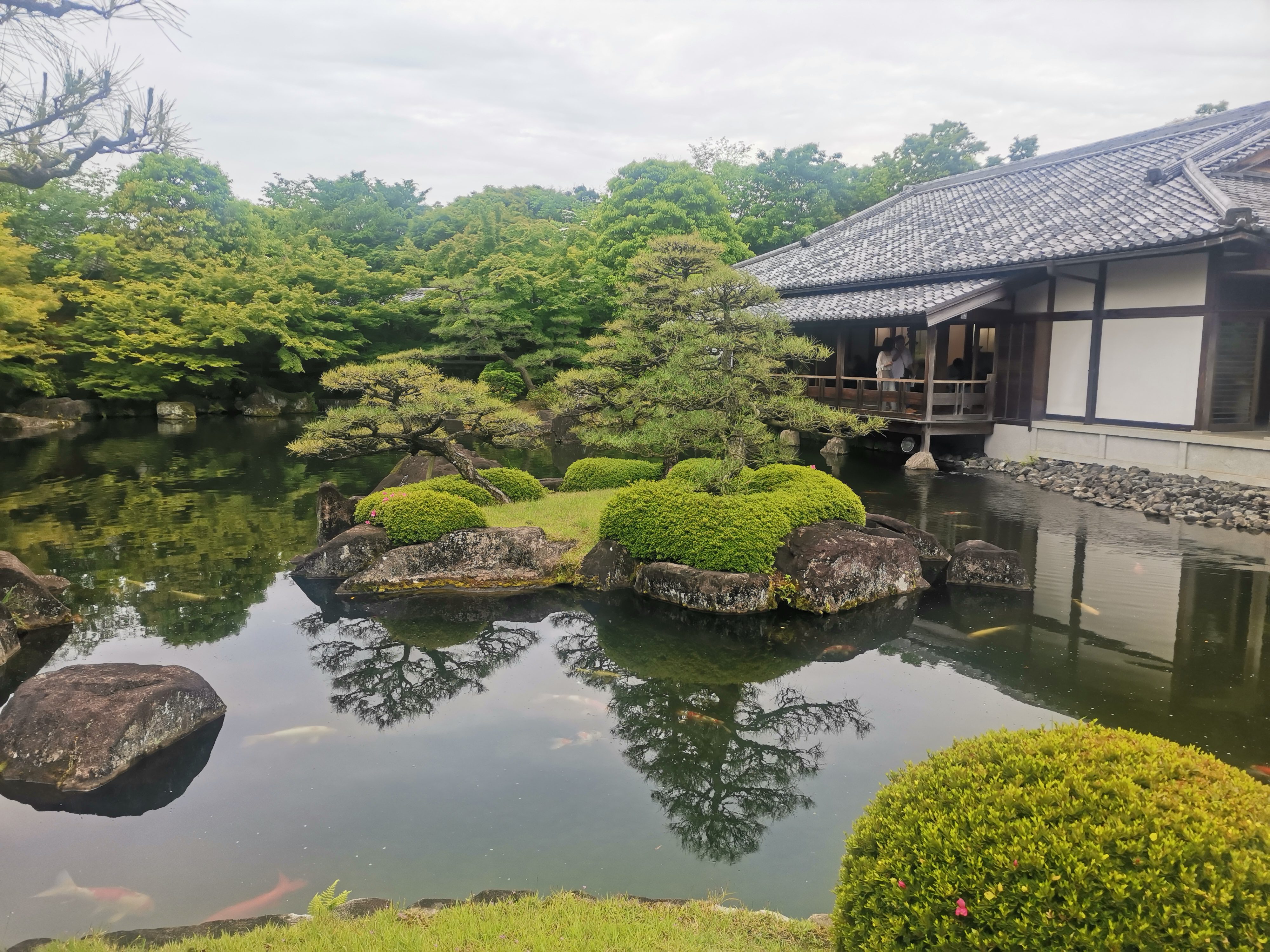
The gardens, known as Kōko-en, were created in 1992 to celebrate Himeji’s 100th anniversary as a city. They’re designed in the style of the Edo period (1603–1867), with nine different themed gardens: from tea ceremony spaces to ponds with koi fish, bamboo groves, and seasonal flowers. The view of Himeji Castle towering over the landscaped grounds makes it feel like you’ve stepped back in time.


Sweet Endings and Postcard Fun
We wrapped up the visit, strolled back down the avenue to the train station, and treated ourselves to some pudding before heading back to Osaka. Honestly? That pudding alone was almost worth the train detour.
And then came another fun idea: thanks to a postcard we picked up at the Himeji Tourist Office, we decided to actually mail postcards back home. We sent a few to friends, and it was surprisingly enjoyable—like sharing a little piece of our trip in real time.
👉 A complete 38-day Japan itinerary, including Nakasendo walking, Kumano Kodo hiking, Shimanami Kaido cycling, and a Kyushu road trip.
👉 Guide and tips for collecting Manhole Cards across Japan — click here to read more.
👉 Don’t miss Japan’s postcard-sending experience — read the full guide here.
👉 10 standout food experiences worth seeking out – Japan Foodie Map: My Top 10 Meals Across Japan



Leave a Reply