
23 May 2025
Nagasaki is a city with many layers. Shaped by Portuguese traders, Chinese merchants, and Christian missionaries, it has always been a gateway between Japan and the outside world. At the same time, it carries deep scars from the atomic bombing in 1945. Today, it’s also just a very pretty place, with hilly terrain, cozy alleys, and viewpoints that reveal its character little by little.
Morning: Churches, Slopes, and Puddings
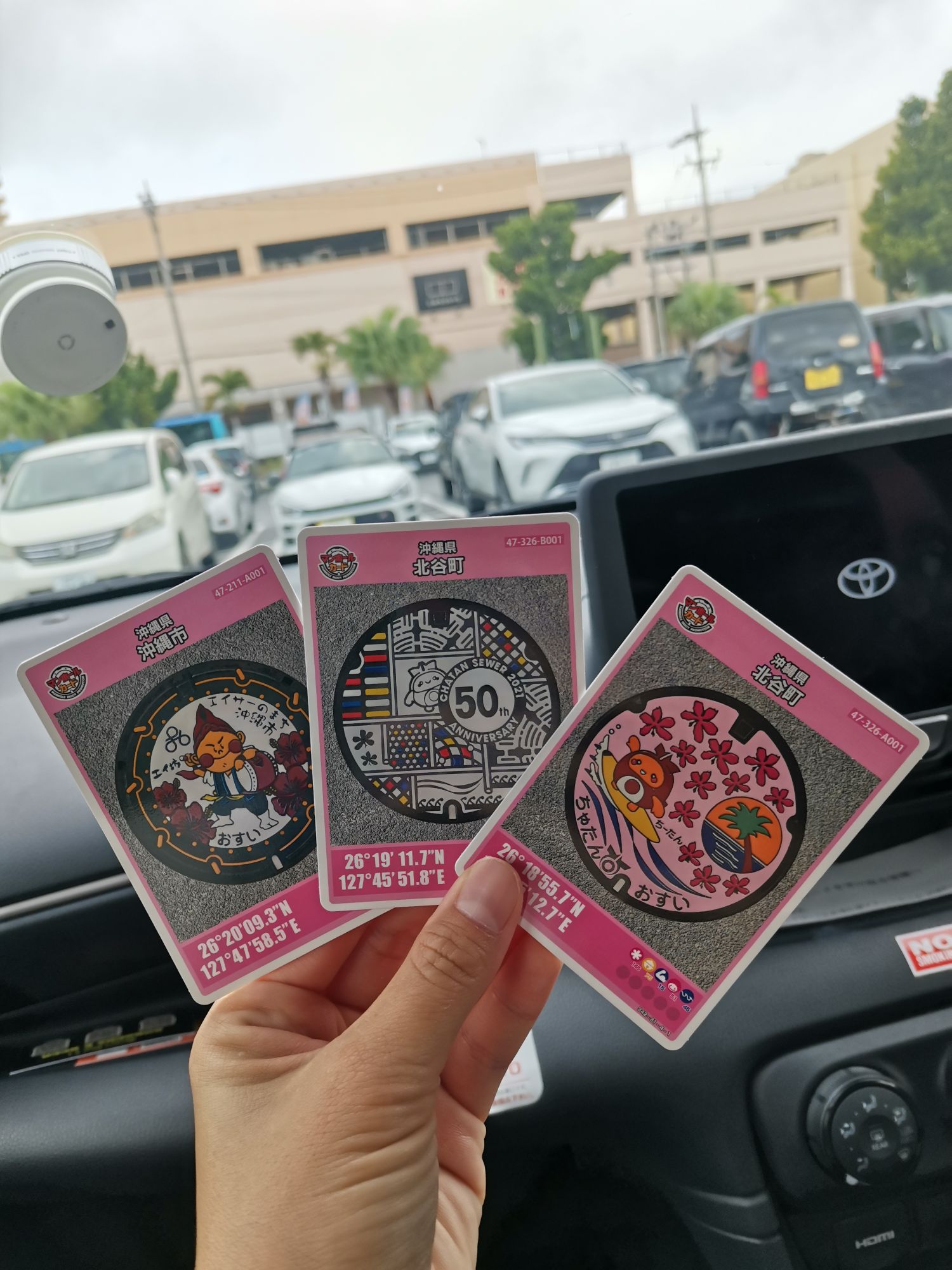
Our day began with a mix of manhole-card hunting (yes, that’s a thing!) and sightseeing around Urakami Church and the Dutch slopes. Parking was a bit of a headache—we ended up near the ferry terminal—but the upside was a pleasant walk through streets lined with shops.
We stopped at a pudding shop that everyone raved about, and it lived up to the reputation. Honestly, almost every pudding I’ve tried in Nagasaki is good. We also grabbed a pau—simple, soft, and satisfying. Because of Nagasaki’s Christian influence, many souvenir shops had stained-glass trinkets, which gave a very different feel from the usual Japanese souvenirs.


At Ōura Church, we took the obligatory photo. Built in 1864 by French missionaries, it’s considered the oldest surviving Christian church in Japan and is a UNESCO World Heritage site. It was also where the “Hidden Christians” (Kakure Kirishitan)—Japanese believers who practiced their faith in secret during centuries of persecution—revealed themselves to priests. That moment marked one of the most poignant chapters in Nagasaki’s Christian history.
But to be frank, while it’s beautiful, I didn’t feel the same awe I once felt in Europe. I still remember how majestic Durham Cathedral was—it set a high bar.
Glover Garden: Escalators up the Hill


Next was Glover Garden, a hillside park filled with Western-style houses from the late Edo and early Meiji eras. Thomas Glover, a Scottish merchant, settled here in the 19th century and played a key role in modernizing Japan. He supported samurai from Chōshū and Satsuma who later overthrew the shogunate, helped establish shipyards, and even had ties to Mitsubishi’s early development.
The garden today preserves his home and those of other foreign traders. Thankfully, they had escalators to avoid the uphill climb! The gardens were beautiful and filled with history. I kept joking with my companion that we should just stay there for the night. It had that kind of atmosphere—quiet, scenic, and a little romantic.
Afternoon: Heavy History at the Atomic Bomb Museum
After a cheerful morning, we shifted gears and visited the Nagasaki Atomic Bomb Museum and Peace Park. On 9 August 1945, Nagasaki became the second city targeted by an atomic bomb. Around 70,000 people died instantly, and tens of thousands more perished in the months and years that followed.
Compared to Hiroshima, the Nagasaki museum felt more history-focused, with detailed explanations of the build-up, the bombing, and the aftermath.
I had mixed feelings. The exhibits were heartbreaking, showing the scale of destruction and civilian suffering. But coming from Southeast Asia, I couldn’t ignore another side of history. Japan was not only a victim of the war—it was also the aggressor in our region. My grandma used to tell stories about how her community camouflaged themselves to hide from Japanese troops. It was horrific in its own way, and those scars remain too.
So when I read just one short sentence in the exhibition acknowledging the suffering in Southeast Asia, I felt a kind of irony. The bombing of Nagasaki was tragic, but so were the atrocities committed elsewhere. I don’t say this out of hate—because if hate keeps passing down generations, we’ll never move forward. What I hope is that our next generations will choose friendship and peace, rather than another war to settle old scores.


Dejima: A Reconstructed Gateway
After lunch, we went to Dejima, the small fan-shaped artificial island built in 1636 to confine Portuguese traders and later used exclusively by the Dutch. During Japan’s two centuries of sakoku (isolation), it was the only official window to the outside world. Through Dejima, Western medicine, science, maps, and even coffee first reached Japan.


Today, most of it is reconstructed, so it feels more like a museum village than an authentic port. Still, it’s fascinating to walk the narrow streets and peek into restored warehouses.
What caught my attention was a painting of Malacca—not the thriving port city I usually read about, but Malacca in flames, attacked by Portuguese fleets.
Before the Portuguese came in 1511, Malacca was one of the most powerful and cosmopolitan trading ports in Asia. Founded around 1400 by Parameswara, a Sumatran prince, it grew rapidly thanks to its strategic location on the Straits of Malacca—the choke point of maritime trade between the Indian Ocean and the South China Sea. Ships from China, Arabia, India, and the Malay world all converged here.
Under the Malacca Sultanate, the city became a melting pot where Muslim traders introduced Islam to the Malay Peninsula. The Sultanate also established a legal code (Undang-Undang Melaka), a system of taxation, and a diplomatic network that reached as far as Ming China. Malacca was recognized as a legitimate kingdom by the Ming Dynasty, which provided it with protection against rivals. By the late 15th century, Malacca was considered the pre-eminent trading hub of Southeast Asia.
One unique community that blossomed during this time was the Baba-Nyonya (Peranakan). They were descendants of Chinese traders who settled in Malacca and married local Malay women, creating a blended culture that fused Chinese traditions with Malay language, dress, and cuisine. Their colorful houses, intricate beadwork, and food—like laksa and kuih—are still part of Malacca’s identity today. The Peranakan story shows how Malacca wasn’t just a port of goods, but also of people, ideas, and families.
When the Portuguese finally attacked in 1511, they weren’t just conquering a port—they were dismantling one of the great centers of Asian commerce and hybrid culture. Seeing Malacca’s burning image here in Nagasaki was strangely powerful, reminding me how deeply entangled these places were in the currents of global trade and colonial ambition.
Evening: Chinatown and a Hidden Yakitori Gem


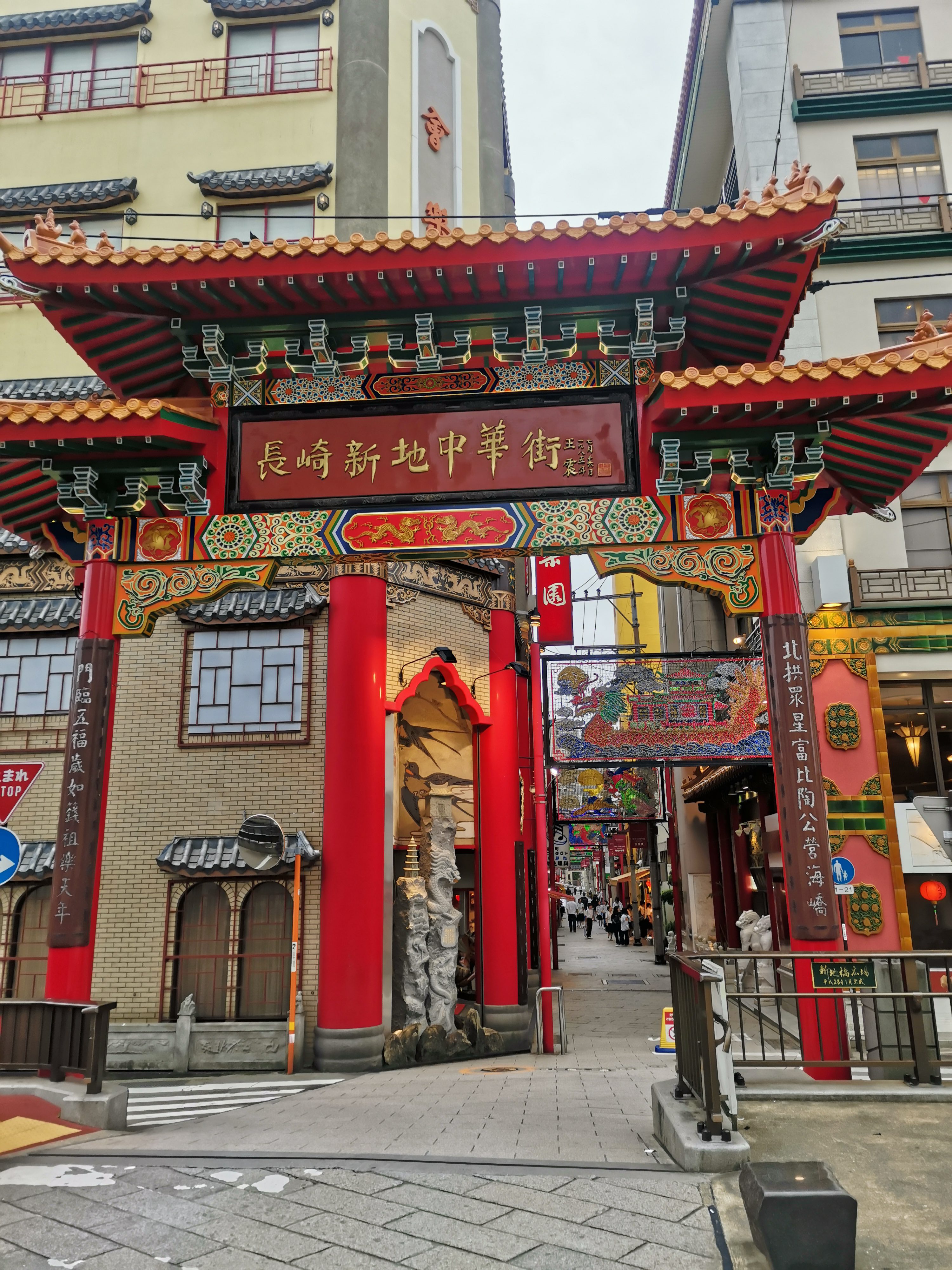
We continued to Nagasaki Chinatown, also known as Shinchi Chinatown. Founded by Chinese merchants in the 17th century, it’s one of Japan’s three major Chinatowns (along with Yokohama and Kobe). The community introduced food, culture, and religious practices that left a lasting mark on the city—most famously, chanpon noodles and the vibrant Lantern Festival celebrated during Lunar New Year.
Walking through, I couldn’t help but think about Malacca again. Just as Chinese traders in Malacca married into local Malay families and gave rise to the Baba-Nyonya (Peranakan) culture, Chinese merchants in Nagasaki also left behind a culinary and cultural legacy that still defines the city. In both places, these communities show how migration and trade shaped not only economies, but also food, architecture, and everyday life.


By evening, we were starving, but every yakitori restaurant we tried was fully booked. We probably went to three or four before luck brought us to a tiny place hidden in an alley. It turned out to be exactly what we needed—simple, delicious food in a cozy, unpretentious setting. Sometimes the unplanned moments make the best memories.
Reflections on Nagasaki
Nagasaki is a city where cultures collide and history lingers—European, Chinese, colonial, Christian, and Japanese. In just one day, I experienced pudding shops and peace parks, churches and Chinatowns, laughter and heavy reflection.
If you’re visiting, bring good shoes for the hills, book your dinner in advance, and keep your mind open. Nagasaki is beautiful, yes—but it’s also a city that makes you think.
👉 A complete 38-day Japan itinerary, including Nakasendo walking, Kumano Kodo hiking, Shimanami Kaido cycling, and a Kyushu road trip.
👉 Guide and tips for collecting Manhole Cards across Japan — click here to read more.
👉 Don’t miss Japan’s postcard-sending experience — read the full guide here.
👉 10 standout food experiences worth seeking out – Japan Foodie Map: My Top 10 Meals Across Japan



Leave a Reply