

25 May 2025
25 May 2025

Looking back, this was a really full day—packed with history, culture, food, and landscapes that kept surprising us.
Morning in Akune: A Quiet Train Station


We left Akune in the morning, but not before stopping at Akune Station to snap a few pictures. The station opened in 1922 on the Hisatsu Orange Railway (formerly part of the JR Kagoshima Main Line). Today it serves fewer trains than its heyday, but the wooden structure and retro charm make it a nostalgic spot for railway fans.
Miyama: Porcelain & Pasta
Our next destination was Miyama, a small town famous for Satsuma ware porcelain. The craft dates back to the early 17th century, when Korean potters were brought to Kagoshima after the Japanese invasions of Korea. Over the centuries, Miyama developed into a pottery village, with climbing kilns (noborigama), family workshops, and refined glazes.
I had also discovered, through a bit of research, that Miyama is home to a famous spaghetti restaurant calm. You need to queue early—it’s that popular. As a spaghetti aficionado, I couldn’t possibly miss it.


- We browsed a historical pottery shop and bought a delicate porcelain pot. The shop still had its stepping kiln in the back, and the garden was beautifully kept.
- Up the hill, we found a tiny matcha café Hioki Chaho, perched above tea bushes. Drinking a matcha latte while overlooking the tea fields felt timeless.


A Sweet Stop at Ijuin Station

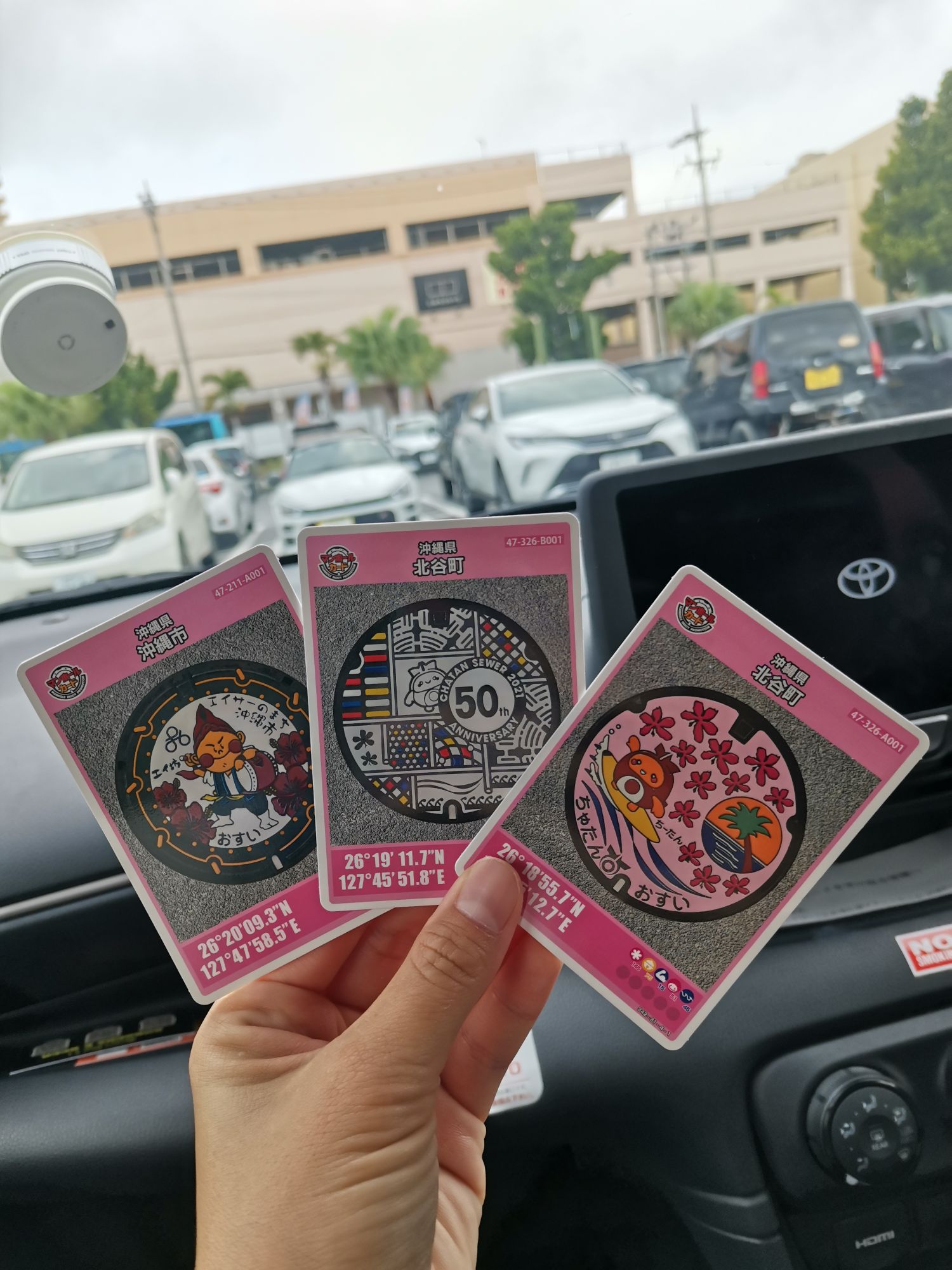
On the way to Kagoshima, we stopped at Ijuin Station, partly for a manhole card and partly just to see the town. At the souvenir shop, we spotted some strawberry-filled biscuits that looked too good to pass up. At the time I thought they were just “quite nice,” but when I brought them back home, my sister loved them. Funny how small discoveries like this end up being the most memorable souvenirs.
Kagoshima: A Historic Stay
We reached Kagoshima a little early to check in, but our host welcomed us warmly. The building itself had a story: originally a soy sauce workshop, later turned into a restaurant, and eventually transformed into a guesthouse. At over 100 years old, it carried layers of history in its beams and walls.
Afternoon: Buddhist Carvings & Chiran Peace Museum


Our first outing was to Shimizu Magaibutsu (清水磨崖仏群), a site where Buddhist images are carved into rock walls. The area is vast, more like a hiking park, with lush greenery and peaceful trails. We only saw a few of the carvings in our short visit—it felt like the place deserved more time and perhaps even an overnight camping trip.
From there, we drove to the Chiran Peace Museum for Kamikaze Pilots. During the final months of World War II, Chiran was one of the main bases for kamikaze missions. The museum preserves letters, photographs, and personal belongings of the young pilots who departed on one-way missions.
Inside, it was quiet and solemn. I didn’t take photos—out of respect, and also because it didn’t feel right to frame grief through a lens. Many of the farewell letters written by teenage pilots were heartbreaking, speaking of mothers, cherry blossoms, and duty.
Chiran Samurai Residences


Nearby, we visited the Chiran Samurai District. This historic area preserves samurai houses and gardens from the Edo period, when Chiran was a castle town under the Satsuma domain. Walking through the stone walls and carefully landscaped gardens, I tried to imagine life here centuries ago—the discipline, the order, and the mountains watching silently over the town.
It was late in the day, so most houses were closed, but the atmosphere itself was enough.
Evening: Back to Kagoshima
On our way back, the view of Sakurajima, the active volcano dominating Kagoshima Bay, was striking. Even shrouded in evening light, its presence was powerful.
For dinner, we went to a tonkatsu restaurant (Tonkatsu No Taketei Tagami Branch とんかつ竹亭 田上店) to try the famous Kagoshima black pork (Kurobuta). Crispy outside, juicy inside—it was the perfect way to end the day.


Back at the guesthouse, we finally rested, grateful but tired after such a packed itinerary.
📜 Spotlight: Chiran and the Weight of Memory
Chiran is a place where Japan’s layered history comes into focus:
- Edo-era samurai houses remind visitors of Kagoshima’s role as a powerful domain.
- World War II history lingers in the Peace Museum, where young men were sent to certain death in kamikaze missions.
Walking both sites in one afternoon felt like traversing centuries of resilience, tragedy, and reflection.
👉 A complete 38-day Japan itinerary, including Nakasendo walking, Kumano Kodo hiking, Shimanami Kaido cycling, and a Kyushu road trip.
👉 Guide and tips for collecting Manhole Cards across Japan — click here to read more.
👉 Don’t miss Japan’s postcard-sending experience — read the full guide here.
👉 10 standout food experiences worth seeking out – Japan Foodie Map: My Top 10 Meals Across Japan



Leave a Reply