
6 Oct 2025
After two nights and one full day in Turpan, we zipped up our bags, left the vineyards and sun-soaked alleys behind, and boarded a short train ride eastward to Shanshan (鄯善 / Piqan 皮羌)—a county wedged between mountains, desert and ancient Silk Road memory.

To be honest, I didn’t realise until later that many people visit Shanshan as a day trip from Turpan, which is indeed more convenient. But because I didn’t research tours thoroughly earlier, I ended up booking two nights in Shanshan. And in the end… it became a happy mistake. Maybe some places are meant to be lingered in, especially a place where the desert practically sits at your doorstep.
Why Shanshan — A Gateway to Desert History
Shanshan is more than just a stop on the map. Historically, this was once part of the ancient Shanshan Kingdom (鄯善国), a Silk Road oasis state mentioned in the Book of Han. It was a crucial rest point for caravans travelling between Dunhuang and the Western Regions—imagine camels, traders, monks, and spices weaving through these sands nearly 2,000 years ago.
Today, Shanshan is known for one thing that has never changed: sand.

Here lies the Kumtag Desert (库姆塔格沙漠)—a rare desert that “touches the city.” Unlike many deserts hidden far away in remote regions, Kumtag rises literally behind the town, its dunes rolling like golden waves. Its name comes from Uyghur language: kum (sand) + tag (mountain)—“mountains of sand.”
Since we missed the legendary long road trip across the Taklamakan, and had been putting off every other desert attraction, this became our last chance to step into a desert before heading to Beijing. And, well, our final opportunity to ride a camel. So Shanshan was an important stop—our personal “desert finale.”
Arrival — Taxi Gossip & Quiet Streets
The train ride was painless, and we caught a taxi at the station—only to immediately witness a mini telenovela unfolding at the taxi queue. Two drivers kept getting chased away by security guards, shuffling back again once others had moved. From their slightly grumpy conversation, we gathered they were on some sort of “blacklist” for taking extra passengers before finishing the first trip. A tiny slice of local gossip to welcome us.


Our hotel sat right next to a famous pilaf (手抓饭) restaurant—pure luck.
Lunch was simple and hearty, the rice soft and fragrant. Outside, a stall sold fresh honey melon that was unbelievably sweet. If Xinjiang has a flavour, it must be the crunch of honey melon under the desert sun.
We attempted to hunt for coffee afterward, but the café was closed—Golden Week casualties. So we wandered between shops, drinking tea and whatever caffeine we could find, hiding under shade because the dryness clung to the skin like static.
Despite being midday, the streets were surprisingly quiet—perhaps we were slightly outside the main town center. Convenient, yes, but not quite lively. It felt like a town catching its breath between heat waves.
Desert Weather — Fierce at Day, Gentle at Dusk
Everyone warned us that the desert would be unbearable in the afternoon, so we planned our visit for around 5 PM. Desert weather is its own creature—scorching under the sun, sharp and cold once the light fades, and always dry enough to steal the moisture from your skin and drink your water for you.
At 5 PM, we finally headed toward Kumtag.
Kumtag Desert — Sand, Shadows & A Mid-Autumn Moon


Inside the attraction, you can choose to walk straight into the dunes or take the shuttle deeper in. Following online reviewers, we took the shuttle all the way to the last stop.
Even though it was a desert, it was full of people—little silhouettes scattered across the dunes like tiny black dots. But because the space is so vast, it never felt crowded. It felt alive.
We queued for the camel ride as the sun softened into gold.
Soon we were swaying atop the camel, our shadows stretched long across the sand, looking like two travellers drifting through a giant hourglass. It was romantic, cinematic… and also slightly painful. After 30 minutes, both our backs and bottoms protested. Reality always balances the fantasy.
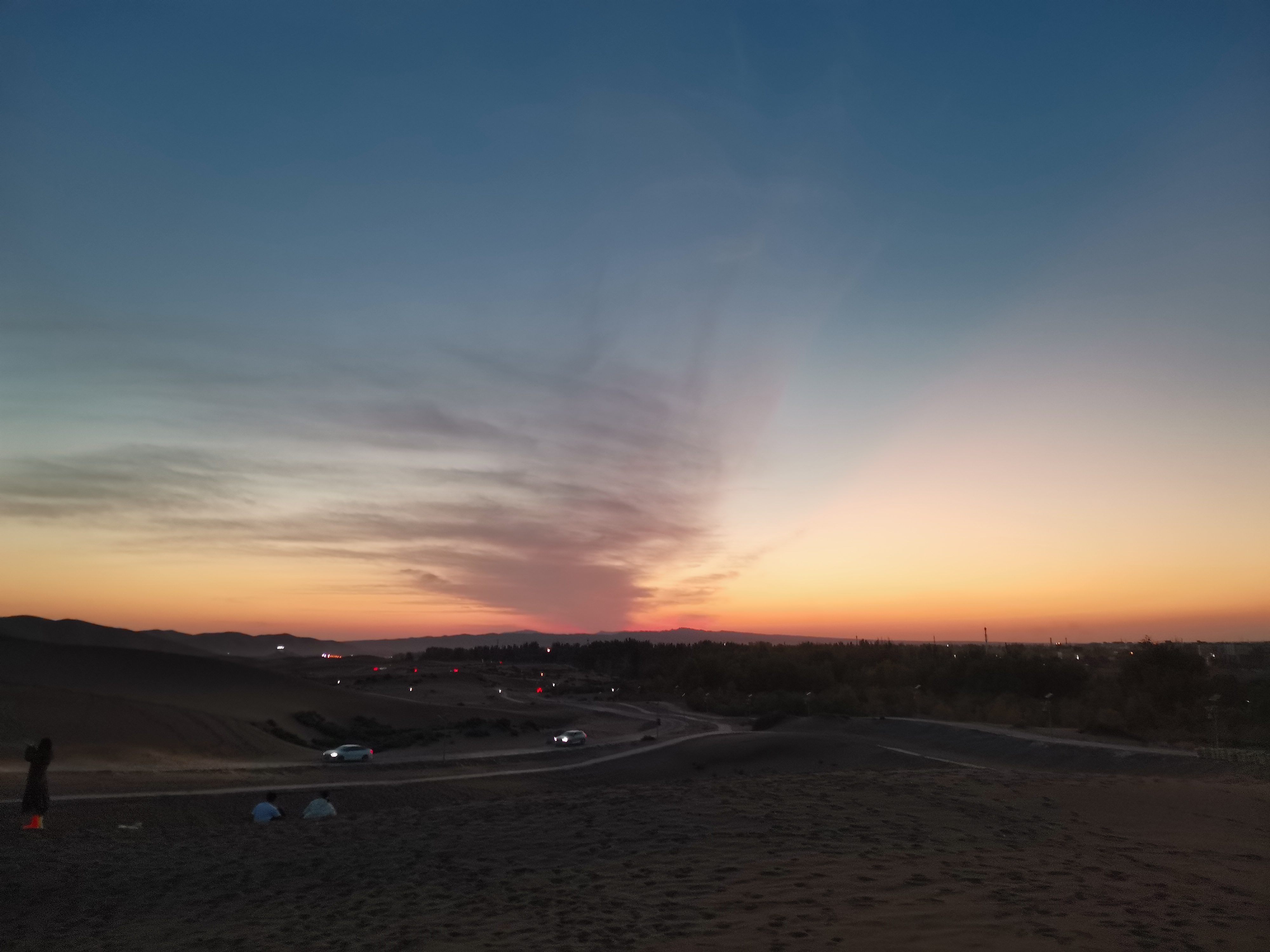
We then found a quiet dune, sat on the sand, and watched the sunset dye the sky.
The clouds were the real star—delicate streaks that caught every shade of orange.
And just as the sun slipped away, we turned around.
There it was—
a full Mid-Autumn Festival moon rising over the silent desert.
No buildings, no noise, just sand and moonlight.
The moon felt close enough to touch.

Dinner & Desert Chill
As night deepened, the heat dissolved into desert cold. We rode the shuttle out, then grabbed a taxi to a lively skewer restaurant. Lamb skewers, fresh bread, cumin in the air—the kind of meal that warms your fingers after the desert wind chills them.


And just like that, we ended our Shanshan day—full of sand, stories, moonlight, and grilled lamb.




Leave a Reply