
7 Oct 2025
What was supposed to be a simple transit day from Shanshan to Turpan unexpectedly turned into a three-part adventure, combining dinosaurs, wine, and ancient civilizations.
Loulan Winery: A More Genuine Wine Experience
What was supposed to be a simple transit day from Shanshan to Turpan unexpectedly turned into a three-part adventure, combining dinosaurs, wine, and ancient civilizations. Our first stop in the morning was Loulan Winery, a place we decided to try after a slightly disappointing experience at another Turpan winery the day before.
We arrived just as a tour group was beginning, and quickly joined in. The winery felt surprisingly welcoming and unpretentious. Xinjiang’s policies for senior travelers are quite thoughtful: many attractions offer free or half-price tickets for those over 65, and even private wineries follow this rule. The only limitation for free tickets is that you cannot sample the wine, whereas paying visitors are offered a glass. That small gesture alone made this winery feel more genuine than the previous one.


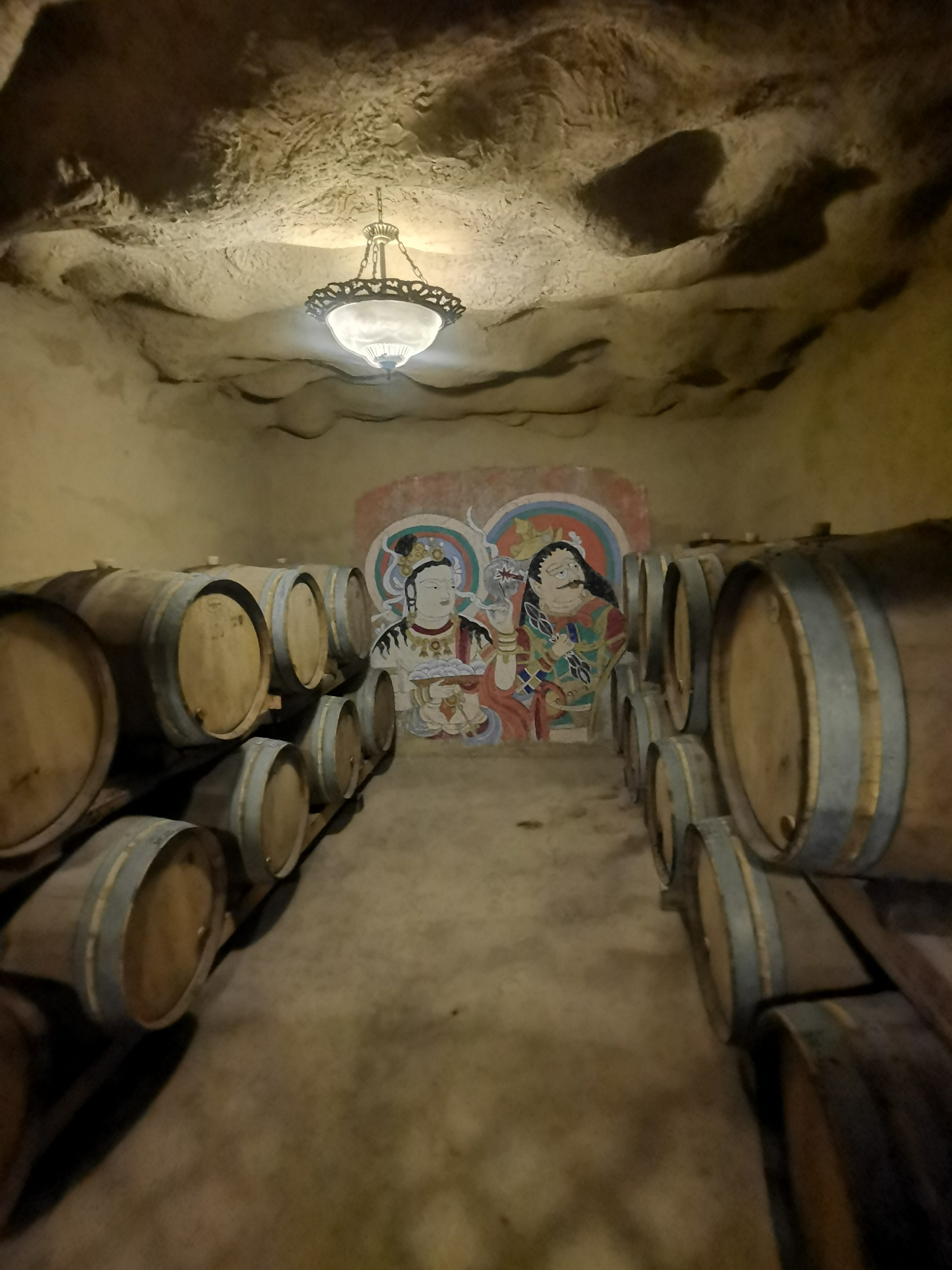
The tour was both informative and enjoyable. We learned about the history of winemaking in Turpan, a region with over 2,000 years of viticulture history, dating back to the Tang Dynasty. Turpan’s unique climate—hot, dry, and sunny—makes it perfect for growing grapes, particularly the seedless varieties used in local wines. The most fascinating part of the visit was exploring the wine bottling area and the underground wine cellar. Another highlight was a room featuring replicas of ancient Buddhist murals. The guide explained that many original murals have been damaged over time due to the harsh desert climate, and these faithful reproductions allow visitors to appreciate the art and its historical context.
At the end of the tour, visitors had the option to taste a glass of red or white wine. We also tried a premium red, finally fulfilling our small wish to sample Turpan wine. The guide’s humor and storytelling made the experience even more memorable, turning a simple wine tasting into a cultural journey through local history and tradition.
Shanshan Jurassic Museum: A Surprisingly Impressive Free Attraction
After returning to our hotel, we headed to the Shanshan Jurassic Museum, conveniently located right across the street. One reason we booked this hotel was its proximity to the museum, so missing it wasn’t an option.


Admission is free, which initially made us wonder about the quality—but the museum exceeded expectations. A giant dinosaur skeleton greeted visitors at the entrance, likely a replica but still awe-inspiring. Inside, exhibits covered dinosaur excavations in Xinjiang, the evolution of prehistoric animals, geological changes, and a wide array of fossils. While most of the explanations were in Chinese, the displays themselves were rich and engaging. Families with children would particularly enjoy it, but even for adults, the sense of walking among the remnants of creatures that once ruled the Earth was thrilling.
Xinjiang has become famous for its dinosaur fossils in recent decades, with significant discoveries near Shanshan and other desert regions. The museum showcased these finds, emphasizing the scale of the prehistoric creatures and the scientific work required to excavate and preserve them. It was an unexpected highlight of our day and a reminder of how vast and diverse Xinjiang’s cultural and natural heritage is.
From Shanshan to Turpan: Hotel Upgrade, Rest, and Sunset
After the museum, we boarded the train to Turpan. This time, we booked a hotel in the city center, learning from previous experiences to avoid long commutes. The train ride was smooth, and we settled into our hotel room comfortably, grateful for air conditioning and a bit of rest after the morning’s activities.
Turpan’s afternoons can be sweltering, with temperatures often reaching well over 35°C in October’s early days. We took a short nap and relaxed before heading out in the evening to Jiaohe Ancient City, ensuring we could explore in cooler, more comfortable light.
Jiaohe Ancient City: Wandering Through a Sun-Baked Maze
Jiaohe Ancient City is one of the oldest and best-preserved earthen cities in the world, dating back to the 2nd century BCE. It was once an important city in the ancient Kingdom of Jushi, strategically located along the Silk Road. Its stepped layout follows the natural contours of a river valley, accommodating residences, palaces, temples, and storage areas. Many structures incorporated underground spaces as natural “air conditioners” to cope with Turpan’s scorching summers—a testament to the ingenuity of ancient urban planning.
The entrance to Jiaohe is far from Turpan’s city center, so we took a shuttle bus and then explored on foot. Walking among the high and low earthen walls felt like navigating a labyrinth. Some walls were sunken, while others rose impressively above the ground, creating a patchwork of shadows and textures. The fading sunlight cast a warm glow across the city, and although the sunset itself wasn’t spectacular, the quiet desolation of the desert ruins was deeply moving.


As night fell, staff lit small lanterns along pathways, and subtle lighting highlighted portions of murals. The ancient city glimmered softly in the evening breeze, creating a poetic, almost magical atmosphere. Even though we were too tired to linger, the stroll left a lasting impression—one of both historical awe and a quiet connection to the centuries of life that once thrived here.
Difficulty Catching a Taxi at Jiaohe
Leaving Jiaohe proved more challenging than expected. Several groups of visitors were waiting, and taxis were scarce. Two young women couldn’t get a ride and had to walk farther to try their luck, while a mother with two children grew increasingly anxious. We ourselves had to use two different taxi apps before finally securing a car, which required the driver to take a slightly longer detour.
Seeing these small struggles made us realize how essential a little flexibility and patience are when traveling in less-touristy areas. We suggested sharing a ride with the mother’s family if the driver allowed, and just as we discussed, another driver passed by with available seats. Everyone got safely into town, which was both amusing and reassuring.
Jiangke Huozhou Banquet: A Perfect Ending with Lamb Racks


Back in Turpan, we picked a highly-rated restaurant for dinner: Jiangke Huozhou Banquet. To our delight, they offered small portions of their signature lamb rack, perfectly suited for two people. We ordered several dishes, each beautifully prepared and delicious, combining succulent meat, fragrant spices, and the hearty flavors that define Xinjiang cuisine.
The combination of the day’s experiences—the morning wine tasting, the fascinating dinosaur museum, the quiet majesty of Jiaohe ruins, and finally, the aroma of lamb—made for a perfect ending. We left the restaurant full, satisfied, and reflective, realizing that a simple transit day had transformed into an unexpectedly rich adventure.



Leave a Reply