
Kushiro to Tomakomai
29 September 2026
So this morning, we checked out early and started our drive towards Tomakomai, where we would board the ferry to Sendai.
It was going to be a long drive. We estimated around five hours using the non-toll roads, and since we really did not want to run into any unfortunate delays and miss the ferry, we decided that an early start was the safer option.
The route also gave us a very different side of eastern Hokkaido.
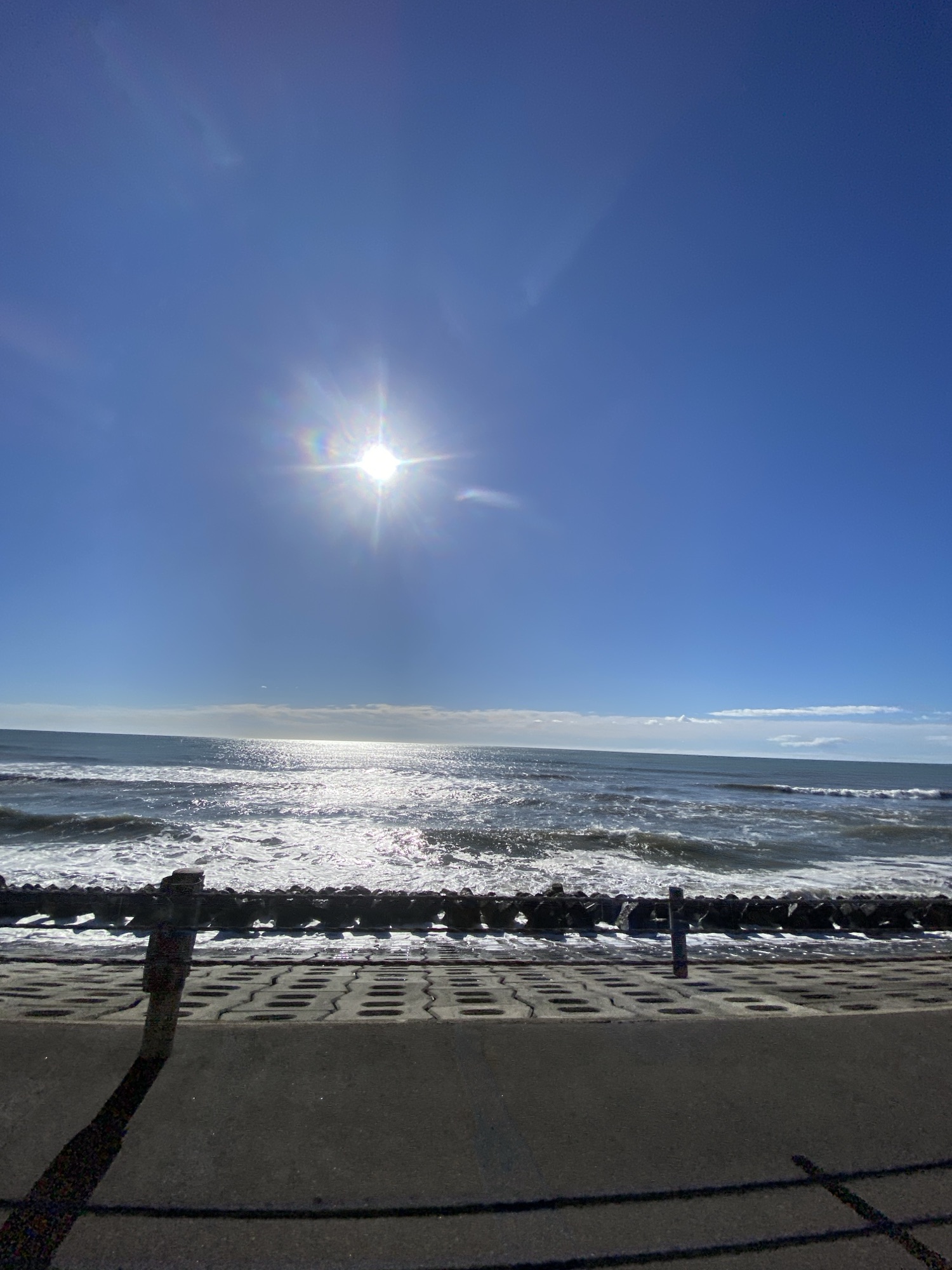
Rather than taking the faster highway route, we headed down towards Urakawa and followed the Pacific coast for quite a while. It was one of those drives where the journey itself became part of the day. The sea kept appearing beside the road, while the landscape gradually changed from the urban surroundings of Kushiro into the much more open scenery of the Hidaka region.


There were also some slightly less romantic parts of a long road trip.
I saw two road kills along the way, which is always a reminder that these coastal and rural roads are very much part of a working landscape rather than a carefully curated scenic route. At the same time, we spotted eagles flying low over the fields and roadside areas, presumably looking for an opportunity to hunt. Then there were horses.
Lots of horses.
Driving through Urakawa, Hokkaido’s horse country
Urakawa is one of the places where the connection between Hokkaido and horse breeding becomes particularly obvious. The town sits between the Pacific Ocean and the Hidaka Mountains and is one of Japan’s important thoroughbred-producing areas. The wider Hidaka region accounts for around 80% of Japan’s light-horse production, while Urakawa itself has around 3,000 thoroughbreds in its pastures.
The western and southern parts of Urakawa are particularly known for their broad pasturelands, and the local tourism organisation calls the area along the Hidakahorobetsu River and Motoura River the Urakawa Thoroughbred Road. This is an area with roughly a century of horse-breeding history, so seeing horses grazing beside the road was not just a random countryside sight. It is one of the defining industries and landscapes of this part of Hokkaido.
I had actually wanted to collect the Urakawa manhole card as another little travel souvenir, but unfortunately that did not work out. The distribution had been temporarily suspended until October, so that was another one for the “almost” collection.
A quick stop for bread and shishamo
We stopped at one of the roadside rest stops along the way and found some surprisingly good salted bread. It was exactly the sort of simple thing that makes a long driving day more enjoyable: nothing particularly fancy, just good bread at the right moment.
We also stopped at カネダイ大野商店 in Mukawa to try grilled shishamo.
This was actually quite an interesting stop because real shishamo is not the same fish as the capelin commonly sold outside Japan as “shishamo.” The genuine shishamo is a rare fish found naturally along parts of the Pacific coast of Hokkaido, and Mukawa has built an entire local food culture around it. The fish was traditionally an important local food before processors began drying it and selling it more widely outside the region. “Mukawa Shishamo” was later registered as a regional collective trademark.
The timing of our visit was also interesting.
We were there on 29 September, just before the main shishamo fishing season. The fish normally approaches the coast and rivers in autumn for spawning, with the fishing season generally running from October into late November, depending on the annual conditions.
So when I said I would have preferred to try the shishamo sashimi but unfortunately it was not the season yet, that was actually quite literal. Fresh shishamo sushi and sashimi are seasonal delicacies, with local restaurants generally offering them around October and November. Some local establishments specifically list shishamo sushi as a limited seasonal dish.
That made me slightly regret the timing, because this is exactly the sort of regional food experience that is difficult to reproduce elsewhere.

Still, we did get to try the grilled shishamo, and the person serving us was very friendly. It was a nice little stop before getting back onto the road.
If you are specifically travelling to Mukawa for shishamo, October to November is the period to aim for, rather than late September. The fishing season and restaurant availability can vary, so it is worth checking locally before making a special detour.
Arriving in Tomakomai
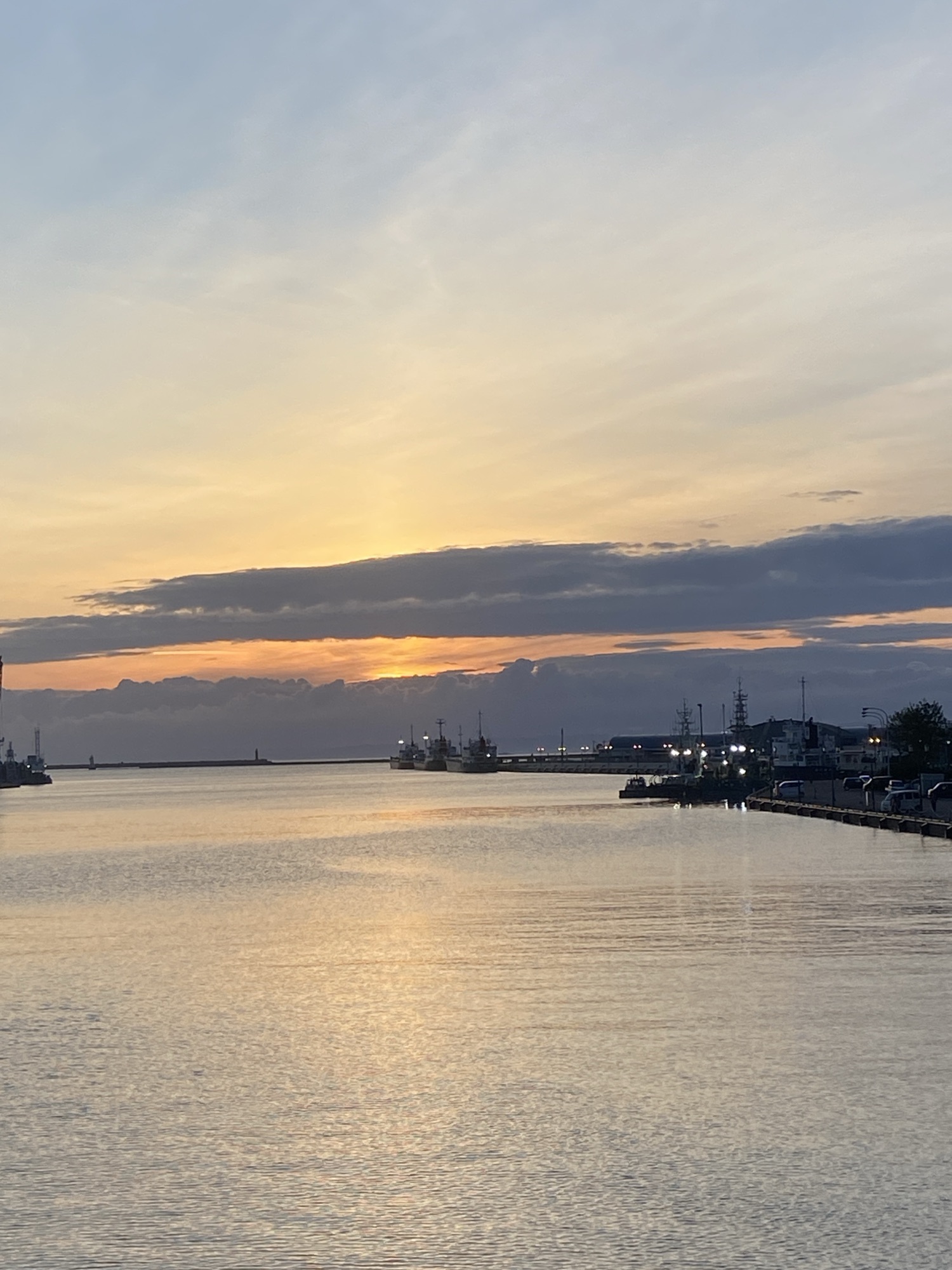
Eventually, we made it to Tomakomai.
Our first stop was 苫小牧市役所 to collect the Tomakomai manhole card. At least this one worked out.
Tomakomai is an interesting place to arrive by road because it is much more than simply a ferry port. Its modern identity is closely tied to industry, logistics and the sea. The area was already an important settlement and administrative centre during the development of Hokkaido, while the arrival of the railway in 1892 and the later development of the industrial port fundamentally changed the city. The first ship entered Tomakomai’s industrial port in 1963, and the first ferry arrived in 1972.
In other words, the ferry we were about to board was part of a much larger history of Tomakomai developing as one of Hokkaido’s major transport connections with the rest of Japan.


After the town hall, we had lunch at a conveyor-belt sushi restaurant before heading to イオンモール苫小牧 for some browsing and shopping.
By this point, we were really just enjoying the familiar Japanese shopping-centre routine: wandering around, looking at things, and seeing what we might want to take with us.
Eventually, we bought some Rokkatei desserts and snacks, because apparently no trip through Hokkaido is complete without bringing back something from Rokkatei.
We also went over to the UNIQLO across the street before finally heading back to the car.
Then came the less exciting but necessary part of the day: filling up the petrol and returning the rental car.
From the rental car to the ferry
Once the car was returned, we were suddenly left with all our luggage.
Normally, we would probably have taken the bus to the ferry terminal, but after the long drive and everything else we had done that day, we simply could not be bothered.
So we took a taxi.
And yes, it cost a leg.
But sometimes there is a point in a trip where saving a little money is simply not worth dragging luggage around when everyone is already tired.
So if you are travelling light, the bus is obviously the more economical option. With several pieces of luggage and tired parents, however, we decided that the taxi was worth paying for on this particular evening.
And then, finally, we saw it.
The ferry.
Boarding the Taiheiyo Ferry KISO
We boarded the huge Taiheiyo Ferry KISO on time, and just like our previous Japanese ferry experience, it immediately felt less like simply getting on a boat and more like checking into a small floating hotel.
The Taiheiyo Ferry operates the Tomakomai–Sendai route as part of its wider Hokkaido–Tohoku–Nagoya network. The Tomakomai–Sendai crossing covers around 560 km and takes roughly 15 hours, so there is plenty of time to settle in rather than treating the ferry as simply transportation.
And there is quite a lot to do once you are onboard.
There is a large public bath, restaurants and cafés, a shop, cinema/theatre facilities, games and, on KISO, even a karaoke room.


The public bath is probably one of my favourite things about travelling by Japanese ferry. After spending most of the day sitting in a car, being able to go upstairs, take a proper bath and stretch out in warm water while travelling across the sea feels surprisingly luxurious.
The KISO also has a theatre lounge where movies are shown, and scheduled entertainment is offered on the route, although the exact programme can vary by sailing.
There are also vending machines, a shop, places to sit and watch the ocean, and enough little facilities that you do not really feel trapped on a ship for the next 15 hours.
By the time we had settled in, the long drive seemed quite far away.
We had spent most of the day travelling south along the Hokkaido coast, watched the landscape change, passed horse farms around Urakawa, stopped for shishamo in Mukawa, collected another manhole card in Tomakomai, did some last-minute shopping, returned the rental car and finally made it onto the ferry.
Now all we had to do was cross the sea.
So that’s today.


Leave a Reply