
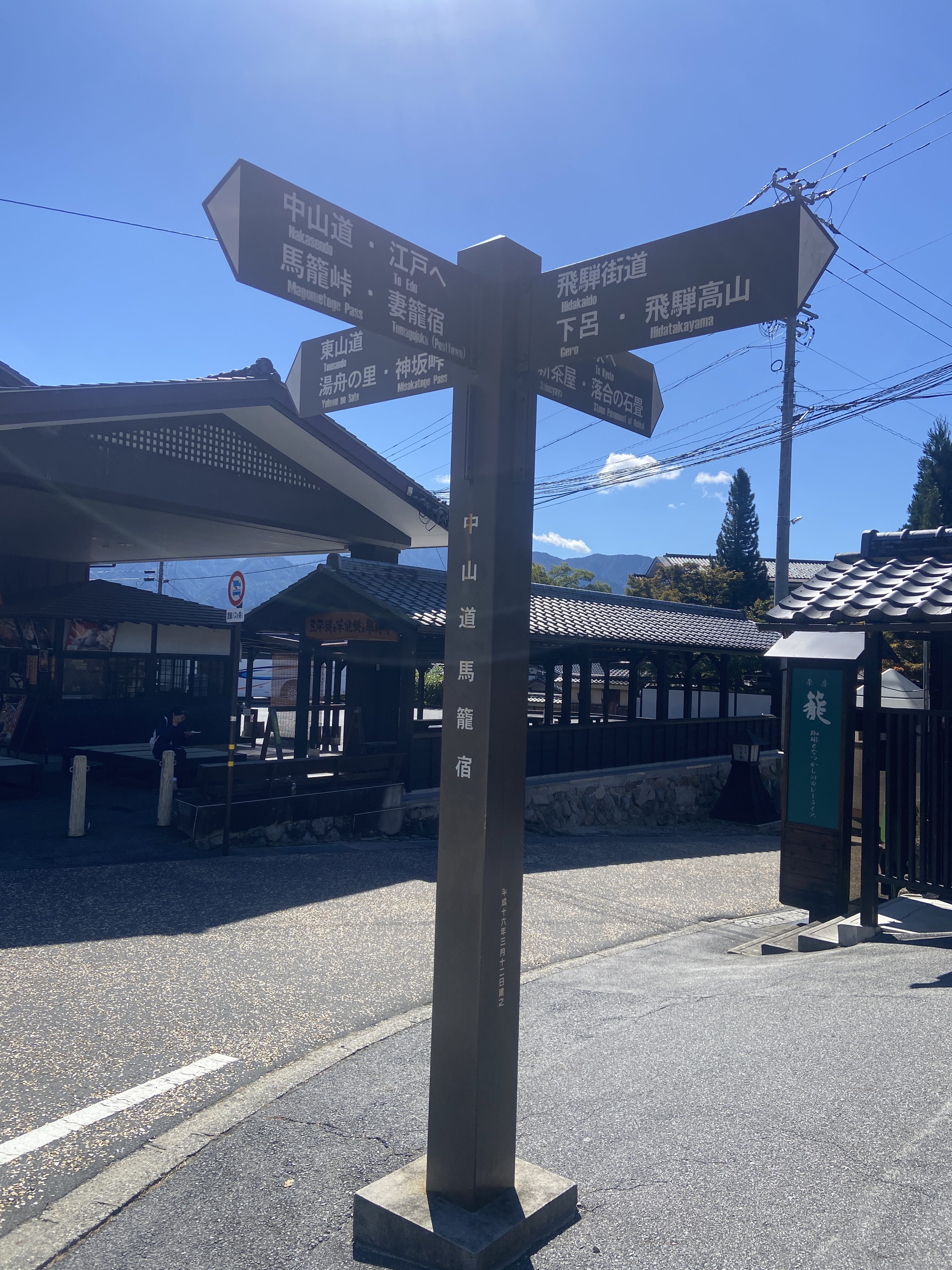
15 October 2026 | Matsumoto → Nakatsugawa → Magome → Nagoya → Chubu Centrair Airport
The final day of our Japan trip took us back to Magome-juku, one of the historic post towns along the old Nakasendo Highway. Rather than spending the morning shopping for a replacement suitcase, we decided to make one last stop at this charming mountain town before heading to Chubu Centrair International Airport for our evening flight.
From Matsumoto to Nakatsugawa: A Gifu Morning Service Breakfast
Initially, we considered visiting a shopping mall to buy a new suitcase. One of our luggage wheels had broken during the Takkyubin (宅急便) luggage forwarding process, and dragging it around was becoming rather inconvenient. However, instead of spending our last morning shopping for luggage, we decided to put up with it and head to Magome for a final sightseeing stop.
We took the train from Matsumoto to Nakatsugawa (中津川), where we left our luggage at the station’s luggage storage facilities. This was a sensible decision, especially since Magome’s main street runs uphill and is paved with uneven stone paths. There was little reason to bring all our luggage along.
Before catching the bus, we stopped for breakfast.

In many traditional coffee shops, known as kissaten (喫茶店), ordering a coffee during breakfast hours comes with a complimentary breakfast set. Depending on the establishment, this might include thick-cut toast, a boiled egg, salad, yoghurt or other small sides.
This tradition became particularly popular in the post-war Showa period, especially around Nagoya, where coffee shops competed to attract regular customers, including local business owners and workers. What started as a way to make a simple cup of coffee more appealing gradually became an established part of the region’s breakfast culture.
After breakfast, we made our way to the bus terminal and boarded the bus to Magome.
Revisiting Magome-juku: Walking Through an Edo-period Post Town
This was my second visit to Magome-juku (馬籠宿), and it was just as pretty as I remembered.
Magome is one of the best-preserved historic post towns along the Nakasendo (中山道), the old mountain route that connected Edo (present-day Tokyo) with Kyoto during the Edo period (1603–1868).
The Nakasendo was one of the Five Routes (五街道) established and maintained under the Tokugawa shogunate. Unlike the coastal Tokaido route, which followed the Pacific coastline, the Nakasendo travelled through the mountainous interior of central Japan. It passed through present-day Saitama, Gunma, Nagano, Gifu and Shiga prefectures.
The route had 69 post towns where travellers could rest, eat, change horses and find accommodation. These towns were particularly important for samurai, merchants, government officials and ordinary travellers making the long journey between Edo and Kyoto.
Magome was the 43rd post town when counted from Edo. Its location on a steep mountainside makes it quite distinctive compared with many other post towns. The main street climbs uphill, with traditional wooden buildings, stone paving, small shops and waterwheels giving the town its characteristic appearance.
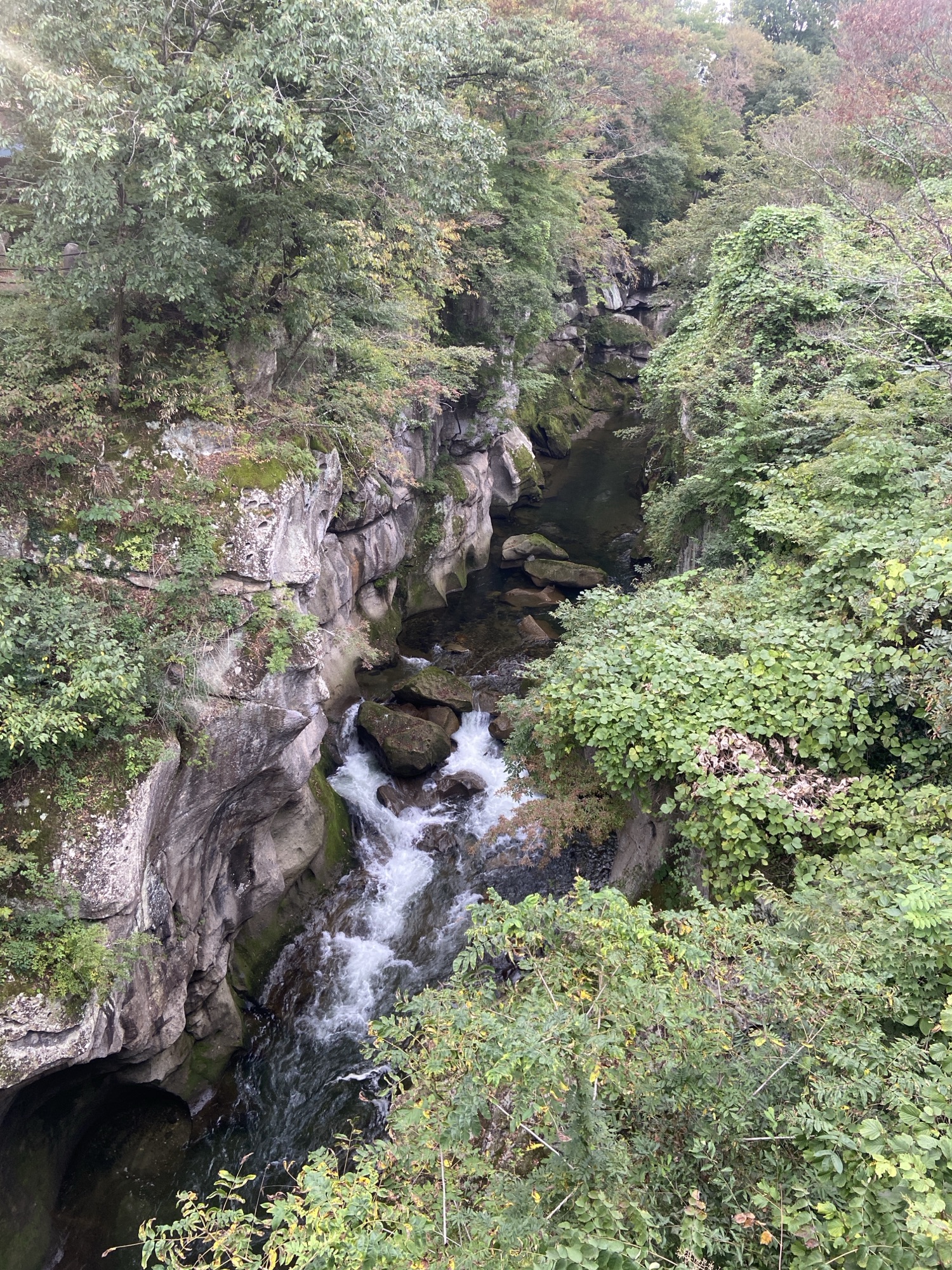
We took our time walking uphill through the narrow streets, passing traditional wooden houses and the old waterwheels along the way. The combination of the sloping stone paths, wooden architecture and surrounding mountain scenery makes Magome particularly picturesque.


Of course, a walk through Magome would not be complete without trying some of the local snacks.
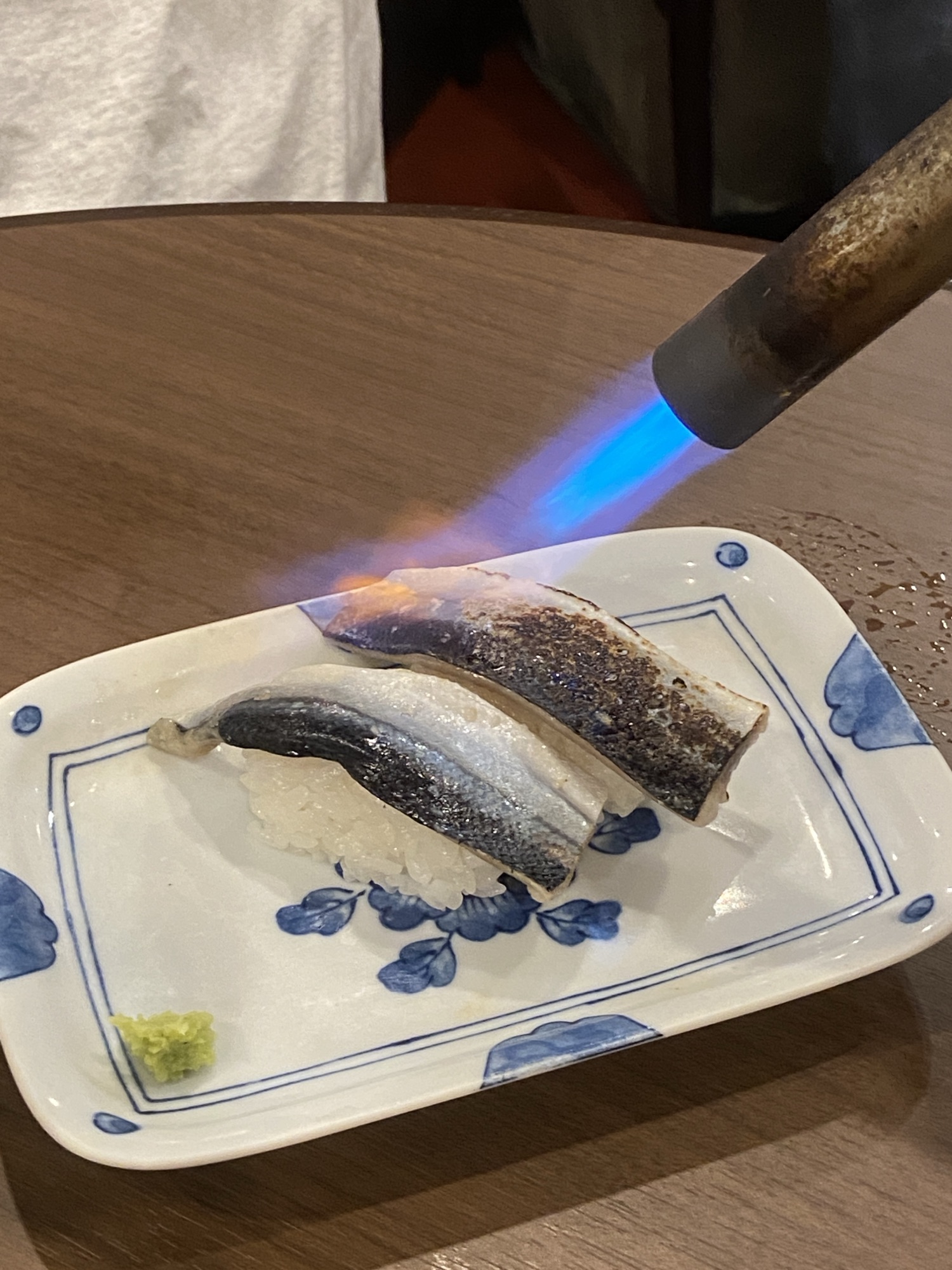
We slowly made our way uphill, stopping along the street for sushi, onigiri, tea and various grilled snacks on sticks. There were plenty of little shops selling traditional Japanese treats, making it easy to turn a short sightseeing walk into a leisurely food stop.
It was a nice way to explore the town without rushing from one attraction to another. The only downside was that the sun was surprisingly hot that afternoon. Walking uphill under the strong autumn sunshine was a little more tiring than expected, so the occasional food and drink stops were very welcome.
Despite having visited before, Magome still had the same charm. Sometimes revisiting a place is just as enjoyable as discovering somewhere new, especially when there is no need to rush through the experience.
From Magome Back to Nagoya and Chubu Centrair Airport
After spending some time exploring Magome, we made our way back to the bus stop and waited for the bus to return to Nakatsugawa Station.
We collected our luggage and continued towards Nagoya by train. From Nagoya Station, we transferred to the Meitetsu railway to reach Chubu Centrair International Airport (中部国際空港), also known as Centrair.
We arrived at the airport fairly early, which gave us plenty of time to check in and explore the airport before our flight. Rather than simply waiting around at the departure gate, we browsed the airport shops, did a little last-minute shopping and had a bowl of noodles.

Eventually, it was time to board our flight to Taiwan, where we would transit before continuing our journey home.
The Final Luggage Disaster: Two Broken Suitcases in Two Days!
And then, tragedy struck again.
During the flight, it was my turn for the luggage wheel to break off!
Honestly, I was getting rather frustrated by this point. Two suitcases, two consecutive days, and two separate luggage incidents. The first one had already given us trouble during the Takkyubin transfer, and now another wheel had decided to give up during the flight.
What made it worse was having to deal with the paperwork and claims under two different circumstances. It was certainly not the kind of administrative work we wanted to deal with at the end of a long holiday.
Still, putting the luggage incidents aside, the trip itself had gone relatively smoothly. We had travelled across different parts of Japan, from Hokkaido and Tohoku to the Chubu region, experiencing everything from historic towns and mountain scenery to local food, traditional festivals and long-distance ferry journeys.
There were plenty of memorable moments along the way, and even though the journey ended with a little luggage drama, we were thankful that we had completed the trip safely.
And that was the end of our Japan journey.
Not quite the perfect ending we had imagined, but certainly a trip worth remembering.
Practical Travel Guide: Matsumoto to Magome to Chubu Centrair Airport
If you are planning to visit Magome on your way to Chubu Centrair Airport, it is possible to fit it into a travel day, provided you plan your train and bus connections carefully.
1. Matsumoto to Nakatsugawa
- Take the JR Shinano Limited Express from Matsumoto Station to Nakatsugawa Station.
- Journey time is approximately 1 hour 20 minutes, depending on the train.
- Reserved seats are advisable, particularly during busy travel periods.
- Check your train connections before departure, as not every service stops at every intermediate station.
2. Luggage Storage at Nakatsugawa Station
If you are visiting Magome as a stopover, leave your luggage at Nakatsugawa Station before taking the bus.
Magome’s main street is steep, with stone-paved paths. It is much more comfortable to explore without pulling a suitcase uphill.
3. Nakatsugawa to Magome by Bus
- Board the Kitaena Bus Magome Line at Nakatsugawa Station Bus Terminal, Stand No. 3.
- Journey time: approximately 25 minutes.
- One-way fare: ¥800 according to the timetable published from 1 October 2026.
- The bus is not covered by the Japan Rail Pass.
- Seat reservations are not available.
The buses do not operate at identical intervals throughout the day, so check the return timetable as well. This is particularly important if you have an onward train or international flight to catch.
4. Magome Sightseeing
Allow around 1.5–2.5 hours if you simply want to explore the main street, enjoy some snacks and visit the shops.
5. Nakatsugawa to Nagoya to Chubu Centrair Airport
After returning to Nakatsugawa, retrieve your luggage and take the JR train to Nagoya Station.
From there, transfer to Meitetsu Nagoya Station for the airport train.
- μ-SKY Limited Express: approximately 28 minutes to Centrair.
- A separate μ Ticket is required for the reserved first-class seat, in addition to the regular fare.
- Other Meitetsu services are also available, although journey times vary.


Leave a Reply