
Granada | 29 Dec 2025
Our morning began in the blue, biting cold of a pre-dawn mountain winter. We had one goal: the Alhambra. Common travel wisdom suggests that if you fail to secure tickets online weeks in advance (as we did), you can try your luck at the ticket office at opening time. This is less of a strategy and more of a pilgrimage. By the time we arrived, a queue of more than ten people was already shivering ahead of us. The atmosphere was tense—at one point, we even had a small disagreement with a man who tried to cut the line.
But when the windows finally opened, the verdict was swift: No tickets.
The Fortress Without the Crown
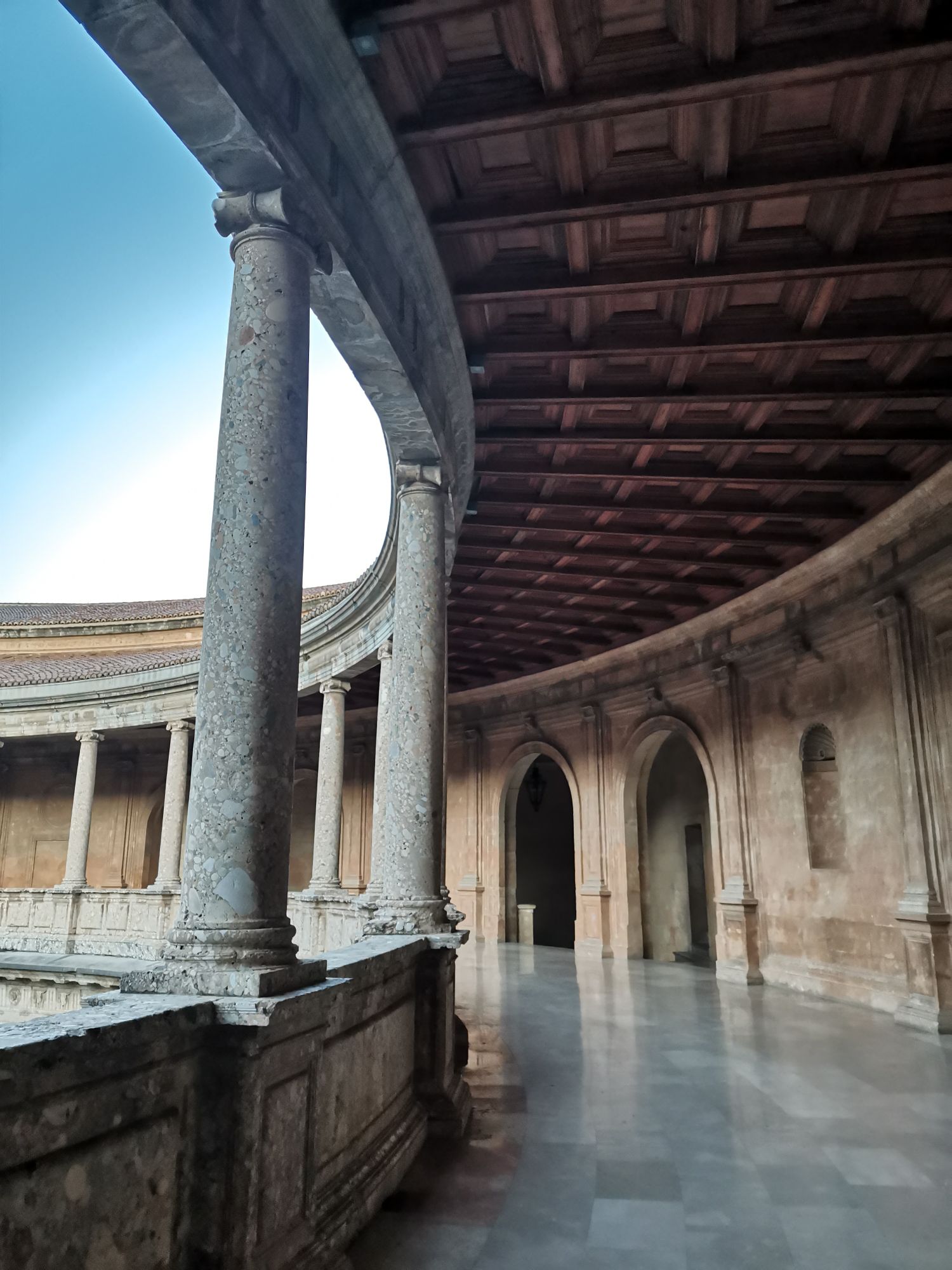
Even without a ticket to the Nasrid Palaces, you can still explore the general grounds. We spent our morning at the Palace of Charles V, a striking, circular Renaissance building nestled inside a square exterior. It feels almost like a Roman Coliseum dropped into the heart of a Moorish fortress—a physical manifestation of the Christian “conqueror” asserting dominance over the Islamic past.
Afterward, we headed back to the town center. Defeated by the queue but saved by the sun, we found a small breakfast place. Even with a wait, the friendly service was the perfect antidote to the morning’s frustrations.


The Cathedral and the Alcaicería
In the heart of the city stands the Granada Cathedral (Catedral de Granada). Built over the site of the city’s main mosque, it is one of the grandest examples of Spanish Renaissance architecture. We chose not to go in, but spent time exploring and photographing the exterior. The sheer scale of its white stone walls and the intricate carvings on the facade serve as a reminder of the power Granada held after the Reconquista.
We spent the afternoon navigating the narrow streets of the Alcaicería. Historically, this was the site of the Great Bazaar of Granada, where silk and spices from the Silk Road were traded under the protection of the Sultan. Today, it is a maze of Moorish-style archways selling tourist-oriented crafts—leather, ceramics, and lanterns. It is unashamedly touristy, but the architecture still carries the echo of the ancient souks. We sat down for some local churros and a nice focaccia before retreating for a well-earned rest.


Flamenco: A Blessing in Disguise
As night fell, we sought out the soul of Andalusia: Flamenco. In Granada, Flamenco isn’t just a dance; it’s a history of the marginalized. The most authentic way to experience it is in a Cueva (cave) in the Sacromonte district.
Our first choice had closed its online booking 15 minutes prior, and upon arrival, the queue was immense. We were told it was full and bid them adieu, feeling the day’s pattern of rejection repeating itself.
But travel rewards the persistent. We walked over to Zambra María la Canastera. We arrived early, and though they initially tried to push us to a later slot, the host relented and let us wait inside, out of the cold. Then, a moment of travel magic: the lady asked us to sit at the very best seat in the house—front and center, facing the “stage” with a small table for our drinks. Had we gone to the first place, we would have been squeezed into a corner; here, we were in the eye of the storm.
The Zambra Experience
The style performed here is the Zambra, a form of Flamenco specific to the Granada caves. This was intimate and visceral. We could feel the vibration of the heels on the floor and the snap of fingers. Flamenco is built on duende—a state of raw emotion and authenticity. Watching the singers wail their laments and the dancers channel centuries of Roma history into their footwork was the perfect way to cap our night. We walked back through the quiet streets, the rhythm of the guitar still ringing in our ears.





Leave a Reply