
Granada to Málaga — 30 December 2025
From cold stone streets to winter sunshine
We originally planned to catch the 1pm ALSA bus from Granada to Málaga, but travel has a way of quietly reshaping itself. With our time in Granada wrapping up sooner than expected—and the bittersweet reality of missing the Alhambra due to sold‑out tickets—we found ourselves lingering in the city a little longer than planned, then suddenly realising… we were ready to move on.
So we did what seasoned travellers in Spain quickly learn to do: we changed our ticket. For a small fee, ALSA allowed us to move to an earlier departure. No drama, no stress—just a small logistical shuffle and suddenly Málaga was calling sooner than expected.
Transport Notes: Granada → Málaga
- Operator: ALSA
- Journey Time: ~1 hr 45 mins (very smooth)
- Granada hotel → bus station: ~22 minutes by local bus
- Tip: ALSA tickets are flexible with a small change fee—useful if plans shift last minute. Book directly on ALSA’s website or app for easier changes.
The ride itself was… forgettable in the best way possible. Smooth roads, comfortable seats, and before I knew it, we were pulling into Málaga. I barely remember the journey—and that’s usually a good sign.
First Impressions of Málaga: A Different Andalusia
The moment we stepped out, I fell in love with Málaga immediately.
Not because of a landmark or a grand moment—but because of the weather. After Granada’s winter chill, Málaga felt like a gift. The air was soft, the sun warm enough that I could take off my winter jacket, and suddenly Spain felt gentle again. It was one of those small travel moments that quietly resets your mood.
Málaga, sitting on the Costa del Sol, has long been Andalusia’s gateway to the Mediterranean. Founded by the Phoenicians over 2,800 years ago, it later flourished under Roman rule and then as an important city in Al‑Andalus, when the Moors shaped much of southern Spain’s architecture, irrigation, and urban life. That layered history is still visible—but unlike Granada, it feels lighter here, less intense, more lived‑in.

Wandering Without a Plan
We didn’t have a clear plan for Málaga. And honestly, that felt right.
Starting from our accommodation, we simply wandered into the city streets—likely through areas near Centro Histórico. Museums appeared one after another: the Picasso Museum, the Centre Pompidou Málaga, and other cultural institutions that have turned the city into a serious art destination. Málaga, after all, is Pablo Picasso’s birthplace.
But my companion wasn’t particularly keen on museums, and instead of forcing an itinerary, we did what Málaga encourages you to do: we kept walking.


Alcazaba of Málaga: Moorish Power Above the City
Eventually, our wandering led us naturally uphill—to the Alcazaba of Málaga.
Built in the 11th century by the Hammudid dynasty, the Alcazaba served as both a palace‑fortress and military stronghold during Muslim rule. Strategically positioned on the slopes of Mount Gibralfaro, it was designed to protect the city and its port—one of the most important in Al‑Andalus.
The complex has two main enclosures, with layered defensive walls, courtyards, and gardens that echo the design language of the Alhambra (though on a smaller scale). Walking through it requires a bit of climbing—and yes, we braved it—but the effort felt fair, especially under such pleasant weather.
Inside, it was calm. Courtyards opened into quiet spaces, palm trees and stone paths softened the fortress walls, and the city unfolded below us. The light was perfect, the air relaxed.
And then something unexpected happened.
People kept offering to take photos for us. At least three different times.
It wasn’t pushy or transactional—just genuinely friendly gestures. It made us pause and wonder whether we should pay it forward too. That moment captured Málaga’s atmosphere perfectly: open, warm, unhurried, and quietly human.


From Alcazaba to Gibralfaro: A Test of Legs and Will
Next came Castillo de Gibralfaro—and this is where the day truly turned physical.
The walk between the Alcazaba and Gibralfaro is no joke. It’s climbing upon climbing, and the two fortresses, while visually close, are deceptively far apart. I made the classic mistake of not bringing a water bottle, and halfway through the hike, the Andalusian sun suddenly felt a little too generous.
So when I spotted someone selling ice‑cold water, I didn’t hesitate for a second. That bottle was pure relief.
Historically, Gibralfaro Castle dates back to the 14th century, built to strengthen the city’s defenses after Christian attacks. Together with the Alcazaba, it formed one of the most formidable defensive systems in southern Spain.
And the reward for the climb?
Absolutely worth it.
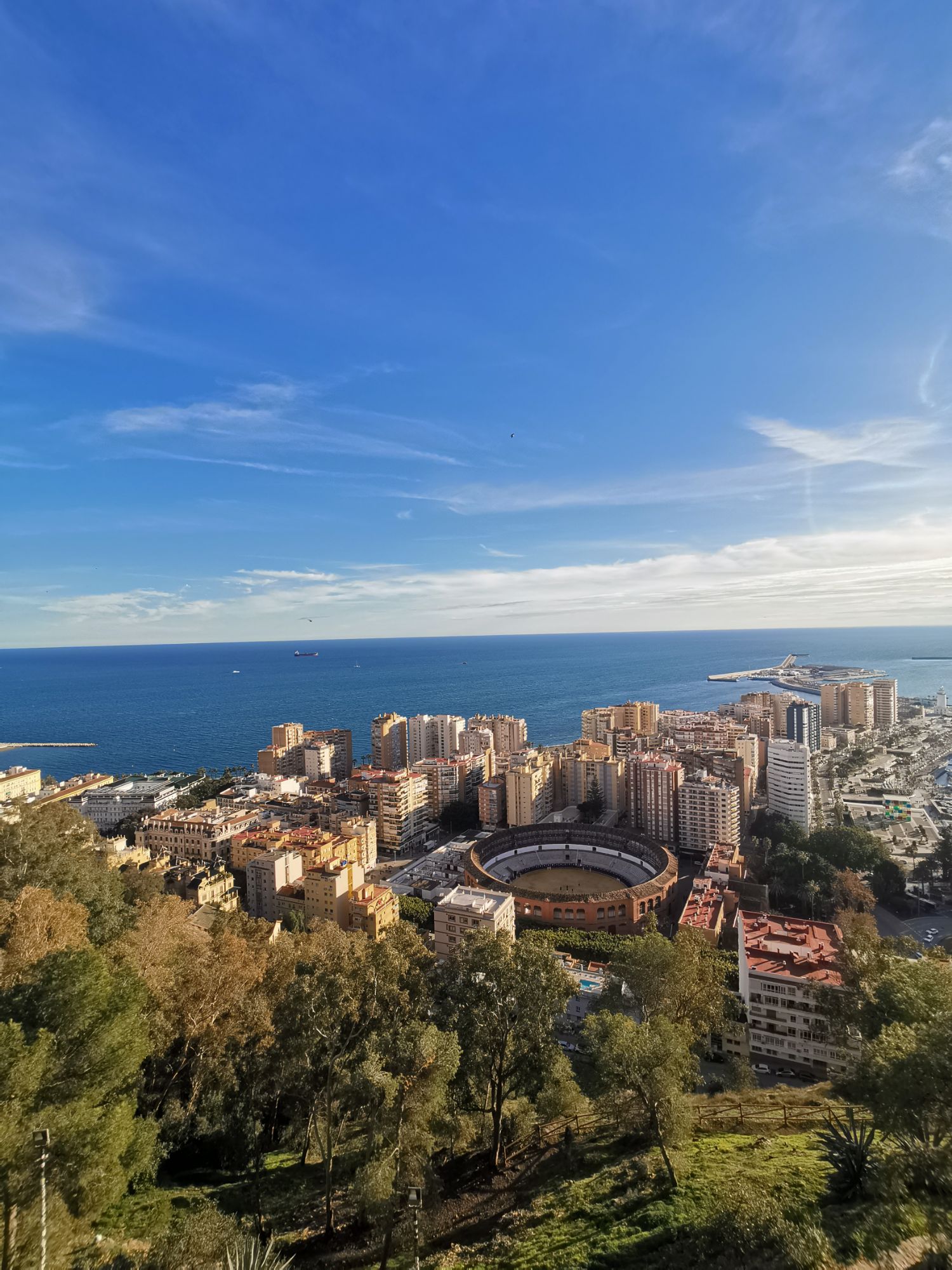
From the top, the view opens wide: the port of Málaga, the bullring (Plaza de Toros de La Malagueta), the coastline, and the city stretching inland. It’s a panoramic reminder of why Málaga mattered—for trade, defense, and control of the Mediterranean.


Practical Tip
- Bring water. Seriously.
- Wear proper shoes.
- If you’re short on energy, consider taking a taxi or bus closer to Gibralfaro and walking downhill instead.
Down to the Bullring & Evening Wind‑Down
Afterwards, we took the staircase shortcut downhill, aiming for the bullring. Unfortunately, we arrived too late—it was already closed.
Bullfighting remains a controversial but historically significant tradition in Spain, and Málaga’s bullring, built in 1876, stands as a reminder of how deeply embedded it once was in Andalusian culture. Even without going inside, seeing it from above and street level added another layer to the day.
With the light fading, we shifted gears—picked up some groceries, headed home, and began planning the next leg of our journey.
Ronda was waiting tomorrow.
And Málaga, with its winter sun and gentle pace, had already done its job: it softened us, reset us, and reminded us that sometimes the best travel days are the ones without a rigid plan.
Reflection
Málaga isn’t loud about its beauty. It doesn’t demand attention like Granada or Sevilla. Instead, it welcomes you quietly—with weather, warmth, and people who offer to take your photo without asking for anything back. And sometimes, that’s exactly what you need.



Leave a Reply