
8 January 2026
Merzouga to Ouarzazate
I woke to another freezing morning in Merzouga. The desert at dawn is deceptive — golden in photographs, merciless in temperature. It was so cold I genuinely struggled to leave the warmth of the blankets, even though we were meant to depart around 9am.
Eventually, I slipped outside for a quick look at sunrise over the dunes of Erg Chebbi. In daylight, the dunes regain their quiet dignity. The previous night’s survival mode — taping door gaps and layering every piece of clothing — felt almost surreal under soft morning light.
After breakfast, we hitched a ride with others back to the main meeting point. That was where the order dissolved.

The Desert Logistics Nobody Explains
If you’ve never done a multi-day Sahara tour, here’s what happens:
Everyone exits their respective camps at roughly the same time. Some head back to Marrakesh, others to Fes, and some — like us — continue onward.
Different agencies subcontract drivers. Groups merge, split, reshuffle. Instructions are often minimal.
The meeting area was mildly chaotic. No signs, no clear names being called. Just clusters of half-awake tourists scanning faces, hoping someone would recognise them. We messaged our driver; he called back saying someone would pick us up. That reassurance did little to reduce the uncertainty of standing there in the cold, watching luggage pile up in mismatched vans.
It felt improvised — but this is fairly typical of desert route logistics in southern Morocco, where local operators coordinate informally along long-established travel corridors.

Following the Ancient Caravan Route
Day 2 traces part of the historic trans-Saharan trade path that once linked West Africa to imperial cities like Fes and Marrakesh. Caravans carried salt, gold, textiles and stories across this terrain. Today, tourists follow similar roads — though thankfully by minivan rather than camel.
Our first major stop: Todra Gorge near Tinghir.
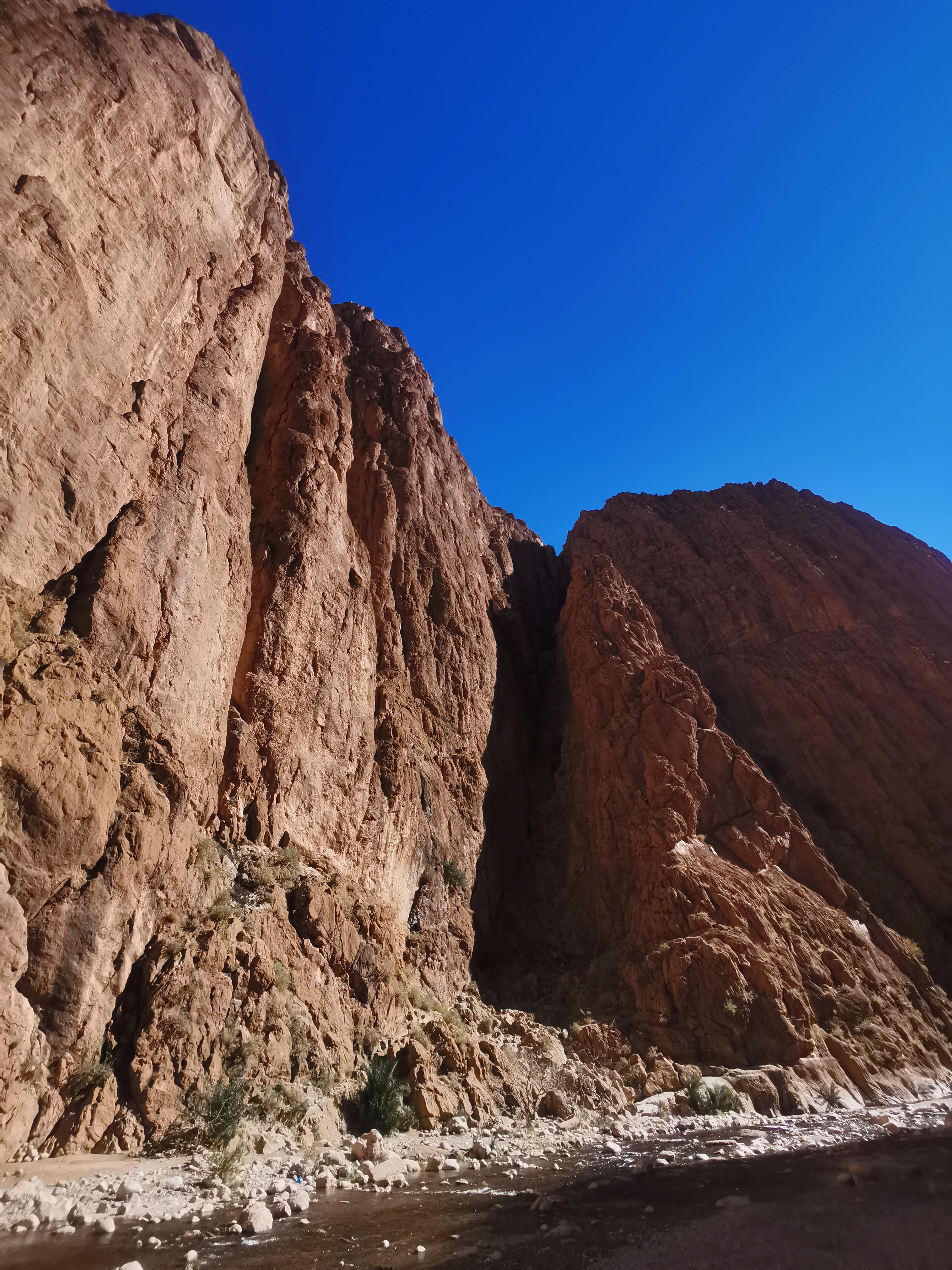
The gorge is dramatic in a way photos rarely capture. Towering limestone walls rise nearly 300 metres, forming a narrow canyon carved by centuries of river erosion. The contrast between sheer rock and the thin ribbon of water below is striking. After the muted tones of the desert, the vertical scale feels almost architectural.
It was cold — again — but beautiful. The rugged cliffs left a stronger impression on me than many of the smaller roadside stops, which blurred together in memory.


Dades Valley and the Kasbah Landscape
We continued toward Dades Valley, often nicknamed the “Valley of a Thousand Kasbahs.”
Kasbahs — fortified earthen residences built by Amazigh (Berber) families — once protected trade routes and agricultural settlements. Constructed from rammed earth and straw, their organic tones blend into the landscape. In winter light, they appear almost ruin-like — a kind of beautiful decay.
The weather amplified that feeling. Cold air, muted skies, mudbrick silhouettes against pale mountains.
Somewhere along this stretch I thought I had lost my scarf. Mild panic. It turned up in another bag later — unlike my friend’s wireless earbud, which was genuinely gone. Desert roads have a way of claiming small sacrifices.
The Long Road to Ouarzazate
The drive was long, and as usual, I drifted in and out of sleep. Desert road trips compress memory: getting in the van, getting out, brief photo stops, fragments of conversation. The Greek mother-and-daughter pair travelling with us added warmth to the otherwise subdued atmosphere. Shared discomfort creates quiet camaraderie.
By late afternoon we reached Ouarzazate — often called the “Gateway to the Sahara.”
We attempted to visit Atlas Studios, one of the world’s largest film studios, where productions like Gladiator and Game of Thrones were shot. Unfortunately, we arrived just after closing (around 5pm), so the plan was abandoned.
A reminder: winter daylight hours are shorter than you expect in Morocco.

Transport & Practical Tips (Day 2 Specific)
1. Confirm pickup details the night before.
Desert tours often involve subcontracted drivers. Ask for a name, vehicle plate number, or WhatsApp contact in advance. Not sure if one can get it, but it is best to be prepared whenever possible.
2. Expect group reshuffling.
Day 2 when you leave the desert is usually when routes diverge. Be mentally prepared for logistical ambiguity.
3. Atlas Studios timing.
Opening hours typically run until around 5pm (varies seasonally). If visiting in winter, ensure your itinerary allows arrival before 4pm.
4. Food stops.
If your group prefers fewer lunch breaks, communicate clearly. Long desert drives can be shortened slightly if everyone agrees.
5. Winter reality check.
December temperatures in southern Morocco can hover near freezing in the mornings and evenings. Layer properly — especially for canyon stops like Todra Gorge where shade traps cold air.
Reflections
Day 2 felt less cinematic than the dune sunset, more transitional — a bridge between desert and mountains.
It was colder than expected. Slightly chaotic. Some moments blurred by fatigue.
But in retrospect, this stretch revealed something important: the Sahara journey isn’t only about dunes. It’s about movement — through geological time in Todra’s cliffs, through caravan history in Dades, and through modern Morocco’s layered tourism infrastructure.
Not every day of travel is dramatic. Some are simply connective tissue.
And yet, without this road, the desert would remain isolated rather than understood.
That was our second day on the Sahara route.




Leave a Reply