
11 October 2025 | Beijing, China
Some days in Beijing feel almost cinematic — monumental, overwhelming, slightly chaotic, and unexpectedly delicious.
This was one of those days.
It was a “typical tourist day,” yes — but in Beijing, that means walking across the political heart of modern China, stepping through the ceremonial gates of emperors, and ending the night with roast duck carved tableside. So I’m splitting this into two parts — history and highlights first, then food (because Beijing deserves both).
📍 Morning at Tiananmen Square — Standing in the Political Heart of China
We arrived early at Tiananmen Square, and oh my god — the queue.
There was a confusing sign near one of the queuing zones, so many of us walked one direction only to be told to turn back and join another line. No elderly priority line that day — everyone queued. And with security checks in place, we stood in light rain for what felt like over an hour.
Booking entry was easy (the square is massive), but the bottleneck is always security.
Once we passed the checks, the space opened up — and suddenly, you understand scale in a different way.
The Historical Layout of Tiananmen Square
Tiananmen Square today is the world’s largest public square, spanning around 440,000 square meters. But historically, this area was never meant to be a public gathering place.
During the Ming and Qing dynasties, this zone was the ceremonial forecourt of the imperial city. Ordinary citizens were not allowed here. The gate at the north — Tiananmen — was the Gate of Heavenly Peace, the southern entrance to the Imperial City, behind which lay the Forbidden City.
The square we see today was dramatically expanded in the 1950s. Surrounding it now are:
- Monument to the People’s Heroes (central axis monument)
- Great Hall of the People (west side)
- National Museum of China (east side)
- Mausoleum of Mao Zedong (south)
Historically, Beijing’s urban planning followed strict cosmological principles — a north-south central axis symbolizing order between Heaven and Earth. Emperors ruled from the center, commoners lived in surrounding hutongs, and power radiated outward in layers.
Standing there in the drizzle, I tried to imagine what this space looked like 500 years ago — no crowds, no tourists, no phone cameras. Just imperial guards and forbidden silence.


🏯 Walking into the Forbidden City — The Dynasty Within Walls
From Tiananmen, we walked directly north toward our main interest: the Forbidden City.
The queue here was surprisingly manageable — likely because many people were still stuck at the square entrance.
And then… the gates opened.
The Layout and Imperial Order
Built in 1420 during the Ming dynasty under Emperor Yongle, the Forbidden City served as the imperial palace for 24 emperors of the Ming and Qing dynasties.
It contains:
- Over 980 surviving buildings
- More than 8,000 rooms
- A strict symmetrical design aligned on Beijing’s central axis
The palace is divided into:
Outer Court (Front Section)
Ceremonial halls where emperors conducted state affairs:
- Hall of Supreme Harmony
- Hall of Central Harmony
- Hall of Preserving Harmony
These were spaces of ritual and power — where officials knelt, tribute was presented, and imperial authority was displayed.
Inner Court (Rear Section)
Living quarters of the emperor, empress, concubines, and eunuchs.
Demographically, during peak Qing times, thousands lived inside these walls — royal family members, palace maids, eunuchs, guards. Yet the emperor himself lived in profound isolation. “Forbidden” meant exactly that — entry was punishable by death without permission.
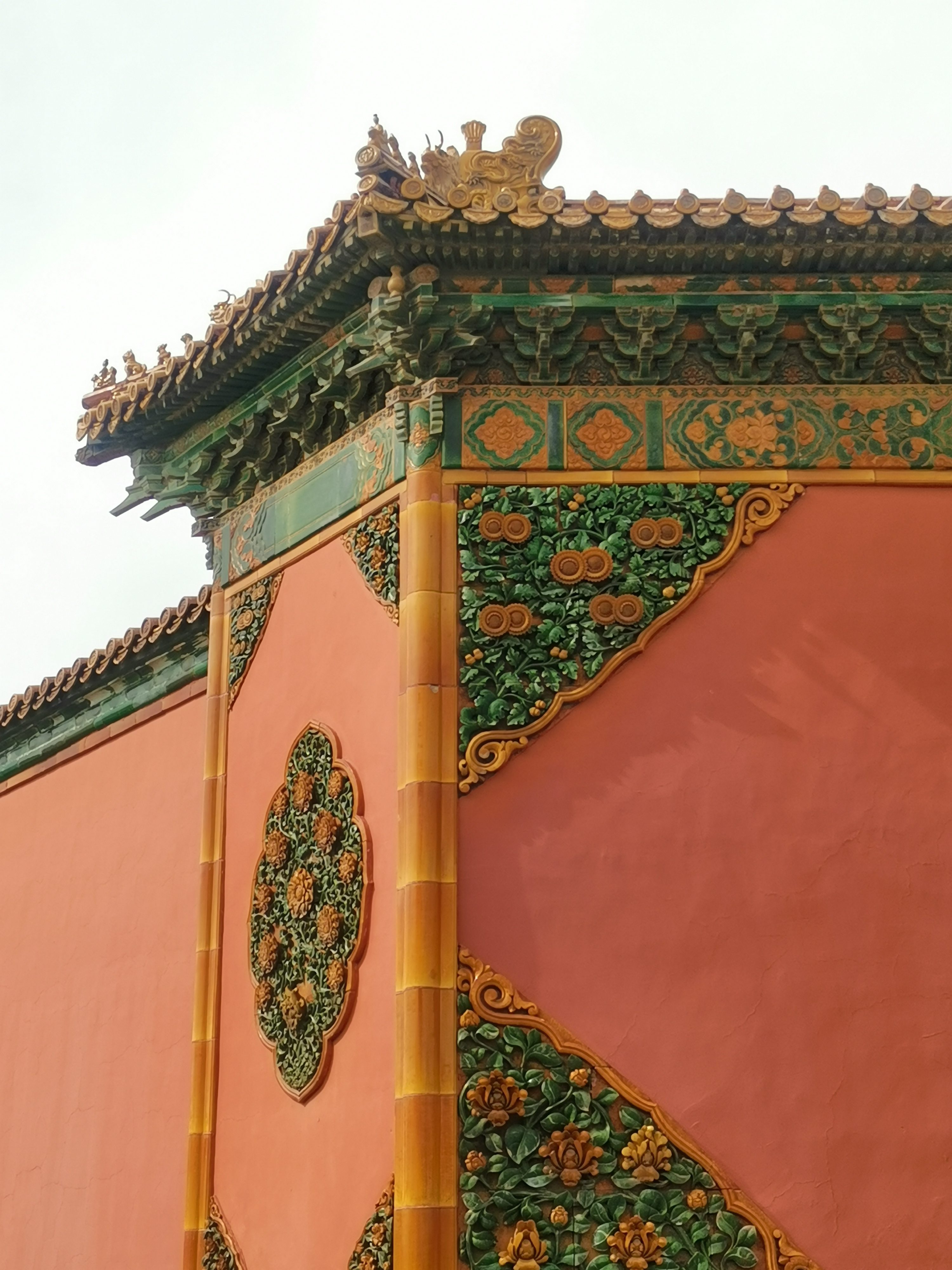
The yellow glazed roof tiles symbolized imperial exclusivity. Even the number of roof figurines signified rank.
The scale is overwhelming. After three hours inside, I understood why a mother was crying in the courtyard — her child had wandered off. Security is tight, so I’m sure the child was found, but this place is enormous.
If you’re traveling with companions — set a meeting point. Don’t rely on “we’ll just text.”
🎧 Guide or No Guide?
If you don’t hire a guide, you honestly can’t avoid history. There are so many tour groups that explanations float through the courtyards in multiple languages.
Personally, I think a guide would enrich the experience — the symbolism, palace politics, concubine rivalries, power struggles. But if you prefer free and easy like me, just walk slowly and borrow knowledge from the air.


🕰 The Clock Exhibition — Where East Met West
One of my personal highlights was the Clock and Watch Gallery.
The jewellery was glamorous — but the clocks? Exquisite.
Mechanical clocks were incredibly difficult to produce in pre-industrial times. Precision engineering required hand-crafted gears, balance springs, and calibration without modern instruments. Accuracy was rare and highly prized.
When European missionaries arrived in China during the late Ming dynasty, they brought mechanical clocks as diplomatic gifts. Emperors were fascinated.
The Qing court, especially under Emperor Qianlong, became obsessed with collecting and commissioning clocks. Western craftsmen were invited to Beijing. Jesuits such as those serving at court helped introduce European mechanical techniques.
These clocks were not merely timepieces — they were moving theatres:
- Mechanical birds emerging on the hour
- Rotating celestial spheres
- Automaton musicians
Owning them signified technological superiority and cosmopolitan taste. They were luxury statements centuries before luxury branding existed.
Standing there, I realised: in that era, accurate timekeeping was power.


🚶 Qianmen — From Imperial Road to Tourist Street
After three hours, we were exhausted.
We walked south to Qianmen Street.
Historically, Qianmen was a bustling commercial district outside the imperial city walls, serving officials, merchants, and travellers. Today, it’s restored with traditional façades — crowded, lively, full of shops.
Yes, touristy. But fun.
This was once the road connecting imperial authority to everyday commerce — now it connects history to modern consumption.
🍜 A Day for Foodies — Beijing Classics & Viral Favourites
After monumental architecture, we turned to edible heritage.
🦆 全聚德 — Quanjude Peking Duck
Dining at Quanjude felt ceremonial.
Established in 1864 (Qing dynasty), it is one of Beijing’s most famous “Lao字号” (time-honoured brands). While debates exist about who first invented Peking duck, Quanjude certainly popularised it at imperial banquets.
The duck is roasted in hung ovens, giving that lacquered, crisp skin. Carved tableside. Elegant setting.
It’s premium-priced. Personally, I slightly prefer Siji Minfu — but Quanjude is iconic and worth trying at least once


🥛 紫光园奶皮子酸奶 — Ziguangyuan Milk Skin Yogurt
From Ziguangyuan.
Loved it. The creamy milk skin blends beautifully with the tangy yogurt beneath. Rich but refreshing.
It’s trending among tourists — and worth it.
Tip:
Buy from the restaurant itself. Many retail shops sell factory-made versions under the same brand, but the texture isn’t as silky. The restaurant version feels fresher, almost handmade.
Factory vs restaurant? I’ve tried both. Restaurant wins.
🍦 裕泰绿茶冰淇淋 — Yutai Tea Ice Cream
From Wuyutai Tea House.
Originally a traditional tea shop (founded in 1887), now famous for matcha and jasmine soft serve.
Queue looks long — but moves fast.
Smooth texture. Real tea fragrance. You can taste the jasmine, not just sugar.


🥪 小红帽三文治 — Little Red Riding Hood Sandwich
Found via Dianping. Viral.
Crispy toasted bread, generous fillings, flavourful sauces. Good coffee. Nice atmosphere.
Premium pricing again — Beijing’s café culture isn’t cheap.
I noticed multiple cafés selling similar versions, so perhaps it’s franchised. But this outlet had more options and a comfortable setting. We liked it enough to return.


🎟 Booking & Transport Tips (Very Important in Beijing)
Tiananmen Square
- Free entry but must reserve in advance via official mini-program.
- Security checks can take 1–2 hours during peak times.
- Arrive early morning to avoid worst queues.
Tiananmen Gate Tower (Chenglou)
Extremely difficult to book. Limited slots. I couldn’t secure it despite multiple attempts.
Forbidden City
- Tickets released 7 days in advance.
- Sells out quickly, especially during holidays.
- Closed Mondays (except public holidays).
- Passport required for entry.
Transport
- Beijing traffic can be jammed.
- Use subway — Line 1 stops at Tiananmen East/West.
- Didi works well but allow buffer time.
Final Thoughts
Yes — reservations are stressful.
Yes — traffic can be frustrating.
Yes — drizzle and long queues can test patience.
But this day gave us monumental architecture, imperial history, cross-cultural craftsmanship, street energy, and unforgettable food.
Beijing is not subtle. It is layered, ceremonial, vast — and delicious.
And somehow, standing under grey skies in the largest public square on earth, eating milk skin yogurt afterward, it all made sense.



Leave a Reply