
14 October 2025
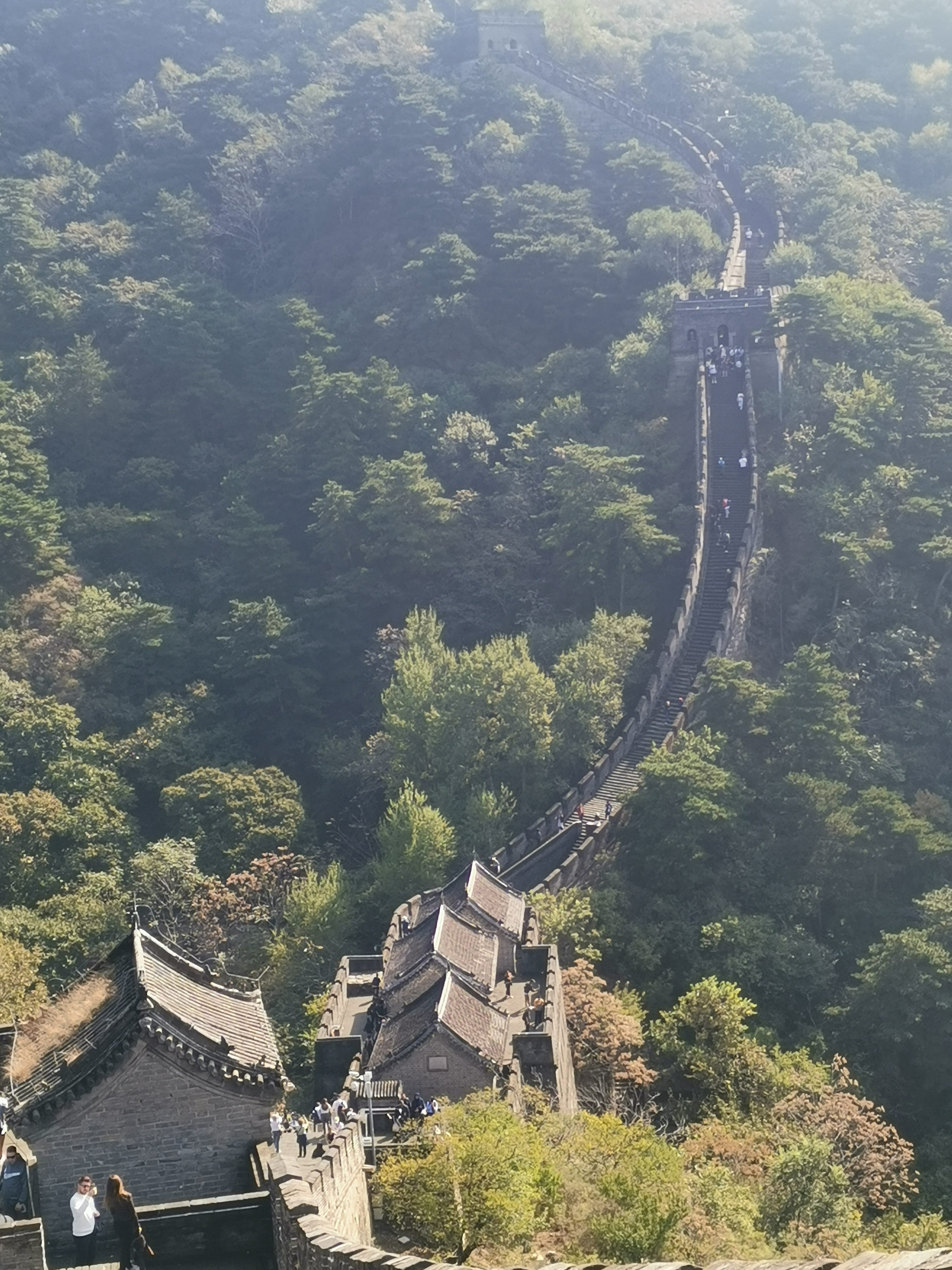
The final full day of our China trip felt like it had been building up to one moment — visiting the Great Wall of China. It’s one of those landmarks you grow up seeing in books and documentaries, yet it almost feels unreal until you finally stand on it yourself.
After some research and discussion, we decided not to visit Badaling, the most famous section of the wall near Beijing. Instead, we chose the Mutianyu Great Wall. The reason was simple: Mutianyu is known for being less crowded, more scenic, and better preserved, while still being relatively easy to reach from Beijing.
Another factor that convinced us was the presence of a cable car or a chair lift and a toboggan slide — which sounded like a fun way to experience the wall without exhausting ourselves climbing the entire mountain.
After all, this was already near the end of our trip, and we had been walking for days.
An Early Morning Start from Qianmen
To get there, we woke up early and headed to Qianmen Street, an area just south of Tiananmen Square where tourist buses depart for the Great Wall.
The bus journey to Mutianyu took about 1.5 hours. The ride itself was surprisingly smooth, and since we had woken up early, we ended up sleeping for most of the journey.
As Beijing’s dense urban landscape slowly faded into forested hills and mountain scenery, it became easier to imagine how this ancient defensive structure was built along such rugged terrain.
The Great Wall wasn’t built in one single period. Its earliest fortifications date back to the 7th century BC, but the sections most visitors see today were largely rebuilt during the Ming Dynasty. During this time, the wall was reinforced with brick, stone, and watchtowers to defend China’s northern borders from nomadic incursions.
Mutianyu itself was constructed in the 6th century during the Northern Qi Dynasty and later rebuilt by the Ming. Its strategic importance came from protecting the northern approaches to Beijing.


Arriving at Mutianyu
When we arrived, we walked towards the ticket area to purchase entrance passes. Luckily, the queue was not too long, which was a relief considering how popular the Great Wall can get.
One thing that caught my attention immediately was the number of cats wandering around the entrance area. They seemed completely comfortable among the visitors — perhaps unofficial guardians of the wall.
There were also quite a number of foreign tourists, which made the atmosphere feel very international.
Understanding the Mutianyu Watchtower Route
One thing that can be slightly confusing for first-time visitors to the Great Wall is the watchtower numbering system.
At Mutianyu, the wall is divided into sections marked by numbered watchtowers, which historically served as military lookout points and signalling stations. Soldiers stationed here would use smoke signals during the day and fire beacons at night to warn of approaching enemies. This communication system allowed messages to travel across vast distances along the wall surprisingly quickly.
Today, these watchtowers help visitors navigate the route along the wall.
Main Access Points
Most visitors reach the wall using one of two transport options:
Chairlift 🚠
- Takes you up to Watchtower 6
- This is also where the toboggan slide starts for the ride back down.
Cable Car 🚡
- Takes you up to Watchtower 14
- This is a higher and more central section of the wall.

Typical Walking Routes
Because of these entry points, most visitors explore the wall in one of these ways:
Short Visit (Most Common)
Chairlift → Watchtower 6 → Walk a few towers → Toboggan slide down.
Scenic Walk
Cable car → Watchtower 14 → Walk toward Watchtower 20–23 → Return by cable car.
Longer Hike
Start at Watchtower 6 and walk all the way to Watchtower 20+, passing many towers along the mountain ridge.
What the Terrain Is Like
Although the Mutianyu section is considered one of the best restored parts of the Great Wall, the terrain can still be surprisingly demanding.
Some sections are relatively flat, but others involve steep staircases that climb sharply up the mountain ridges. The steps were originally built with varying heights, which could slow down invading forces during battle.
Even with modern restorations, walking between towers can still be quite tiring, especially on hot days.
That’s why the chairlift, cable car, and toboggan have become such popular options for visitors today.
Our Short but Memorable Walk on the Wall
By this stage of our journey, we were already quite tired from days of travelling, so we didn’t attempt a long hike along the wall.
Instead, we walked one section, took plenty of photos, and simply enjoyed the moment.
Standing there, surrounded by mountains and ancient stone watchtowers, it was easy to appreciate the scale of what had been built here.
Some parts required steep climbing, and even with modern steps and railings, it could be quite tiring.
That made me think about the past.
In ancient times, soldiers had to climb these mountains in armour, carry supplies, patrol the walls, and sometimes fight battles here. Even just walking up the mountain felt tiring to me — I can’t imagine how exhausting it must have been centuries ago.
It really makes you realise how much energy and effort went into defending empires and fighting wars in those days.
Cable Cars, Toboggans, and Modern Convenience
One thing I was very happy about was the modern transport options.
The cable car makes reaching the wall much easier, especially for visitors who may not want to climb steep mountain paths. The toboggan slide is also quite famous — a long metal track where you ride down the mountain on a sled.
It’s a fun contrast: an ancient military fortification combined with a rather modern amusement-park style descent.
Without these facilities, visiting the wall would definitely be a much more physically demanding experience.
Practical Travel Tips for Visiting Mutianyu
Getting There
From central Beijing, travel time is usually 1–1.5 hours.
Options include:
- Tourist buses from Qianmen Street
- Direct buses from Dongzhimen Transport Hub
- Private tour or Didi ride
Ticket Tips
You usually need three separate tickets:
- Entrance ticket
- Shuttle bus ticket (from visitor centre to the wall base)
- Cable car or chairlift ticket (optional)
If you plan to ride the toboggan, buy the chairlift + toboggan combo ticket.
Booking in advance can help during peak travel seasons.
Best Time to Visit
- Early morning for fewer crowds
- Autumn offers beautiful mountain foliage
- Winter can be scenic but cold
Returning to Beijing — A Surprise Stop
After finishing our visit, we took the bus back to the city.
Interestingly, the bus allowed us to alight near the famous Olympic stadium, the Beijing National Stadium, built for the 2008 Summer Olympics.
People often call it the “Bird’s Nest” because of its unique steel lattice design.
To be honest, it’s essentially a stadium — but since we were already there, we walked around the area, grabbed some food, and took a quick look.
After that, we returned to our accommodation.


The Perfect End to Our China Journey
By the time evening came, we were simply too tired to go out again.
But it didn’t matter.
We had accomplished something we had been looking forward to for a long time — standing on the Great Wall of China.
There’s a famous saying often attributed to Mao Zedong:
“He who has never been to the Great Wall is not a true hero.”
Whether or not that’s true, visiting the wall certainly felt like a meaningful moment.
It was a perfect way to end our China trip, before flying back to Malaysia the next day.




Leave a Reply