

10 Nov — Driving South from Yanbaru
We started the day in Yanbaru, the forested northern region of Okinawa’s main island.
Yanbaru is one of the last large subtropical forests in Japan and was designated a UNESCO World Heritage Site area in 2021. The region is known for dense evergreen forests, endemic wildlife, and relatively low development compared to central Okinawa.
From here, we drove south along the west coast — gradually transitioning from remote forest landscapes into more developed coastal towns like Nago and Yomitan.

A Quick Stop: Sakishima Sappanwood Tree
Our first stop was the Sakishima Sappanwood Tree — about a 40-minute drive.
The sappanwood tree was historically used for producing red dye and connects to the broader maritime trade history of the Ryukyu Kingdom. Okinawa once functioned as a trading hub linking China, Southeast Asia, and Japan, and natural materials like this were part of that exchange network.
It’s a short stop, but adds context to how interconnected the region once was.

Brunch at Warren’s Place, Nago (11am)
We made our way to Warren’s Place for brunch.
A solid burger spot — simple and satisfying.
One thing to note: it’s located בתוך a residential neighborhood, and they are quite strict about parking etiquette. Instructions are clearly listed online and at the entrance, and it’s important to follow them to avoid disturbing the neighbourhood.


Coffee Stop: Coffee People
We grabbed coffee from Coffee People — a low-key local café that feels more like a community spot than a tourist stop.


A Short Cave Visit
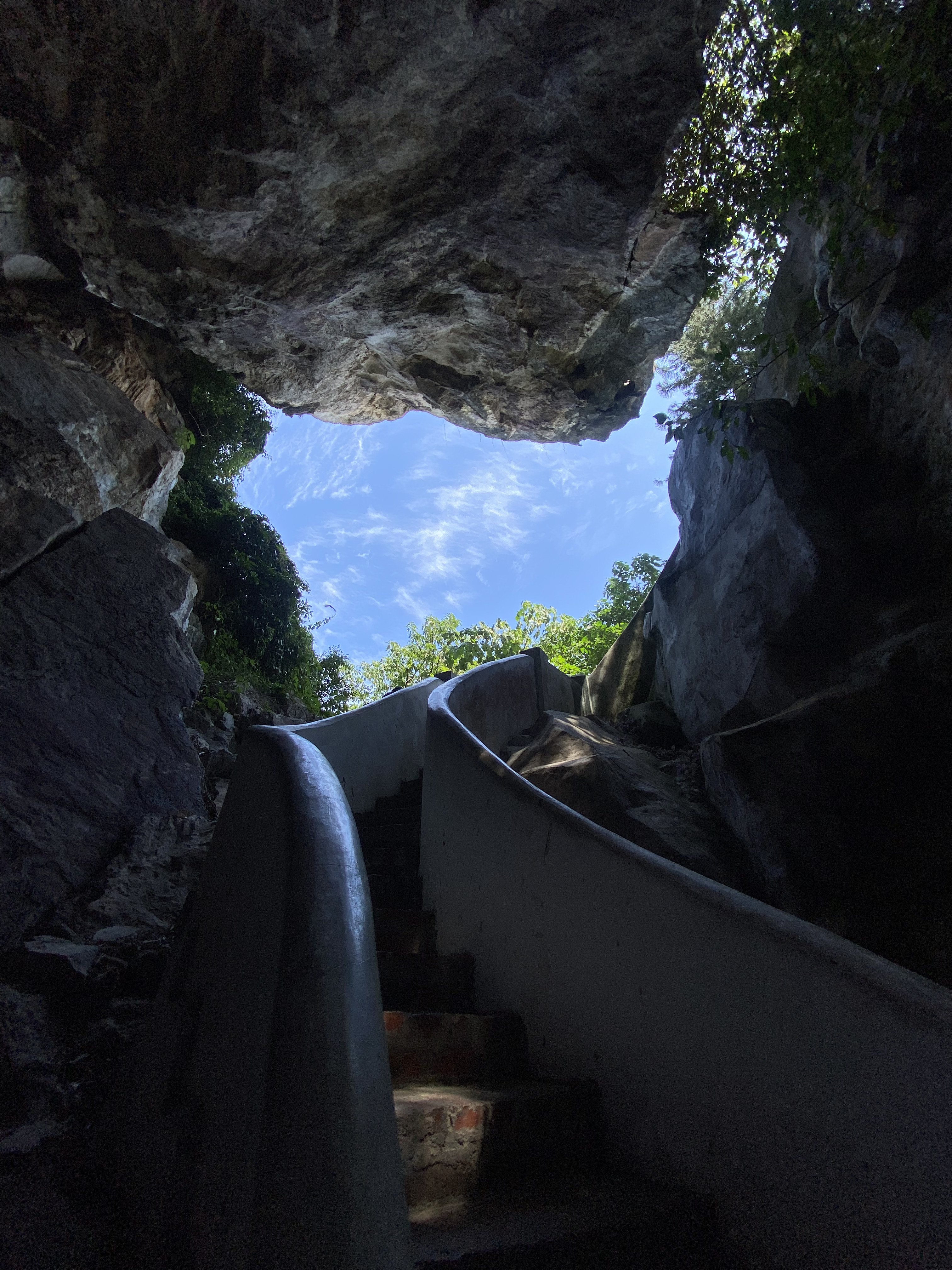
We stopped by one of Okinawa’s limestone caves for about 30 minutes.
These caves are formed from the island’s coral-based geology, but many also carry historical significance — some were used as shelters during the Battle of Okinawa.


Awamori Culture at Kamimura Shuzo (2pm)
We had a booking at Kamimura Shuzo.
Awamori is Okinawa’s traditional distilled spirit, rooted in the trade networks of the Ryukyu Kingdom. It uses long-grain rice (historically imported from Southeast Asia) and black koji mold, giving it a distinct flavour profile compared to Japanese sake.
The visit covers:
- Fermentation and distillation
- Storage and aging process
- Cultural background of awamori production


Yomitan Pottery Village — Rain, Cats & Habu Signs
We reached Yomitan Pottery Village close to 4pm, just as the rain started and shops were preparing to close.
Yomitan is one of Okinawa’s main centres for yachimun pottery, with roots tracing back to the Ryukyu Kingdom and influences from Chinese and Korean ceramic traditions.
As we walked further into the village — past the main road and deeper between the workshops — we started noticing warning signs for habu snakes.
The Habu snake is native to Okinawa and commonly found in forest edges and quieter village areas. The signs appear deeper inside because those parts of the pottery village are closer to natural surroundings.
We didn’t encounter one, but it’s something you’ll keep noticing once you start paying attention.
Also — there’s a surprisingly large colony of cats around the area.


Evening: American Village, Chatan
At night, we headed to American Village, specifically the Depot Island Boardwalk.
It’s lively, with plenty of parking and a strong American influence — a legacy of Okinawa’s post-war period under U.S. administration (1945–1972).
We had steak and pork ribs — many places were quite full. It was decent, but nothing particularly memorable. The atmosphere is the main draw here.


What We Skipped (Weather & Time)
Because of the rain and timing, we skipped:
- Busena Marine Park — known for its underwater observatory and glass-bottom boat (weather dependent)
- Ryukyu Mura — traditional village experience
- Cape Maeda — Blue Cave snorkeling/diving
Sometimes you just have to take it as it is.
Google Maps Route (Simple Reference)
Route: Yanbaru → Nago → Yomitan → Chatan
Stops to pin:
- Sakishima Sappanwood Tree
- Warren’s Place
- Coffee People
- Cave (near Nago/Yomitan area)
- Kamimura Shuzo
- Yomitan Pottery Village
- American Village
Estimated driving time (without stops):
- Yanbaru → Nago: ~1 hour
- Nago → Yomitan: ~1 hour
- Yomitan → Chatan: ~30 minutes
Transport & Practical Tips
- Renting a car is the most practical way to cover this route
- Smaller cultural spots close early (around 4–5pm)
- Marine activities are highly weather-dependent
- Follow parking instructions carefully at local eateries
- Stay on marked paths in rural or semi-natural areas (especially where habu signs appear)




Leave a Reply