
19 Nov 2026
Travelling through the Yaeyama Islands means accepting one simple reality—the weather can change your plans at any moment.
Located at Japan’s southernmost frontier, the Yaeyama archipelago enjoys a subtropical climate throughout the year. However, between late autumn and early spring, strong northeasterly monsoon winds frequently sweep across the East China Sea, creating rough waters between the islands. While sunny skies may still greet visitors on land, ferry services can be delayed or suspended with little warning.
That was exactly what happened to us on 19 November.
Our plan seemed straightforward. We would leave Iriomote Island, return to Ishigaki Island, collect our rental car and spend the afternoon exploring Ishigaki’s scenic coastline before ending the day with a long-awaited seafood dinner. Instead, our morning began with an unexpected change of plans at the ferry terminal.
A Surprise at Uehara Port
After checking out of our accommodation, we made our way to Uehara Port, located on the northwestern coast of Iriomote Island.
Google Maps:
https://maps.app.goo.gl/JqzY3Lv9Y6YxN6pS7
As soon as we reached the terminal, we noticed a large notice informing passengers that ferry services from Uehara Port had been suspended because of bad weather.
Although it came as a surprise to us, this is actually a fairly common occurrence.
Unlike Ohara Port, which is located on Iriomote’s sheltered southeastern coast, Uehara Port faces the East China Sea. During the winter months, seasonal northeasterly winds generate large swells that make it unsafe for high-speed ferries to dock. Even when the weather appears perfectly fine on land, sea conditions can be completely different just a few kilometres offshore.
Fortunately, ferry operators in the Yaeyama Islands have been dealing with these conditions for many years and have developed an efficient contingency system.


Transport Tip – Don’t Panic When Uehara Port Closes
If you are travelling with Anei Kanko or Yaeyama Kanko Ferry, don’t assume your journey has been cancelled altogether.
Most ferry tickets to Uehara include a complimentary emergency transfer whenever the port is closed.
Passengers are directed to board a shuttle bus that crosses Iriomote Island to Ohara Port, where ferries continue operating under calmer sea conditions.
There is no additional charge, and your original ferry ticket remains valid.
This backup system is one of the reasons island hopping around Yaeyama remains surprisingly reliable despite the unpredictable weather.
Crossing Iriomote One Last Time
We exchanged our original ticket for an orange boarding pass and received a 10:30am shuttle bus voucher.
Rather than seeing it as an inconvenience, it unexpectedly gave us one final opportunity to travel across Iriomote Island.
The journey between Uehara and Ohara takes around 50 minutes, passing through the island’s dense subtropical rainforest, winding mountain roads and quiet villages that many visitors never get to see.
Iriomote is unlike almost anywhere else in Japan.
More than 90% of the island is covered by subtropical rainforest, making it one of the country’s last true wildernesses. Together with northern Okinawa, Amami-Oshima and Tokunoshima, Iriomote was inscribed as a UNESCO World Natural Heritage Site in 2021 for its exceptional biodiversity.
The island is also home to the critically endangered Iriomote cat, a wild feline found nowhere else in the world.
Strict environmental protection has intentionally limited development across the island, which explains why there are relatively few roads, hotels or large towns compared with many other Japanese tourist destinations.
Looking out from the shuttle bus, it was easy to understand why so many travellers come here not for shopping or nightlife, but for hiking, kayaking, mangrove cruises and some of Japan’s most pristine natural landscapes.
A Lucky Crossing Back to Ishigaki
After arriving at Ohara Port, we boarded the ferry back to Ishigaki Port Remote Island Terminal.
Google Maps:
https://maps.app.goo.gl/L8jDw2nJzrfVJkAw7
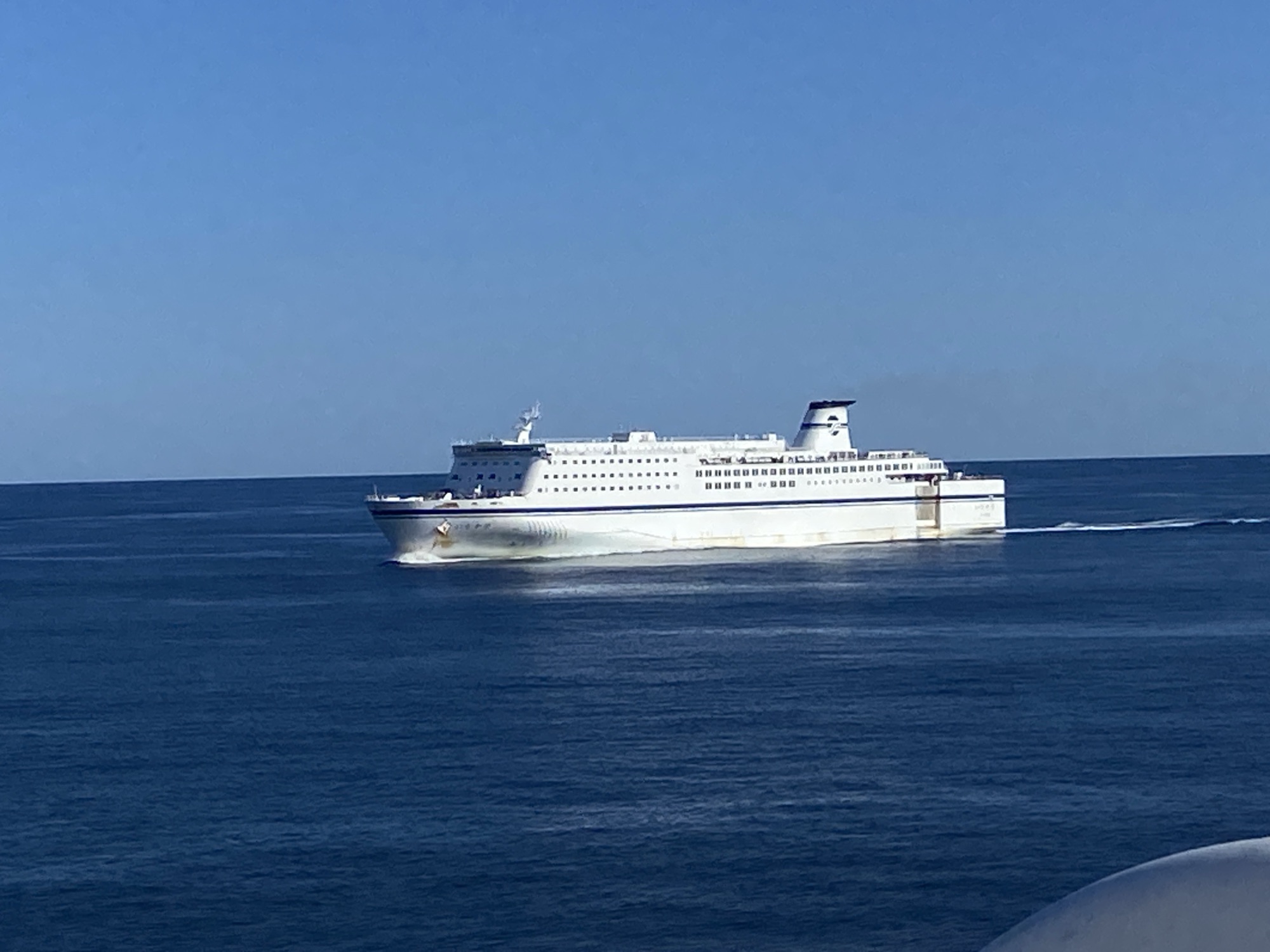
Even as the ferry departed, the sea was noticeably rougher than it had been a few days earlier. Strong winds continued throughout the crossing, and the vessel pitched considerably more than on our journey to Iriomote.
Fortunately, our ferry was still able to operate.
We discovered that the following ferry service had also been cancelled as the weather continued to deteriorate.
Looking back, we realised just how fortunate we had been.
Had our ferry also been suspended, our entire itinerary would have been significantly disrupted. We would have missed our rental car collection, delayed our hotel check-in and almost certainly lost our dinner reservation.
It served as a timely reminder that, while travelling around the Yaeyama Islands is relatively straightforward, a little flexibility is always essential—especially during the windy season.
Returning to Ishigaki
By early afternoon, we arrived safely at Ishigaki Port Remote Island Terminal, the main transportation hub connecting the Yaeyama Islands.
Located within walking distance of Euglena Mall, the ferry terminal handles services to Taketomi, Iriomote, Kohama, Kuroshima and Hateruma, making it one of the busiest ferry terminals in Okinawa Prefecture.
If you’re planning to visit several islands, this terminal will almost certainly become a familiar sight during your trip.
From the ferry terminal, we boarded the Airport Limousine Bus to collect our rental car from Sky Rent A Car, allowing us to continue exploring Ishigaki at our own pace.
For visitors spending several days on Ishigaki, renting a car is highly recommended. Although buses serve many attractions, services are relatively infrequent outside the city centre, and having your own vehicle makes it much easier to visit scenic viewpoints, beaches and cafés around the island.
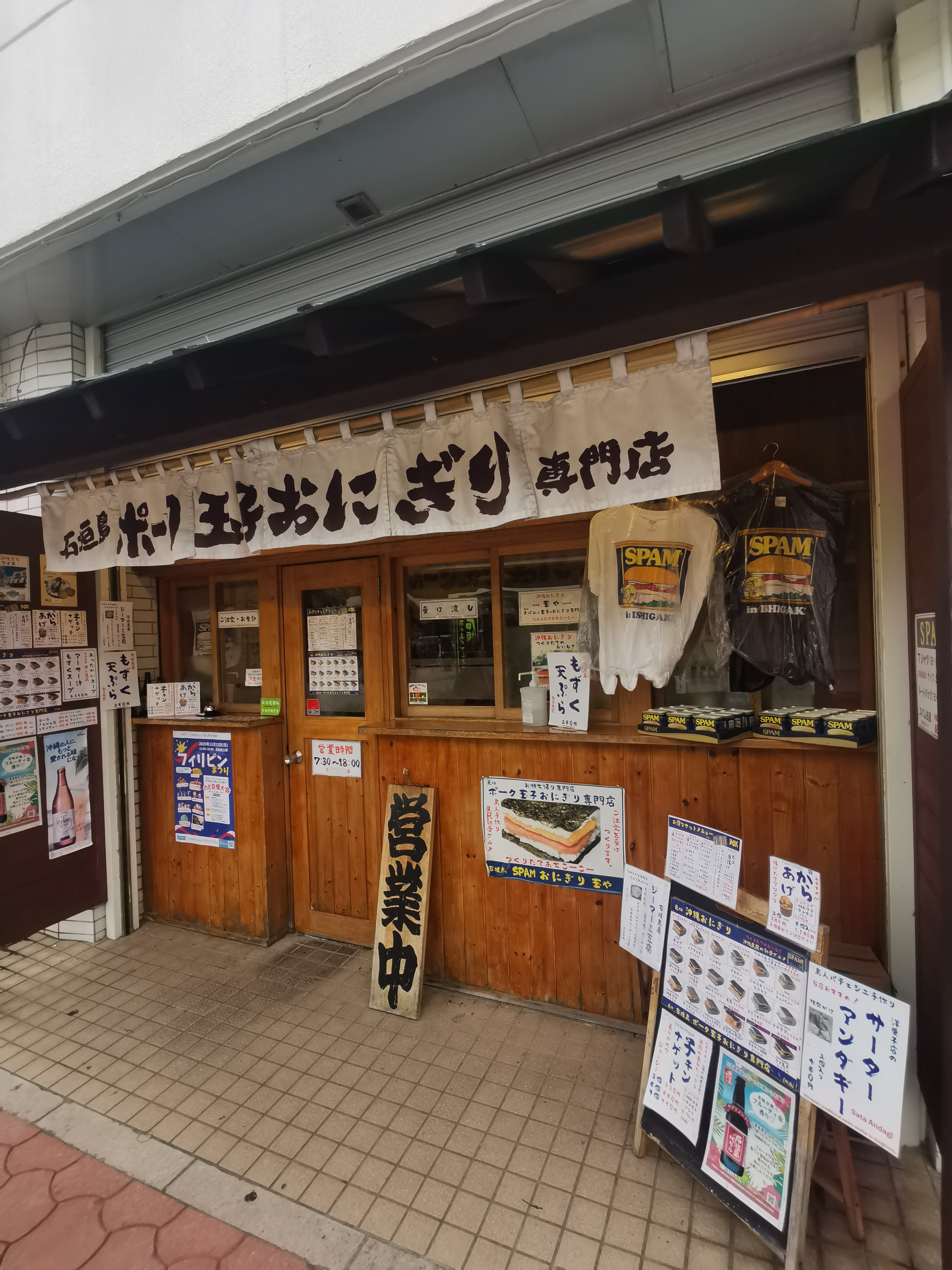
Lunch – Okinawa’s Famous Pork Tamago Onigiri
Before setting off on our drive, we stopped for lunch at a local shop specialising in Pork Tamago Onigiri.
At first glance, it seems like a simple combination of rice, fried egg and Spam wrapped in seaweed.
However, this humble meal tells an important chapter in Okinawan history.
Following the Second World War, Okinawa remained under American administration until 1972. During those years, imported canned foods—including Spam—became a common household ingredient throughout the islands.
Rather than treating it as a foreign product, Okinawan families adapted it to local tastes by combining it with freshly cooked rice and tamagoyaki, creating what is now considered one of Okinawa’s signature comfort foods.
Today, Pork Tamago Onigiri shops can be found throughout Okinawa Prefecture, from Naha to the remote Yaeyama Islands, with many locals enjoying it for breakfast or as a quick lunch before work.
Simple though it may be, it remains one of the most authentic local meals visitors can try.

Yaeyama Genki Milk – Ishigaki’s Beloved Local Brand
In the evening, we made a quick stop at the Yaeyama Genki Milk Shop, one of Ishigaki’s best-known local brands.
Unlike mainland Japan, where dairy farming is concentrated in Hokkaido, Ishigaki has developed a surprisingly successful dairy industry thanks to its wide grasslands and warm subtropical climate.
Founded in the 1950s, Yaeyama Dairy has become synonymous with fresh local milk across the islands, supplying schools, supermarkets and cafés throughout the region.

Its cheerful mascot, Genki-kun, has become something of a local celebrity, appearing on everything from milk cartons to souvenirs and stationery.
The flagship shop offers fresh milk, yoghurt, ice cream and milkshakes made using locally produced milk.
Naturally, we couldn’t resist trying one.
Rich, creamy and wonderfully refreshing, it was the perfect drink after a windy morning spent travelling between islands.
For anyone visiting Ishigaki, it’s a worthwhile stop—not only for the milk itself but also as a chance to support one of the island’s best-loved local producers.
An Afternoon Along Ishigaki’s Coast
With our rental car finally collected, the rest of the afternoon unfolded much more smoothly.
Driving around Ishigaki is one of the island’s greatest pleasures.
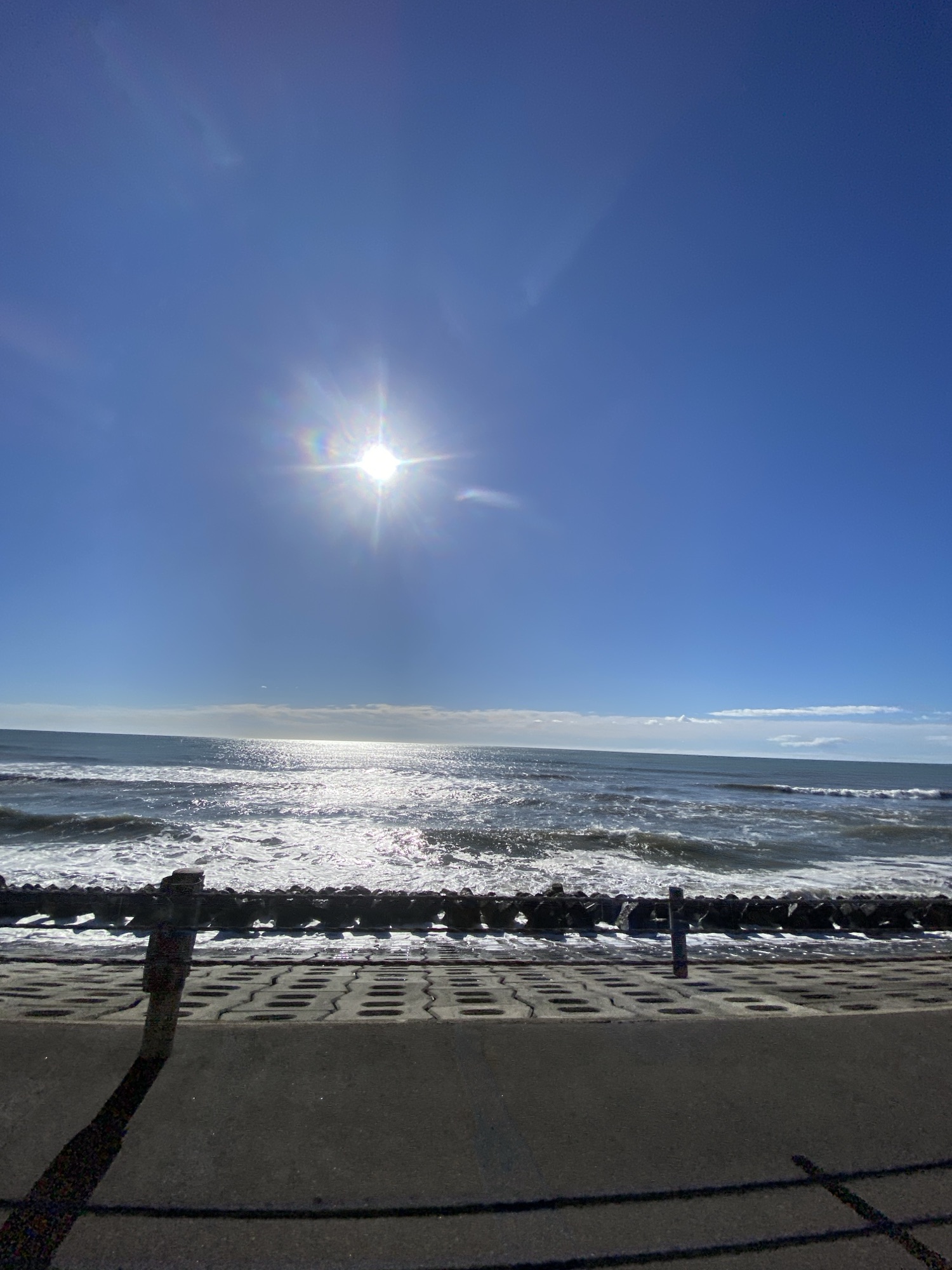
Unlike Japan’s larger cities, traffic is generally light, and many of the island’s roads hug the coastline, offering uninterrupted views across the brilliant blue waters of the East China Sea.
The changing weather added another dimension to the landscape.
Although the strong winds persisted throughout the afternoon, patches of sunlight occasionally broke through the clouds, illuminating the turquoise sea before disappearing again behind darkening skies.
It was a reminder that subtropical island weather can change remarkably quickly, sometimes within just a few minutes.
Fortunately, the rain never arrived, allowing us to enjoy the coastal drive before returning to town for dinner.
Seafood Dinner to End the Day
After an eventful day that had begun with cancelled ferries and uncertain travel plans, we finally settled into our reserved restaurant for what turned out to be one of the best meals of the trip.
Surrounded by some of Japan’s richest fishing grounds, the Yaeyama Islands are renowned for exceptionally fresh seafood. Warm currents flowing north from the Pacific combine with the nutrient-rich waters of the East China Sea, creating an ideal environment for an incredible variety of fish and shellfish.
The meal showcased exactly why Ishigaki has earned such a strong culinary reputation.
Our dinner began with freshly prepared tempura and handmade fish cakes, accompanied by a crisp seasonal salad.
Next came an impressive sashimi platter featuring beautifully sliced tuna, salmon, sweet shrimp and mackerel, each highlighting the freshness of the local catch.
Fresh oysters, served simply with lemon, followed soon after, before perfectly grilled fish arrived at the table, lightly seasoned to let the natural flavours shine.
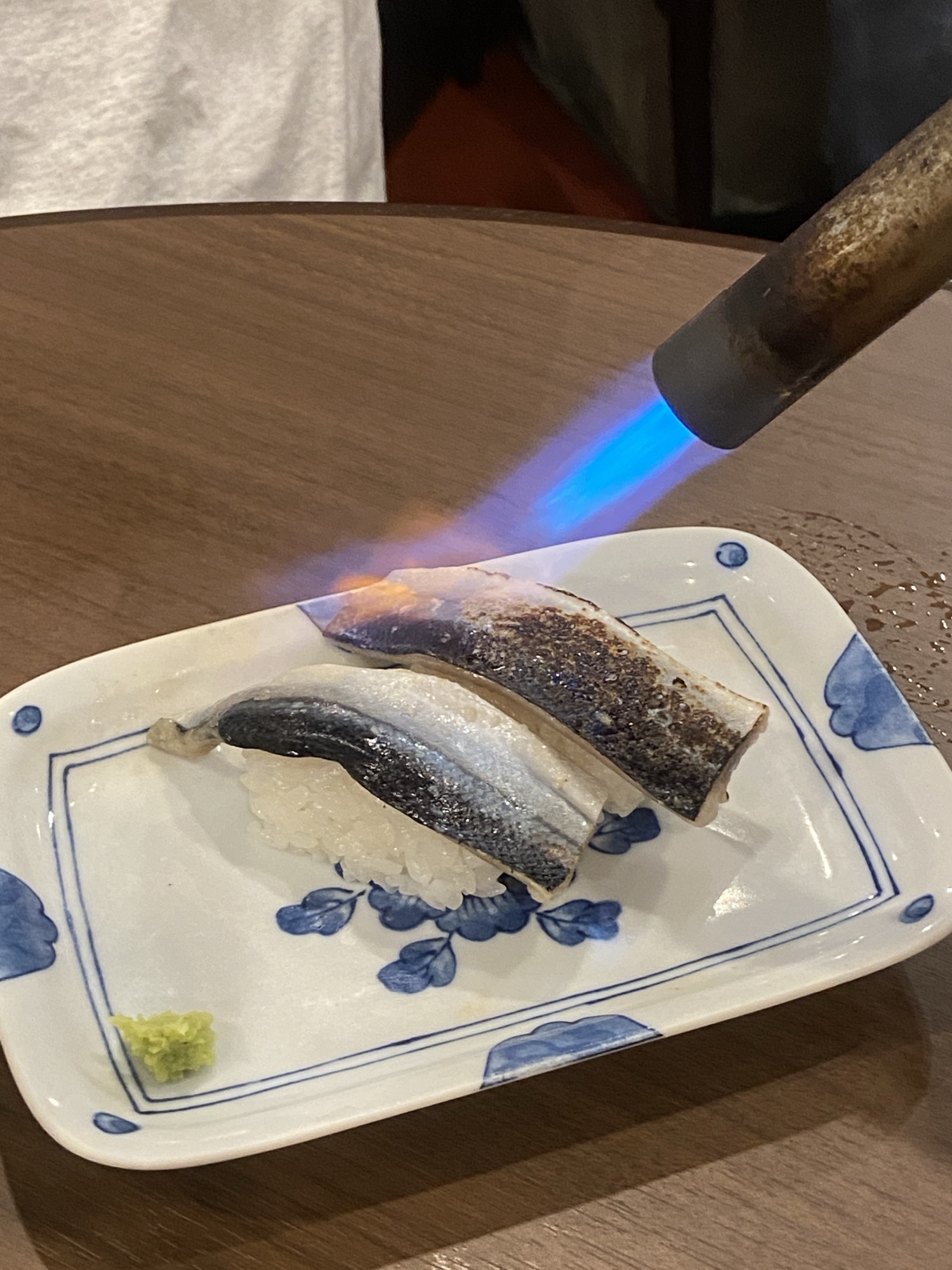
We also enjoyed a selection of nigiri sushi, including eel, white fish and cured mackerel.
The highlight of the evening, however, was the aburi wagyu sushi.
Slices of beautifully marbled wagyu were placed over sushi rice before being lightly seared at the table with a handheld culinary torch. As the flame melted the delicate fat, an incredible aroma filled the air. The beef became wonderfully tender, rich without being overpowering, and quite literally melted in the mouth.
It was the perfect ending to a day that had begun with uncertainty but ultimately reminded us why travelling through the Yaeyama Islands is such a rewarding experience. Even when the weather forces a change of plans, the journey itself often becomes part of the adventure.




Leave a Reply