
22 September 2026
We took the bus from Sapporo to Otaru in the morning. It was Silver Week, so the journey was probably busier than usual, and if you are planning to do the same trip during a holiday period, it is worth getting on within the first few stops if you want a proper seat.
We managed to get decent seats around the third stop, but as more passengers boarded, the available seats quickly disappeared. In the end, some passengers had to use the extra foldable seats along the middle aisle. It was a good reminder that the Sapporo–Otaru route can get quite busy on weekends and Japanese public holidays, particularly when the weather is good.
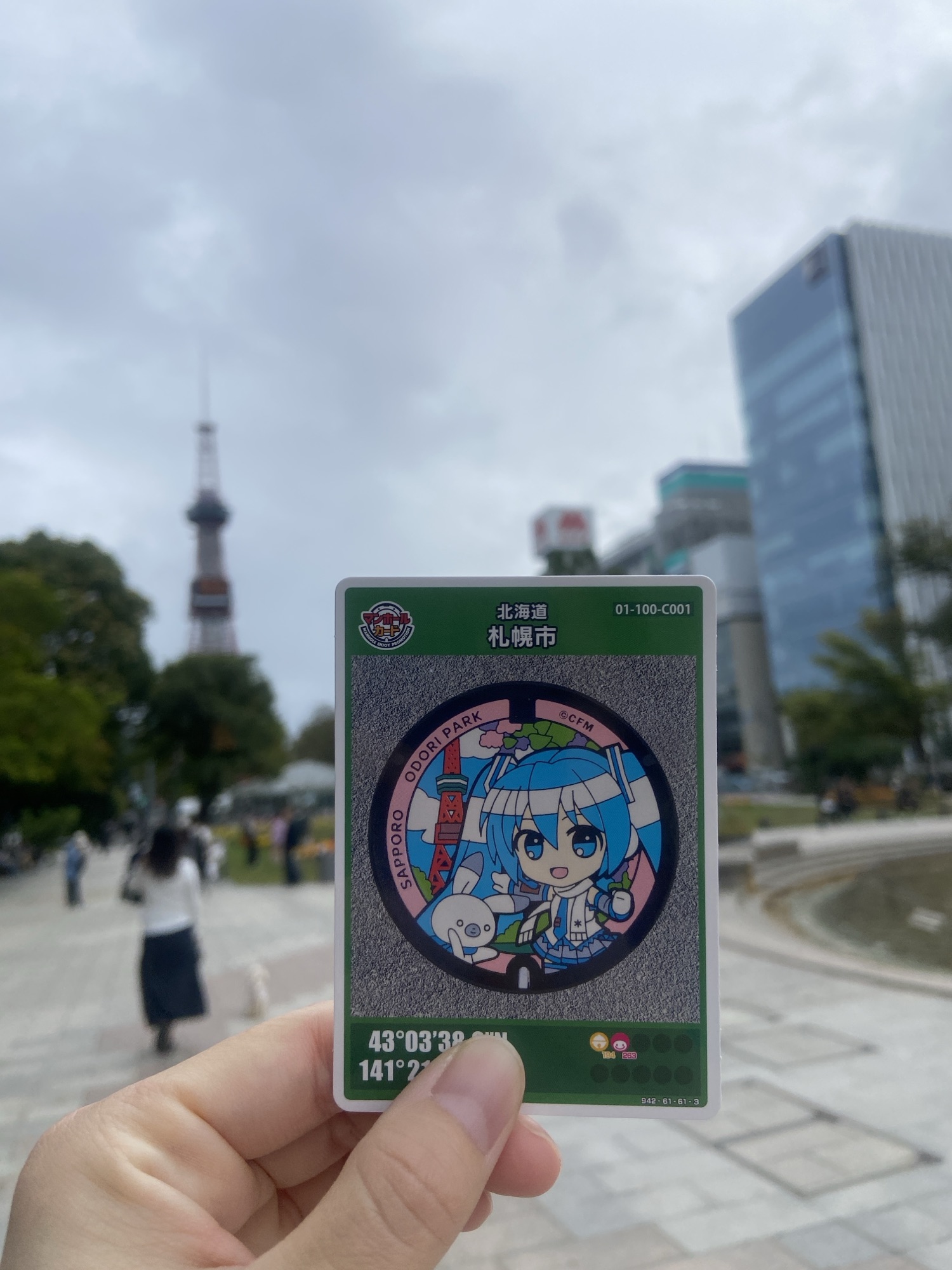
Our original plan was to collect another manhole card from the Otaru Waterworks Bureau, but it was a public holiday and the collection point was closed, so we cancelled that part of the itinerary. Instead, we got off at Sumiyoshi-mae bus stop, which turned out to work rather nicely for what became a slower start to the day.
A Quiet Tea House Near Sumiyoshi Shrine
Just about three minutes from the bus stop, I found a small tea house with a wonderfully serene atmosphere. After the busy bus ride, it was exactly the kind of place we needed before starting the sightseeing.
We ordered cheesecake with mochi and a matcha latte, as well as a dumpling with brown sugar sauce and hot matcha. Both were good, and the quiet setting made the stop feel more like part of the experience than simply somewhere to have a snack.


From there, we walked to Sumiyoshi Shrine, one of Otaru’s important historic Shinto shrines.
Sumiyoshi Shrine and Otaru’s Early Development
Otaru Sumiyoshi Shrine (小樽住吉神社) has a history closely connected with the development of Otaru as a port town. The shrine was established in the Edo period, when the area was becoming increasingly connected to coastal trade and settlement.
Otaru itself grew significantly from the late nineteenth century onwards. Its sheltered harbour and position facing Ishikari Bay helped turn it into an important commercial port, particularly as Hokkaido’s agricultural, fishing and mining industries expanded. The city later became closely associated with the movement of goods between Hokkaido and the rest of Japan.
That history is easy to miss when walking through modern Otaru, because today the city is best known for its preserved warehouses, canals, sweets and shopping streets. But places such as Sumiyoshi Shrine give a different perspective on the city, showing that Otaru’s story did not begin with the famous canal or the tourist district.
The shrine grounds were also a complete change from what we would encounter later in the day. There were fewer people, much more space and a distinctly local atmosphere.


From Sumiyoshi Shrine to Sakaimachi Street
From the shrine, we walked for a little over ten minutes towards Sakaimachi Street, and the change of atmosphere was almost immediate.
After the quiet tea house and the peaceful shrine, suddenly there were people everywhere.
The famous Sakaimachi Shopping Street is one of Otaru’s main tourist areas, lined with confectionery shops, glassware stores, cafés, restaurants and souvenir shops. It is also where the city’s association with music boxes and sweets becomes particularly obvious.
We started near the famous Otaru Steam Clock and the Otaru Orgel Doh / Music Box Museum.


The museum was extremely crowded, but there were still plenty of beautiful things to look at. There were rows upon rows of music boxes, from colourful modern designs to more elaborate pieces and antique-style mechanisms.
We didn’t actually buy anything, but it was still a feast for the eyes. The appeal of Otaru’s music boxes is partly visual, but there is also something fascinating about watching the mechanisms work. Music boxes became particularly associated with Otaru during the city’s development as a tourist destination, and today they have become one of the city’s signature souvenirs.
Then came the inevitable procession of shops along Sakaimachi Street.
The LeTAO Experience
Of course, we had to make the obligatory visit to LeTAO.
There are so many LeTAO shops around Otaru that it can almost feel like each one is its own little branch of the same attraction. Different stores carry different products and limited items, so there is actually a reason to look around rather than simply going into the first one you see.
We took a number and continued exploring instead of standing around waiting.
There were plenty of other confectionery shops, glassware stores and small souvenir shops along the street too. Otaru’s glass-making tradition is another part of its commercial history. The city’s development as a port created demand for practical glass products, including fishing-related items, and the craft later developed into one of Otaru’s better-known tourist industries.
I also tried the queue at LeTAO Pathos, another LeTAO branch. The queue there was shorter and moved faster, which is useful to know when the main shop is particularly crowded.
A Surprisingly Good Little Italian Restaurant
After spending some time along the shopping street, we headed back towards the Sumiyoshi area for lunch.
I had found a small Italian restaurant that appeared to be mostly reservation-based and operated as a one-man show. The online reviews were consistently good, so I decided to try my luck and sent the owner a message through Instagram the night before.
The owner-chef replied surprisingly quickly and managed to fit us in.
We arrived about 15 minutes early, and luckily our table was already ready.
We ordered carbonara with handmade pasta, a Margherita pizza and some orange juice. The food was exquisite. The portions were just right for two people, and the bill came to less than ¥2,000.


I was honestly a little shocked.
For the quality of the cooking, it could easily have fared against much more expensive Italian restaurants. It was one of those unexpected finds that makes a day of travelling particularly satisfying, especially when you had not even planned the restaurant until the night before.
Back to Sakaimachi Street for LeTAO
After lunch, we walked back towards the shopping street again, and by then our number at LeTAO had come up.
So there was no real need to wait any longer.
We ordered the cheesecake set with tea. The cheesecake was smooth and creamy, while the tea was fragrant. After walking around the crowded shopping street, sitting down for a proper tea break was another welcome pause.


Then it was time to head out again.
Walking Towards the Otaru Canal
We continued walking towards the Otaru Canal, passing more shops and attractions along the way.
Near the canal, we were immediately drawn towards an ukiyo-e museum. We went inside and explored both floors of the exhibition.


The exhibition was particularly enjoyable because we already like the style of ukiyo-e. The woodblock prints are not simply pretty pictures; they offer a fascinating glimpse into how people, landscapes, actors, travellers and everyday life were represented in Japan during the Edo period and beyond.
We liked the exhibition enough that we ended up buying quite a few things from the museum shop.
That was probably our biggest souvenir purchase of the day.
Afterwards, we sat beside the canal for quite a while. The original idea was to wait until sunset, when the old warehouses and canal would take on a different atmosphere.
Eventually, however, we gave up waiting.
The light was changing, but we still had a bus to catch, and after such a long day we decided it was better to head back rather than stretch the evening too far.
Otaru’s Canal and Its Commercial Past
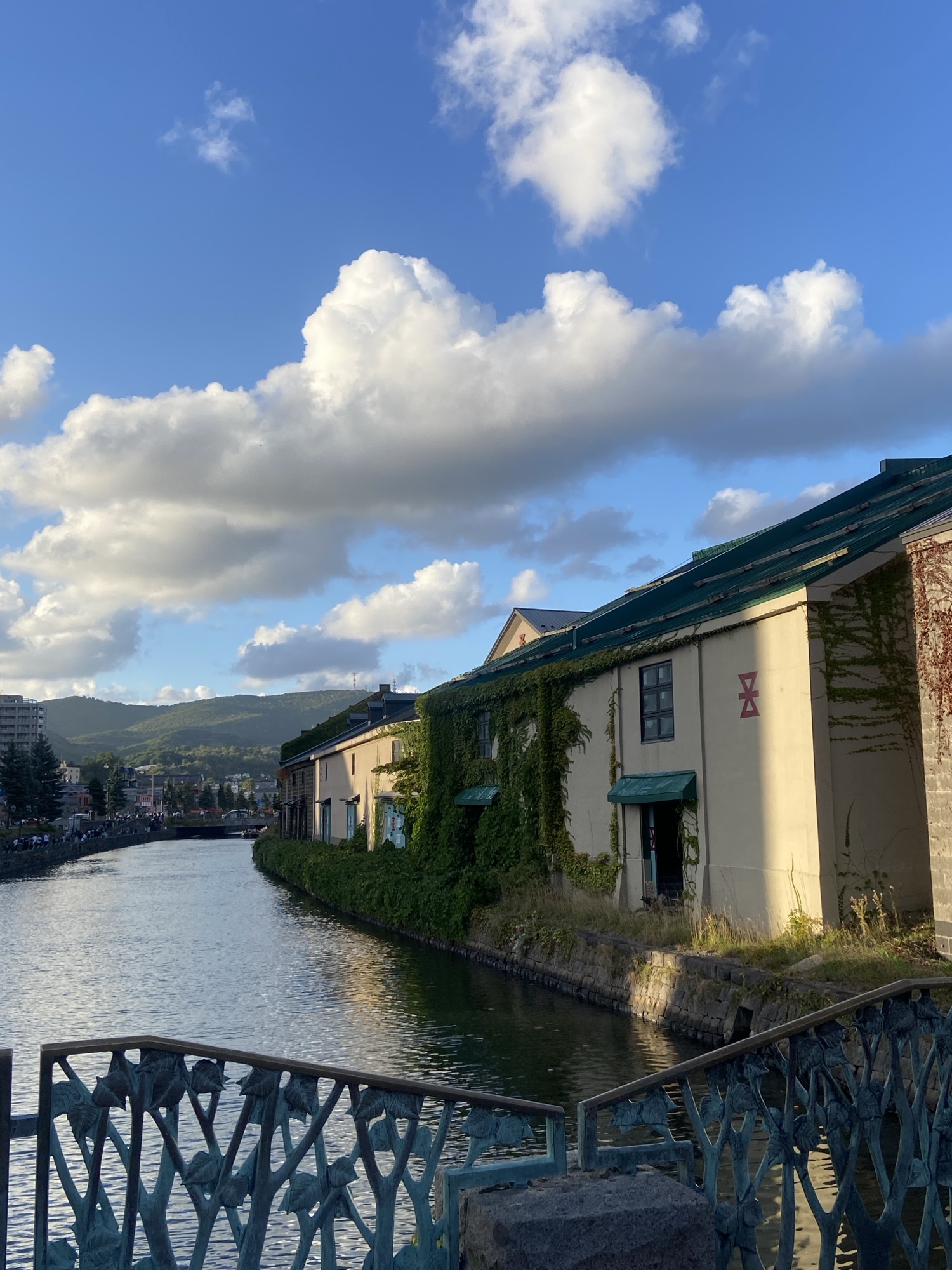
The Otaru Canal is now one of Hokkaido’s most recognisable tourist scenes, but its original purpose was much more practical.
The canal was completed in the early twentieth century as part of Otaru’s expansion as a major trading port. Warehouses were built alongside it, allowing cargo to be transferred between ships and storage facilities more efficiently.


As transportation methods changed and larger port facilities developed, the canal gradually lost its original commercial importance. Parts of the area were later preserved and redeveloped rather than completely erased, which helped create the historic landscape we see today.
The combination of stone-and-brick warehouses, the waterway and old street lighting is now one of Otaru’s defining visual characteristics.
It is also why the canal area feels so different from Sakaimachi Street. One is dominated by shops and visitors; the other still gives you a sense of the city’s older commercial architecture.
Back to Sapporo for Soup Curry
We walked to Otaru Station / Otaru Bus Terminal and caught the bus back to Sapporo.
By the time we arrived at Sapporo Station, we were ready for dinner.
Fortunately, we were already in exactly the right place. We walked into the sitatte sapporo building and joined the queue for GARAKU Sapporo, one of the places known for Hokkaido-style soup curry.
The queue was about 45 minutes, followed by another 12-minute wait after we were seated.
But it was worth the wait.
I finally understood what people were talking about when they praised Hokkaido soup curry.
The curry was quite different from the Japanese curry we are more familiar with. It was much more aromatic and spicy, with a flavour profile that reminded me more of Indian curry than the thick, sweet Japanese-style curry sauce usually served with rice.


The broth was fragrant without simply being hot, and the spices gave it much more depth.
After that, we took the subway back to the hotel.
And that was the end of a very long day in Otaru — starting with a quiet tea house and a historic shrine, moving into the crowds of Sakaimachi Street, eating cheesecake at LeTAO, discovering a surprisingly good little Italian restaurant, browsing an ukiyo-e exhibition, sitting beside the canal and finally ending the day with a bowl of Hokkaido soup curry in Sapporo.
It was a full day, but the contrast between the quieter corners of Otaru and its busy tourist streets made the day particularly enjoyable.
Practical transport and ticket notes
For a Sapporo–Otaru day trip, the JR train is generally the straightforward option if you want speed and predictable journey times, while the bus can be useful if your intended stops are along the bus route. Since we travelled during Silver Week, the bus was noticeably crowded, so getting on early in the route made a difference.
For the Sakaimachi Street and Otaru Canal area, most of the main attractions can be covered on foot. Starting around Sumiyoshi Shrine and walking towards Sakaimachi also makes sense geographically, although it creates a fairly long walking day once you add the canal and return journey.
For LeTAO, taking a queue number rather than standing around is useful when the shop is busy. It is also worth checking the different branches because they do not necessarily have exactly the same products.
The Otaru Waterworks Bureau manhole card should be treated as a separate stop because collection locations can have holiday closures. It is worth checking the official opening days before making it part of a fixed itinerary.






Leave a Reply