

26 September 2026
Today was the day we finally said goodbye to Sapporo and started making our way towards Obihiro.
We began with a quick breakfast from 7-Eleven before taking the subway to the car rental office. Thankfully, unlike our previous car-rental adventure in Hakodate, there was no wrong-office incident this time. We picked up the car without any trouble and were soon ready to leave Sapporo behind.
Before heading out, though, we had one small mission.
We were trying to collect another manhole card from the Sapporo Sewage Science Museum. Japan’s manhole cards have become a rather fun part of our travels. What started as something connected to municipal sewerage infrastructure has developed into a nationwide collecting culture, with different municipalities producing cards featuring their own manhole designs and local characteristics.
Unfortunately, our collection was temporarily put on hold.
Google Maps had indicated that the museum was open, but when we arrived, we discovered that it was actually closed. It was one of those small travel surprises that you simply have to accept and move on from. Municipal museums and public facilities in Japan can have holiday or substitute-closing schedules that are not always obvious from a quick Google Maps check, so checking the official website before making a special trip is worthwhile if a particular facility is important to your plans.
So, no manhole card today.
We went back, collected our luggage and finally started the drive south-east.
Leaving Sapporo and Taking the Slower Road
We deliberately took the non-toll roads rather than simply getting onto the expressway. It meant that the journey would take longer, but there is something different about travelling through Hokkaido this way.
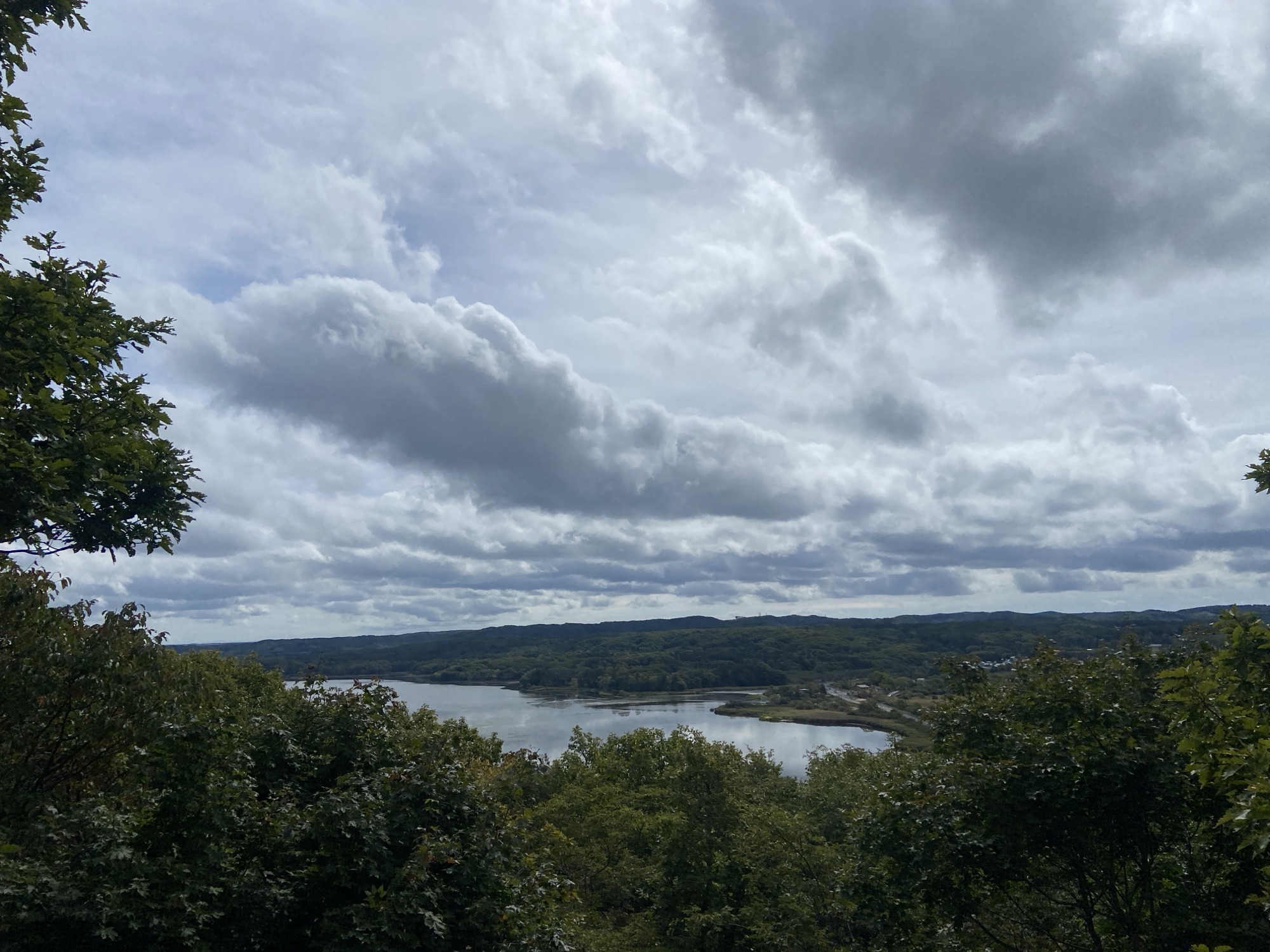
Instead of watching the countryside disappear behind the windows at motorway speed, we passed through smaller towns, agricultural areas and stretches of open landscape. The weather was cloudy when we left Sapporo and gradually became a light drizzle, giving the countryside a rather atmospheric look.


Our first substantial stop was Michi-no-Eki Mikasa.
Michi-no-eki, literally roadside stations, are much more than ordinary highway rest stops. They are places where travellers can stop for food, local produce and information, while many also introduce something about the character of the surrounding area.
Mikasa has a particularly interesting history because the town developed around coal mining, which was once one of the foundations of Hokkaido’s industrial development. The area is also known for fossils, including ammonites, and even the roadside station reflects some of that local geological and industrial heritage.
After driving for a while, it was a good place to stop for lunch.
We had a bowl of dark, rich ramen with spring onions and nori, together with a pork rice bowl topped with pickled ginger. It was exactly the sort of substantial meal that makes sense on a long driving day — warm, filling and without any need to make the stop more complicated than it needed to be.


Bread, Rain and the Furano Countryside
After lunch, we continued towards the Furano area.
One of the nice things about driving through Hokkaido is that the journey itself can become part of the trip. The famous destinations often get most of the attention, but between them are small businesses and roadside stops that would be much harder to reach without a car.
We made a stop at Stoven, a small bakery in the Biei/Furano countryside, to pick up some fresh bread.

It was another one of those unplanned-feeling stops that suited the day. We were not rushing from one major attraction to another. We were simply making our way across Hokkaido, stopping when something caught our attention and when we needed a break from the road.
From there, we continued towards Minami-Furano.
At Michi-no-Eki Minami-Furano, we had a look around the roadside station and the Mont-bell Minami-Furano shop. The timber architecture and surrounding landscape fitted the area particularly well, and it felt very different from the urban environment we had just left behind in Sapporo.


One of the more striking things inside was the display of Ezo brown bears, or higuma. There were also notices showing recent bear sightings around the area.
It was a useful reminder that Hokkaido’s countryside is not simply a scenic backdrop. Large areas of the island remain genuinely wild, and encounters with brown bears are a real consideration in some parts of Hokkaido, particularly around forested and mountainous areas.
For travellers driving through rural Hokkaido, these local notices are worth paying attention to. They are not just something interesting to photograph.
Arriving in Obihiro
By the time we reached Obihiro, we had been on the road for roughly five hours.
After spending the day travelling through open countryside, Obihiro initially felt surprisingly different. It has a fairly regular, spacious street layout, and after the smaller towns and rural scenery along the way, the city could feel a little quiet and almost sterile at first glance.
But Obihiro’s history helps explain some of its appearance.
Like many Hokkaido cities, its modern development is closely connected with the settlement and agricultural development of the island during the Meiji period. The city’s streets were laid out in a planned grid, reflecting the broader planning approaches used in Hokkaido during this period rather than the irregular street patterns found in many older Japanese cities.
And although the streets can seem quiet, Obihiro has a surprisingly strong food culture.
We found this out that evening when we went to Yakitori Ohana.
We had initially wondered whether we would be able to get a table, but managed to walk in and were rewarded with a very good dinner.
There was pork belly skewers grilled over charcoal and seasoned simply with pepper, chicken breast with grated green wasabi, bacon-wrapped shishito peppers and crispy chicken skin.


And, as usual, we somehow ordered more than we needed.
By the end of the meal we were completely stuffed.
After spending around five hours driving across Hokkaido, though, it was a satisfying way to finish the day. We headed back to the hotel tired, full and ready for a proper rest.
The drive had been long, but this was one of those travel days where the journey was as much a part of the experience as the destination.
Driving from Sapporo to Obihiro
For this route, we chose non-toll roads, which made the journey slower but allowed us to pass through more of central Hokkaido and stop at places that would have been easy to miss on the expressway.
If you are doing the same drive, allow plenty of time rather than treating the route as a simple transfer between Sapporo and Obihiro. A five-hour driving day can become considerably longer once you include lunch, roadside stations, bakeries and other stops.
It is also worth checking road conditions before setting off, particularly outside summer. Hokkaido’s weather can change quickly, and mountain roads can feel very different from the conditions in Sapporo.
For rental-car travellers, an ETC card is useful if you decide to use the expressway for part of the journey. If you are deliberately avoiding toll roads, however, Japan’s national and regional highways provide a much more gradual introduction to the landscape.
And for us, that slower journey was exactly what we wanted on our first day out of Sapporo.

Leave a Reply