
30 April 2025 Wednesday
Why Hiroshima

Our trip had three major milestones: Nakasendo, Shimanami Kaido, and Kumano Kodo. After exploring the Nakasendo leg from Nagoya, we faced a key decision—should we head to Onomichi, the official starting point of the Shimanami Kaido, or detour to Hiroshima?
Onomichi was our first choice—charming, cycling-friendly, and highly recommended by fellow travelers. At one point, our dream itinerary looked like this:
Onomichi → Imabari → Matsuyama → Hiroshima → Hagi → Kumano Kodo.
But reality hit. Time was tight, and we were traveling during Golden Week, which meant limited seat availability and rising transport prices.
Hiroshima, being a major hub, offered more flexible transport options—including the money-saving night bus. On top of that, the nearby Kintai Bridge Festival in Iwakuni tipped the scales. Add Miyajima to the mix, and Hiroshima simply made more logistical sense.
With little expectation, we arrived in Hiroshima—only to find ourselves pleasantly surprised.
Manhole Card Hunting in Hiroshima
With no strict itinerary, we dove into something delightfully nerdy: manhole card hunting.
What Are Manhole Cards?
Started by Japan’s sewerage departments, these collectible cards promote public awareness of infrastructure. Each card features a city’s unique manhole cover design—often tied to its local mascot or history. They’re free, but you need to visit specific locations (with all members present) to receive one.
It’s a little like Pokémon Go, but for civil engineering fans.
👉 Pro tip: We relied heavily on this site to track them:
https://www.gk-p.jp/mhcard/
By the time we reached Hiroshima, we’d already collected a few from previous cities. But Hiroshima had several more, so we dedicated the entire day to the hunt.
🚌 Exploring Hiroshima with the Sightseeing Bus
During our Hiroshima adventure, we decided to hop on the Meipuru-pu sightseeing bus, and it turned out to be one of the best decisions of the day. The buses are comfy, air-conditioned, and have huge windows perfect for taking in the city as we traveled from one landmark to the next. The best part? You can hop on and off as you like, which made it super easy to explore spots like the Atomic Bomb Dome, Peace Memorial Park, Hiroshima Castle, Shukkeien Garden, and even grab a bite at Okonomi-mura.

The bus system is color-coded with different routes: the Orange, Green, and Lemon routes cover most of the must-see attractions, while the Blue Route heads to Hiroshima Port for those planning a cruise. We bought a one-day pass for ¥400, which let us ride as much as we wanted on the main routes—an amazing deal for the convenience it offered. There’s even English commentary on board, so we could follow along and learn about the history behind each site as we went.
Riding the sightseeing bus made our day stress-free and fun. We could relax, snap photos, and really take in the city at our own pace without worrying about getting lost or juggling public transportation. If you’re visiting Hiroshima for the first time, I’d definitely recommend this as a smooth and enjoyable way to see all the highlights in a single day.
A Meaningful Morning at the Peace Park

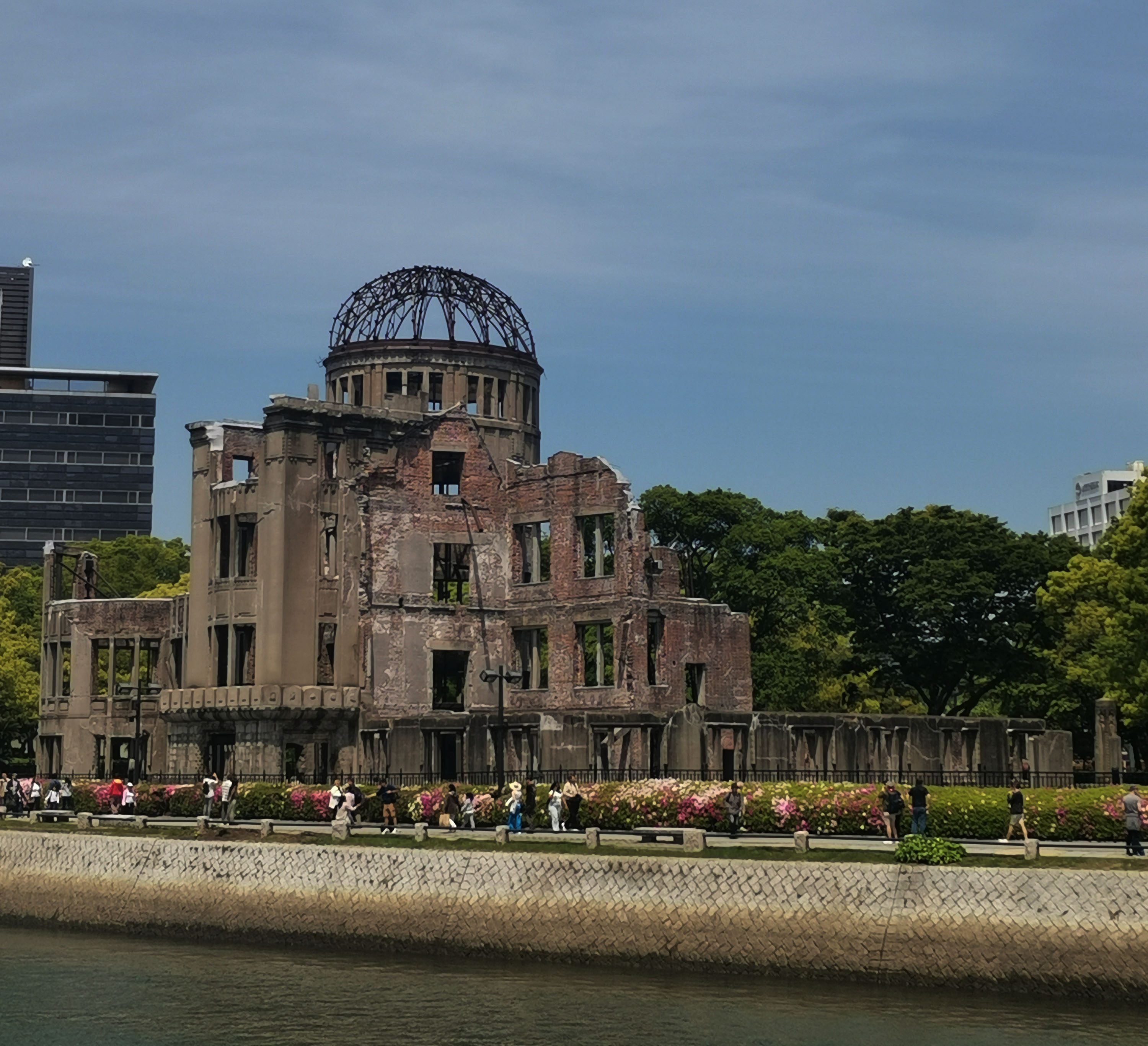
We began at the Atomic Bomb Dome and Peace Memorial Park. Visiting these sites always brings complex emotions—grief, awe, reverence. The scars of war still feel recent, and the experience was sobering.
We stopped by the nearby Tourist Information Center and were delighted to discover a notice about a Kagura show happening that evening. My dad didn’t hesitate: “Let’s watch it.”
Evening plans—set.
Art and Gardens for a Slower Afternoon
With our feet sore from days of walking, we took the Hiroshima Sightseeing Loop Bus to make our way around the city and continue collecting manhole cards.
We visited the Hiroshima Prefectural Art Museum, home to around 5,000 works, including pieces from the 1920s–30s, Asian crafts, and Hiroshima-related art. While it might not top the list for international tourists, we found it quiet and restorative.
But what truly captivated me was the Shukkeien Garden, just next door.
Shukkeien: A Miniature World of Peace


Shukkeien (縮景園) translates to “shrunken-scenery garden.” Designed to replicate natural landscapes—mountains, valleys, forests—in miniature, this garden is a peaceful oasis with a rich history dating back to 1620.
As we strolled the winding paths around the central pond, we passed traditional teahouses and took in panoramic views of crafted perfection. I’ve seen many Japanese gardens, but this one still felt special—serene, compact, and filled with charm.

We passed by Hiroshima castle, but decided against going in, as time was limited.
Ending with Kagura: Myth, Music, and Magic
We hit the jackpot during our Hiroshima trip—our visit happened to fall on a Wednesday, which meant we caught the weekly Kagura performance at the Hiroshima Prefectural Citizen’s Culture Center! From the moment the performers stepped on stage, we were swept into a world of colorful costumes, dramatic masks, and rhythmic drums telling stories that date back centuries. Even if you don’t speak Japanese, the English subtitles and handy playbill made it easy to follow along. Tickets are usually ¥1,800, but we snagged ours for ¥1,600—lucky us! After the show, we got to snap photos with the performers and explore the souvenir shop, filled with Kagura-themed goodies. It was such a lively, immersive experience that really brought Japanese folklore and culture to life right before our eyes.


What is Kagura?
Kagura is a classical Japanese performing art with roots in Shinto rituals and harvest celebrations. Stories often depict epic battles between good and evil, with heroes slaying demons and dragons, all accompanied by rhythmic music and colorful costumes.
Hiroshima Kagura has strong ties to nearby Shimane Prefecture and is performed widely across the region, especially during autumn festivals. But lucky for tourists, Hiroshima hosts regular shows now for tourists to appreciate the cultural performance.
We thoroughly enjoyed the performance—dramatic, lively, and culturally rich.
A Surprisingly Rich Day in Hiroshima


We ended the night with some yakitori and returned to our accommodation, content. What began as a pragmatic choice turned into a highlight of our trip. Hiroshima wasn’t in our original plan, but it gave us art, nature, culture—and of course, manhole cards.
💰 Hiroshima Budget
- Accommodation: We stayed at Smile Hotel — affordable, clean, and comfortable. In general, a good mid-range stay can be found for under ¥10,000 per night.
- Sightseeing Bus (Hiroshima Meipuru-pu): ¥600 (day pass)
- Attractions:
- Hiroshima Art Museum + Shukkeien Garden: ¥1,600
- Hiroshima Kagura performance: ¥1,600
- Tram Expenses: a few hundred yen, depending on usage
- Food: ¥2,000–3,500 per person (don’t miss Hiroshima-style okonomiyaki!)
📊 Estimated Total Per Person (excluding souvenirs)
- Without accommodation: ~ ¥5,800 – ¥7,300+
- With accommodation: ~ ¥15,800 – ¥17,300+
🌸 Budget-Saving Tips
- If you’d like to save, you can skip the Art Museum (¥1,000) but I really recommend visiting Shukkeien Garden for its peaceful beauty.
- Even without paid attractions or shows, Hiroshima makes for a wonderful city walk — exploring Peace Memorial Park, the riverside, and street food stalls can still fill your day with meaningful experiences.
👉 A complete 38-day Japan itinerary, including Nakasendo walking, Kumano Kodo hiking, Shimanami Kaido cycling, and a Kyushu road trip.
👉 Guide and tips for collecting Manhole Cards across Japan — click here to read more.
👉 Don’t miss Japan’s postcard-sending experience — read the full guide here.
👉 10 standout food experiences worth seeking out – Japan Foodie Map: My Top 10 Meals Across Japan


Leave a Reply